

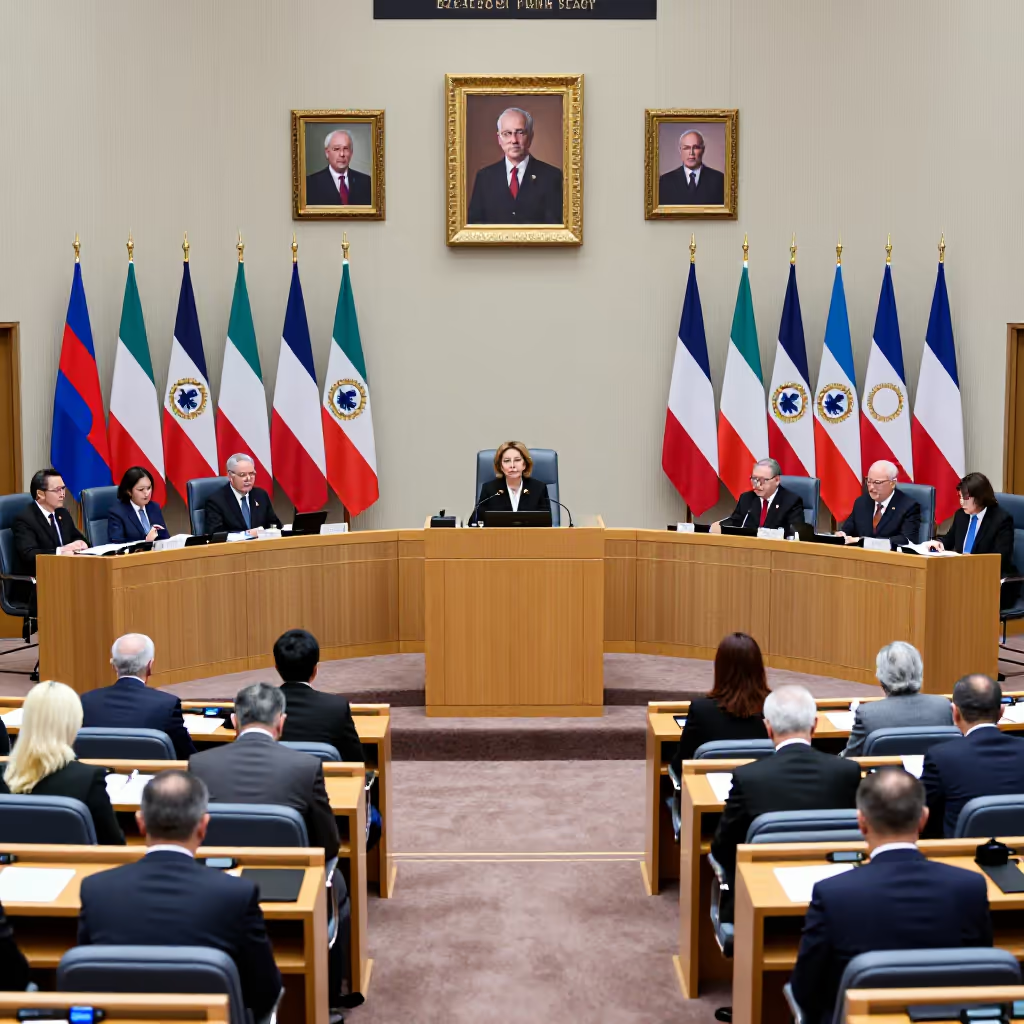
der Staat
state
The political organization of a country, including its government, institutions, laws, and territory.
Der Staat erhebt Steuern, um öffentliche Dienstleistungen zu finanzieren.
The state collects taxes to finance public services.
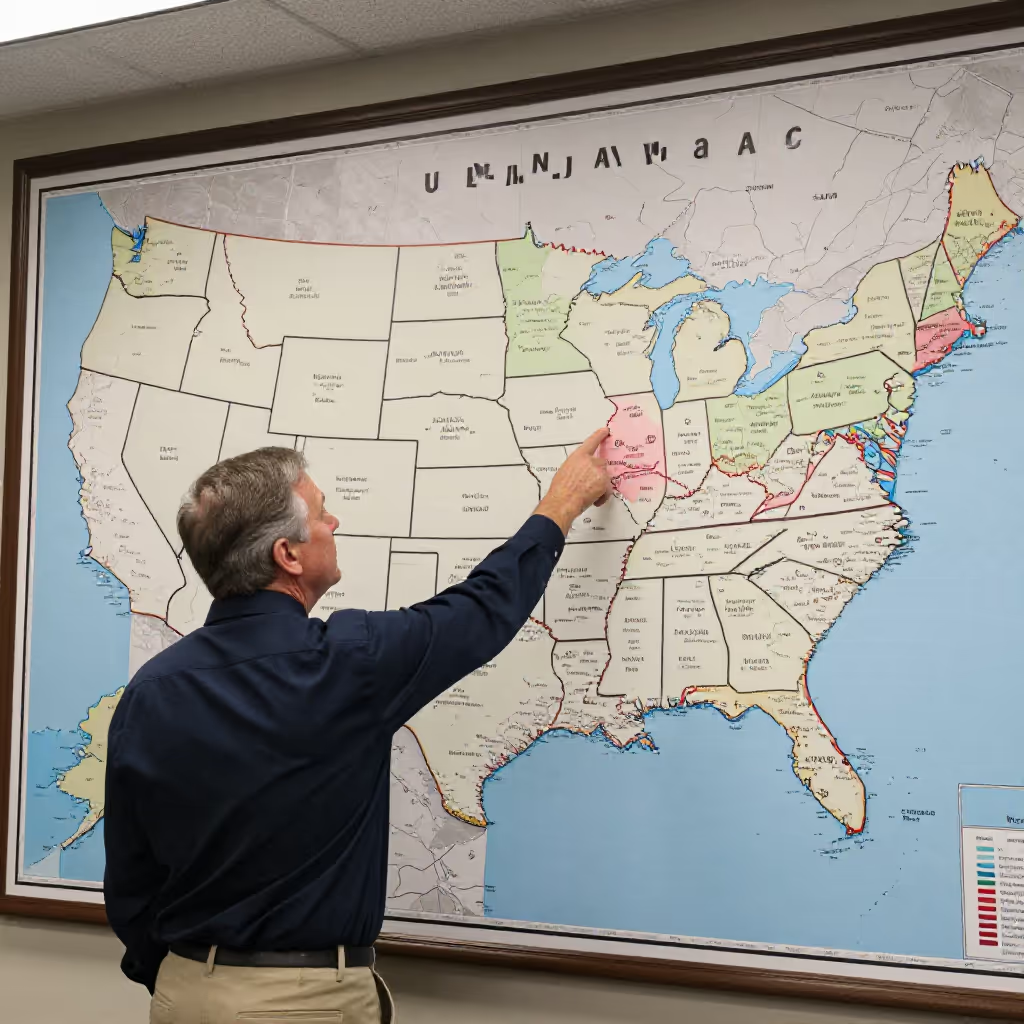

state
Loading your saved state.
state
The political organization of a country, including its government, institutions, laws, and territory.
Der Staat erhebt Steuern, um öffentliche Dienstleistungen zu finanzieren.
The state collects taxes to finance public services.

The adjective 'staatlich' is derived from the noun 'der Staat' (the state), and means 'coming from the state' or 'public'. The verb 'verstaatlichen' (to nationalize; to transfer into state ownership) also belongs to this word family.
Viele Museen sind staatliche Einrichtungen.
Many museums are state institutions.
'Staat' (state) is the basis for many important compound words. Examples include 'Staatsoberhaupt' (head of state), 'Staatsanwalt' (public prosecutor), or 'Staatsbürger' (citizen). The 's' in between is a typical linking element.
Um die deutsche Staatsbürgerschaft zu erhalten, muss man einige Bedingungen erfüllen.
To obtain German citizenship, one must meet several conditions.
Whether 'Staat' (state) means an entire country or a federal state depends on the context. If people are talking about the internal structure of Germany or the USA, it usually means a federal state. In international politics, it means a country.
Kalifornien ist der bevölkerungsreichste Staat der USA.
California is the most populous state in the USA.
The expression 'Staat machen' means to impress through one's appearance or clothing. In this idiom, 'Staat' is always used without an article. Today, it is considered somewhat outdated.
Mit seinem neuen Anzug wollte er bei der Feier richtig Staat machen.
With his new suit, he wanted to make a real impression at the celebration.
country / countryside / land
'das Land' and 'der Staat' can both refer to a political unit. 'Land' often sounds more natural in everyday language when talking about a country in the world, for example Germany, Italy, or Japan. 'Staat' places more emphasis on the political order: government, laws, authorities, and institutions. Both words can also be used for parts of a federal state. Learners may confuse them because they often refer to the same territory. As a simple guide: 'Land' works well for place, travel, and origin; 'Staat' is more suitable for politics, administration, and laws.

Der Staat bezahlt in vielen Fällen die öffentlichen Schulen.
In many cases, the state pays for public schools.
Deutschland ist ein Land in Mitteleuropa.
Germany is a country in Central Europe.