

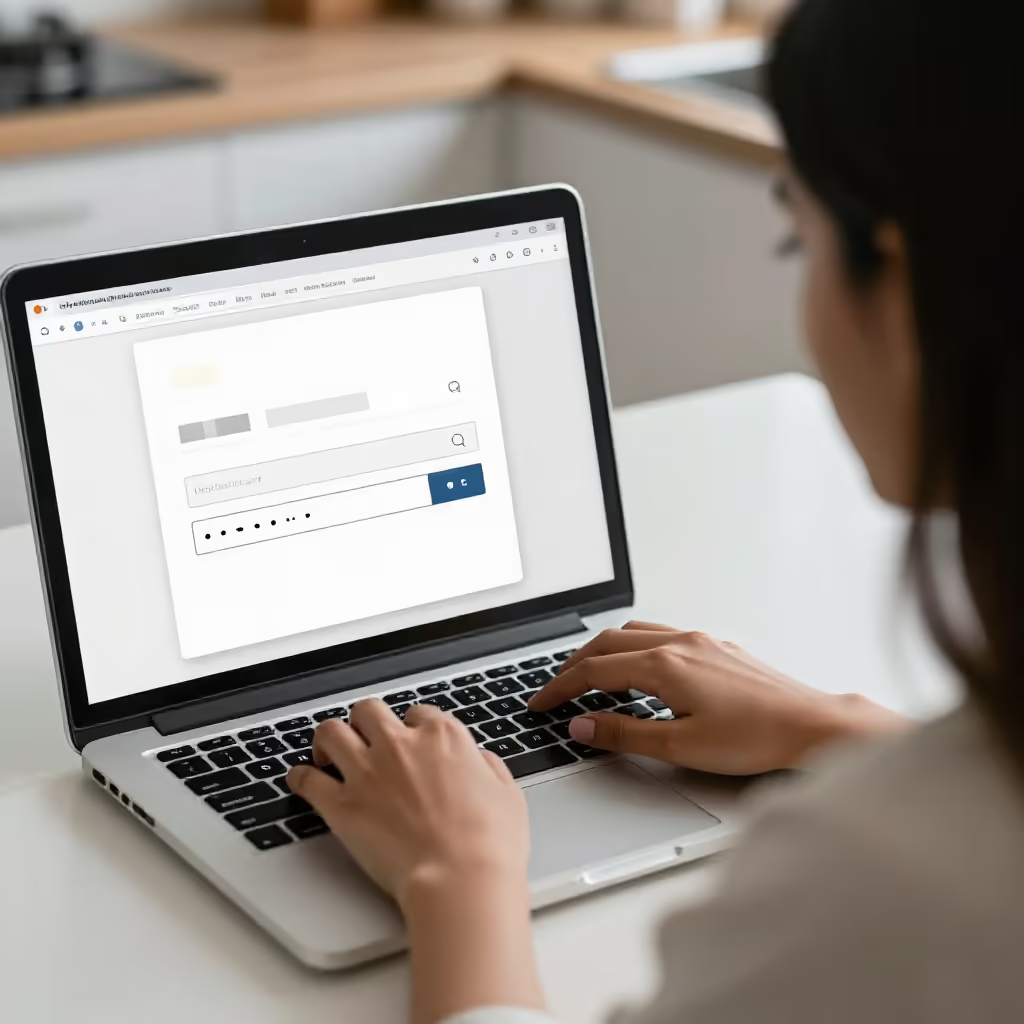
A secret string of characters (word, numbers, symbols) used for authentication in order to gain access to a system, device, or account.
example
Bitte wählen Sie ein sicheres Passwort mit mindestens acht Zeichen.
Please choose a secure password with at least eight characters.
Usage tips
Word composition
'Passwort' is a compound word made up of 'Pass' (passport/pass) and 'Wort' (word). A 'Pass' is a document that allows access or passage. So a password is literally an 'access word'.
EXAMPLE
Ohne das richtige Passwort konnte er sich nicht einloggen.
Without the correct password, he couldn't log in.
Typical verbs
In everyday language, 'Passwort' (password) is very often combined with certain verbs. The most common are: ein Passwort 'eingeben' (to enter), 'ändern' (to change), 'vergessen' (to forget), and 'zurücksetzen' (to reset).
EXAMPLE
Ich habe mein Passwort vergessen und muss es jetzt zurücksetzen.
I forgot my password and now have to reset it.
Typical adjectives
To describe the quality of a password, the adjectives 'sicher' (secure), 'stark' (strong), or the opposites 'unsicher' (insecure) and 'schwach' (weak) are often used.
EXAMPLE
Verwenden Sie ein starkes Passwort, um Ihr Konto zu schützen.
Use a strong password to protect your account.
Compare with
near_synonym · confusable
Passwort vs Code
code
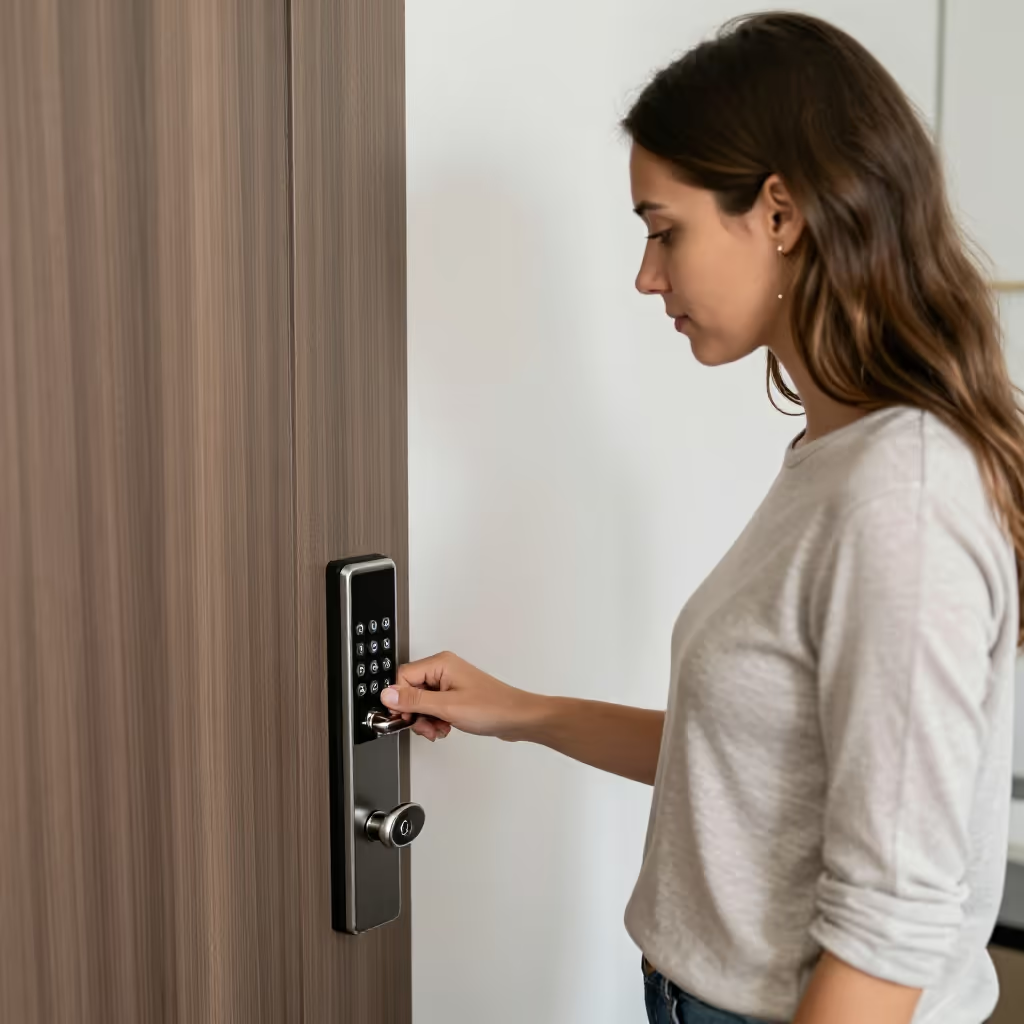
'der Code' and 'das Passwort' can both consist of numbers, letters, or symbols and give access to something. 'Passwort' specifically means a secret string of characters for an account, a device, or a system. 'Code' is broader: it can also be a short sequence of numbers used to unlock, confirm, or identify something. That is why the words can easily be confused. For an online account, you usually say 'Passwort'; for a door, an SMS confirmation, or a PIN, 'Code' often fits.
Passwort
Im Büro ändert Hannes sein Passwort für den Computer.
At the office, Hannes changes his password for the computer.
Code
Nach der Anmeldung bekommst du einen Code per SMS.
After signing in, you will receive a code by text message.