


pendeln
to commute
To regularly travel a route between one's home and one's place of work or education.
EXAMPLE
Sie muss jeden Tag eine Stunde mit dem Zug zur Arbeit pendeln.
She has to commute to work by train for an hour every day.
to commute / swing
Loading your saved state.
to commute
To regularly travel a route between one's home and one's place of work or education.
Sie muss jeden Tag eine Stunde mit dem Zug zur Arbeit pendeln.
She has to commute to work by train for an hour every day.
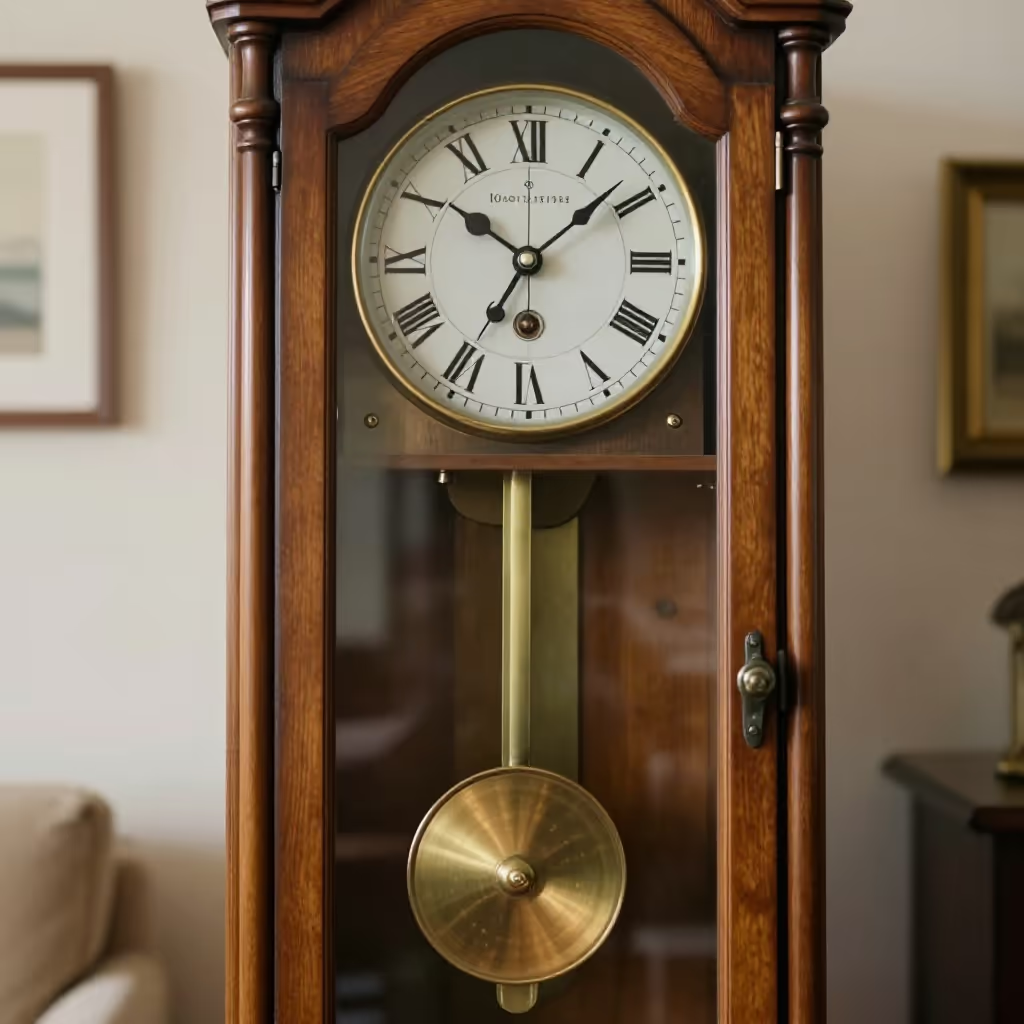
to swing
To move back and forth evenly around a fixed point.
Das Pendel der alten Standuhr schwingt langsam hin und her.
The pendulum of the old grandfather clock swings slowly back and forth.

to fluctuate
To swing or vary between two extremes, values, or states.
Die Stimmung der Mannschaft pendelte zwischen Hoffnung und Enttäuschung.
The team's mood fluctuated between hope and disappointment.
The verb 'pendeln' (to commute / swing) is closely related to the noun 'das Pendel' (pendulum). The basic idea of a regular back-and-forth movement connects all meanings of the word.
Die Kugel pendelte an einem langen Seil hin und her.
The ball swung back and forth on a long rope.
The context makes the meaning clear: If it is about people and the way to work, 'pendeln' means commuting (m01). If it is about objects, it means swinging (m02). If it is about feelings or values, it means fluctuating (m03).
Viele Studenten pendeln täglich zur Universität.
Many students commute to the university every day.
When talking about commuting to work, the structure 'pendeln zwischen [Ort A] und [Ort B]' (to commute between [place A] and [place B]) is often used. Giving the direction with 'von ... nach' (from ... to) or 'zu' (to) is also common.
Er pendelt jeden Tag zwischen Berlin und Potsdam.
He commutes between Berlin and Potsdam every day.
For the abstract meaning, too, the structure 'pendeln zwischen [Zustand A] und [Zustand B]' (to fluctuate between [state A] and [state B]) is often used. This describes a fluctuation between two abstract poles.
Die Aktienkurse pendelten den ganzen Tag zwischen Gewinnen und Verlusten.
Stock prices fluctuated between gains and losses all day.
to swing
Schwingen and pendeln both describe a regular back-and-forth movement. Schwingen usually emphasizes movement around a resting position, while pendeln particularly highlights movement between two points or from a fixed attachment. Use schwingen for general oscillation and pendeln for movement along a fixed path.
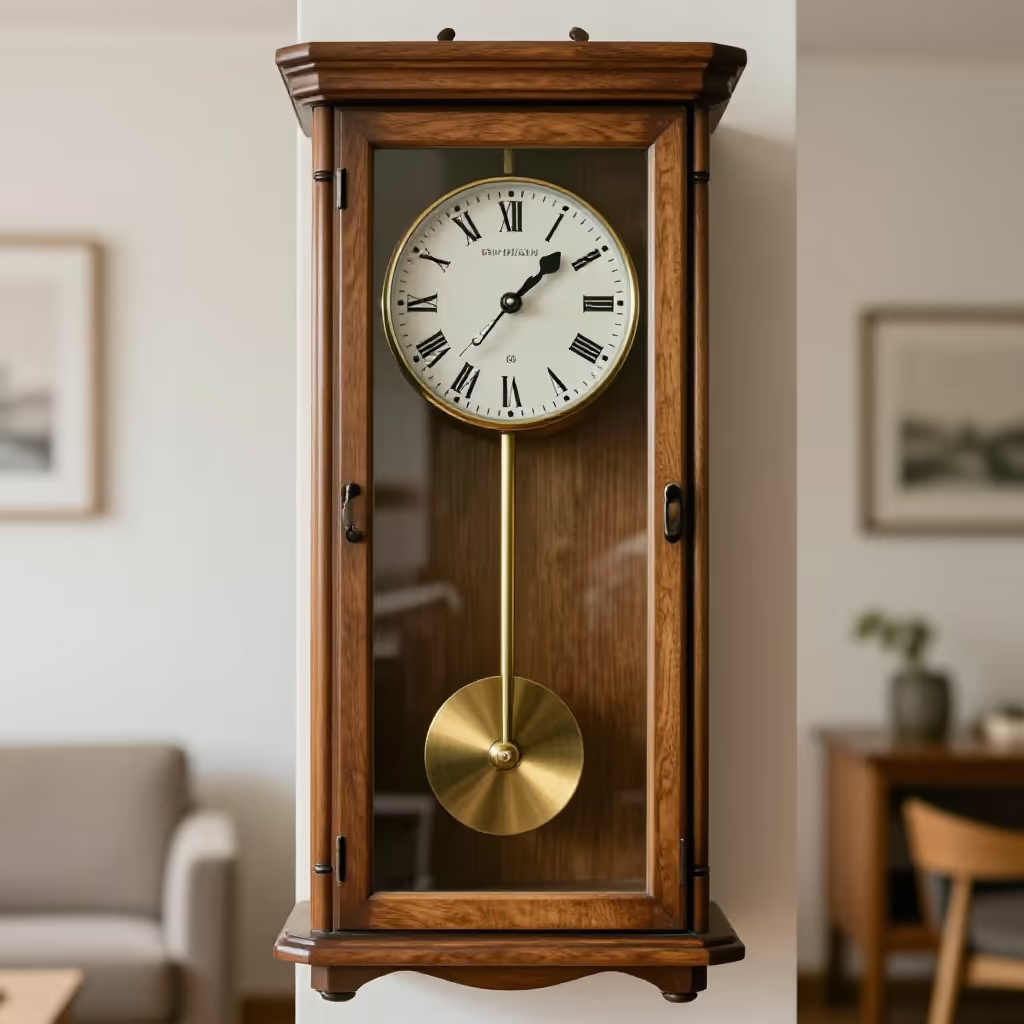
Der Ball pendelt an der Schnur regelmäßig zwischen den beiden Seiten.
The ball swings regularly between the two sides on the string.
Die Hängelampe schwingt nach dem Stoß noch einige Sekunden um ihre Ruhelage.
The hanging lamp continued to swing around its resting position for a few seconds after being pushed.