

schwingen
to swing
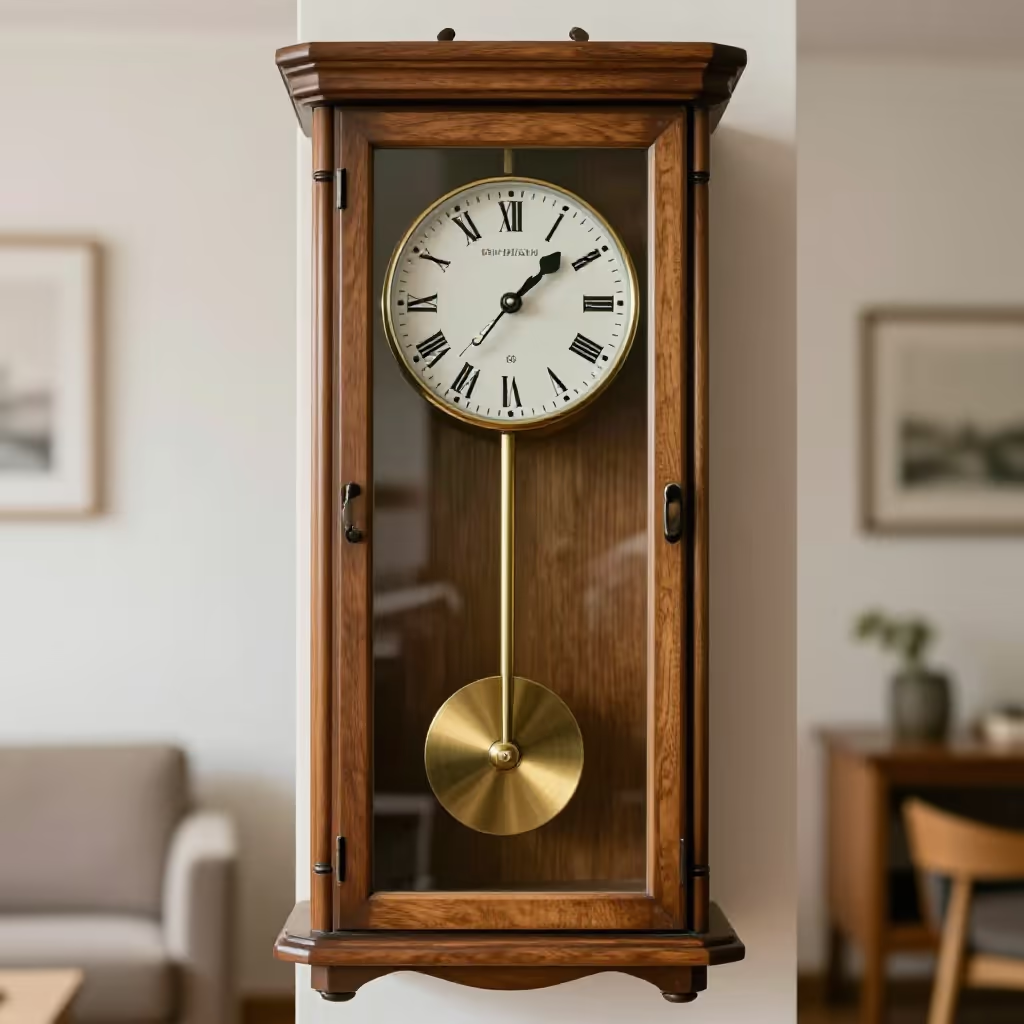
To move back and forth evenly and rhythmically around a central point or resting position.
EXAMPLE
Das Pendel der alten Uhr schwingt langsam hin und her.
The pendulum of the old clock swings slowly back and forth.
to swing
Loading your saved state.
to swing
To move back and forth evenly and rhythmically around a central point or resting position.
Das Pendel der alten Uhr schwingt langsam hin und her.
The pendulum of the old clock swings slowly back and forth.

to swing oneself
To move onto, over, or away from something with a quick, sweeping motion.
Der Reiter schwang sich elegant in den Sattel.
The rider swung himself elegantly into the saddle.

to swing
To move something (such as a flag, a sword, or a racket) through the air in a wide arc.
Die Demonstranten schwangen ihre Fahnen im Wind.
The demonstrators swung their flags in the wind.

to make a speech
To give an often long, rousing, or even bombastic speech. This expression often has a slightly mocking undertone.
Auf der Familienfeier schwang Onkel Herbert mal wieder große Reden.
At the family celebration, Uncle Herbert was once again making grand speeches.
to oscillate
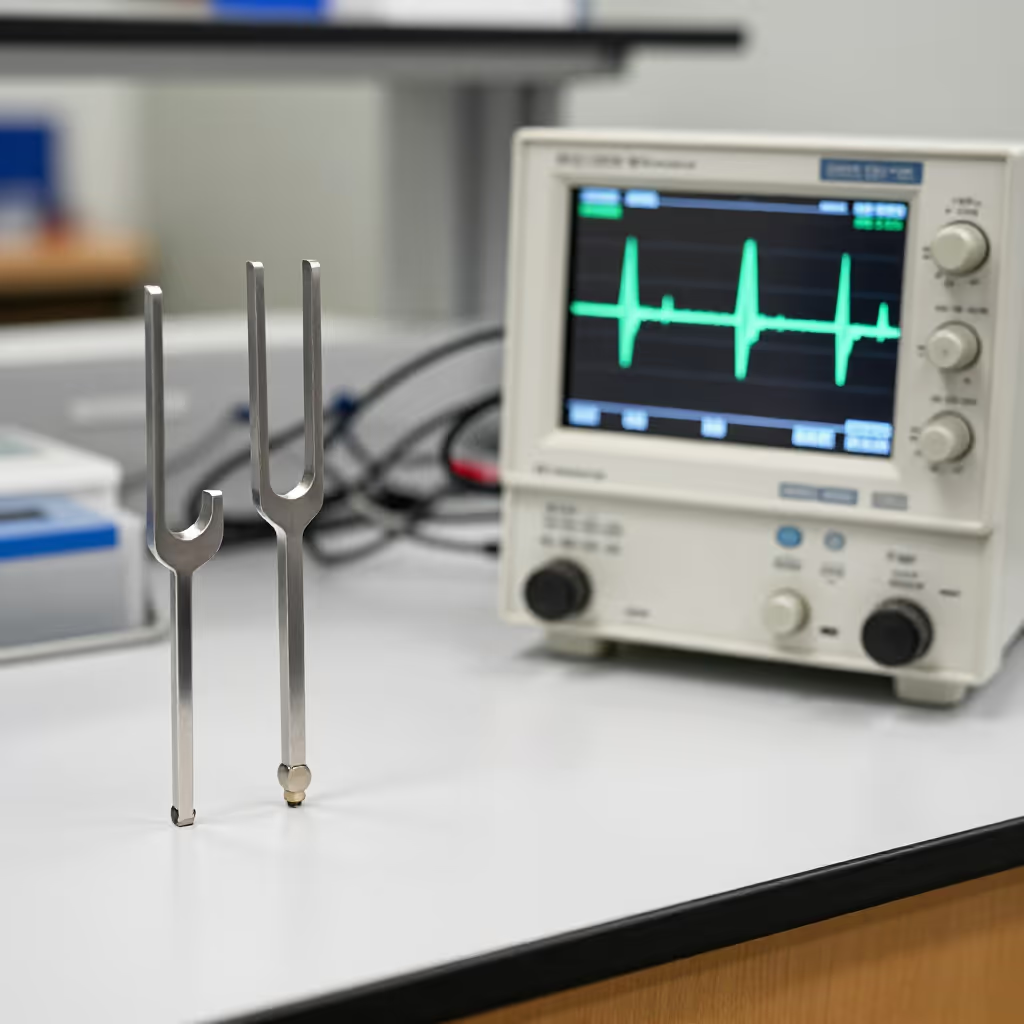
In physics, the periodic change of state of a system around its resting position, as with sound waves or string instruments.
Wenn man die Gitarrensaite zupft, beginnt sie zu schwingen und erzeugt einen Ton.
When you pluck the guitar string, it begins to oscillate and produces a tone.
The verb 'schwingen' (to swing) is closely related to the noun 'der Schwung' (momentum/swing). All meanings of the verb have to do with a sweeping, arcing, or rhythmic movement.
Mit viel Schwung sprang sie über den Graben.
With a lot of momentum, she jumped over the ditch.
Grammar helps distinguish the meanings. 'Sich schwingen' (to swing oneself) is reflexive and means to move onto something. 'Etwas schwingen' (to swing something) is transitive and means to move something. If the subject alone 'schwingt' (swings/oscillates), it oscillates.
Der Affe schwang sich von Ast zu Ast.
The monkey swung itself from branch to branch.
In the meaning 'to move onto something', the verb is always reflexive ('sich schwingen'). It is almost always followed by a preposition that indicates direction, e.g. 'auf' (onto), 'in' (into), 'über' (over), or 'von' (from).
Der Dieb schwang sich über den Zaun und rannte davon.
The thief swung himself over the fence and ran away.
When 'schwingen' (to swing) is used transitively, meaning it has an accusative object, typical objects are things you hold in your hand or move with your body: die Hüften (the hips), eine Keule (a club), einen Tennisschläger (a tennis racket), einen Taktstock (a baton).
Die Tänzerin schwang ihre Hüften im Rhythmus der Musik.
The dancer swung her hips to the rhythm of the music.
The expression '(große) Reden schwingen' (to make grand speeches) is a fixed combination and means to give a long, often somewhat pompous speech. It is frequently used with a slightly ironic or critical undertone.
Der Politiker ist gut darin, große Reden zu schwingen, aber es passiert wenig.
The politician is good at making grand speeches, but little actually happens.
In this meaning, 'schwingen' (to oscillate) is used in a scientific or musical context. It describes the physical movement of waves, strings, or other systems capable of oscillation.
Die Saite der Geige schwingt und erzeugt so den Ton.
The violin string oscillates and thus produces the tone.
to hold
„Eine Rede halten“ is the neutral term for speaking in front of an audience. „Eine Rede schwingen“ also describes giving a speech, but it often makes it sound long, bombastic, or exaggerated and can easily sound slightly mocking.

Die Direktorin schwingt bei der Feier wieder eine ihrer großen Reden über das Jubiläum.
The principal is giving another one of her grand speeches about the anniversary at the celebration.
Die Direktorin hält bei der Feier eine Rede über das Jubiläum.
The principal is giving a speech about the anniversary at the celebration.