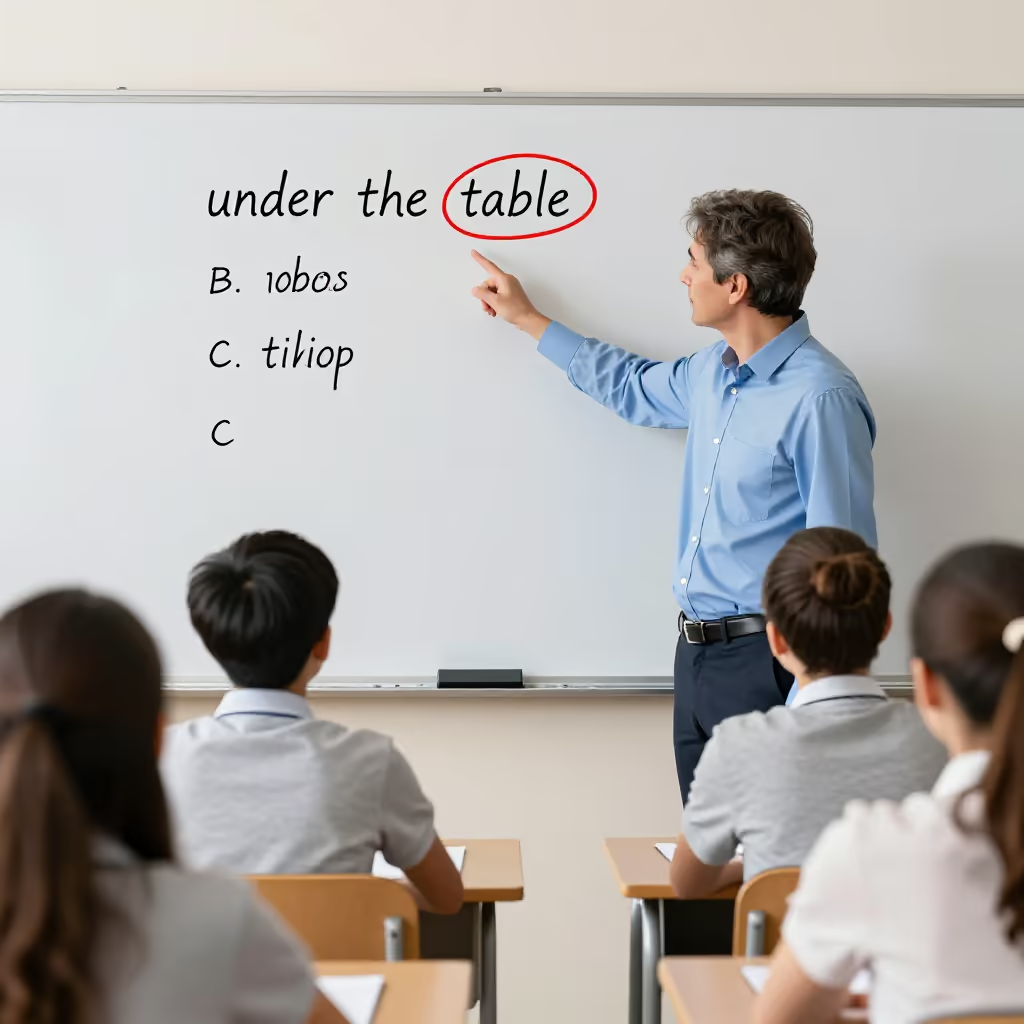
A group of words that forms a grammatical unit but does not make a complete sentence; also a fixed expression.
example
Die Phrase 'von Zeit zu Zeit' bedeutet 'manchmal'.
The phrase 'von Zeit zu Zeit' means 'from time to time' or 'sometimes'.

Usage tips
Context clues
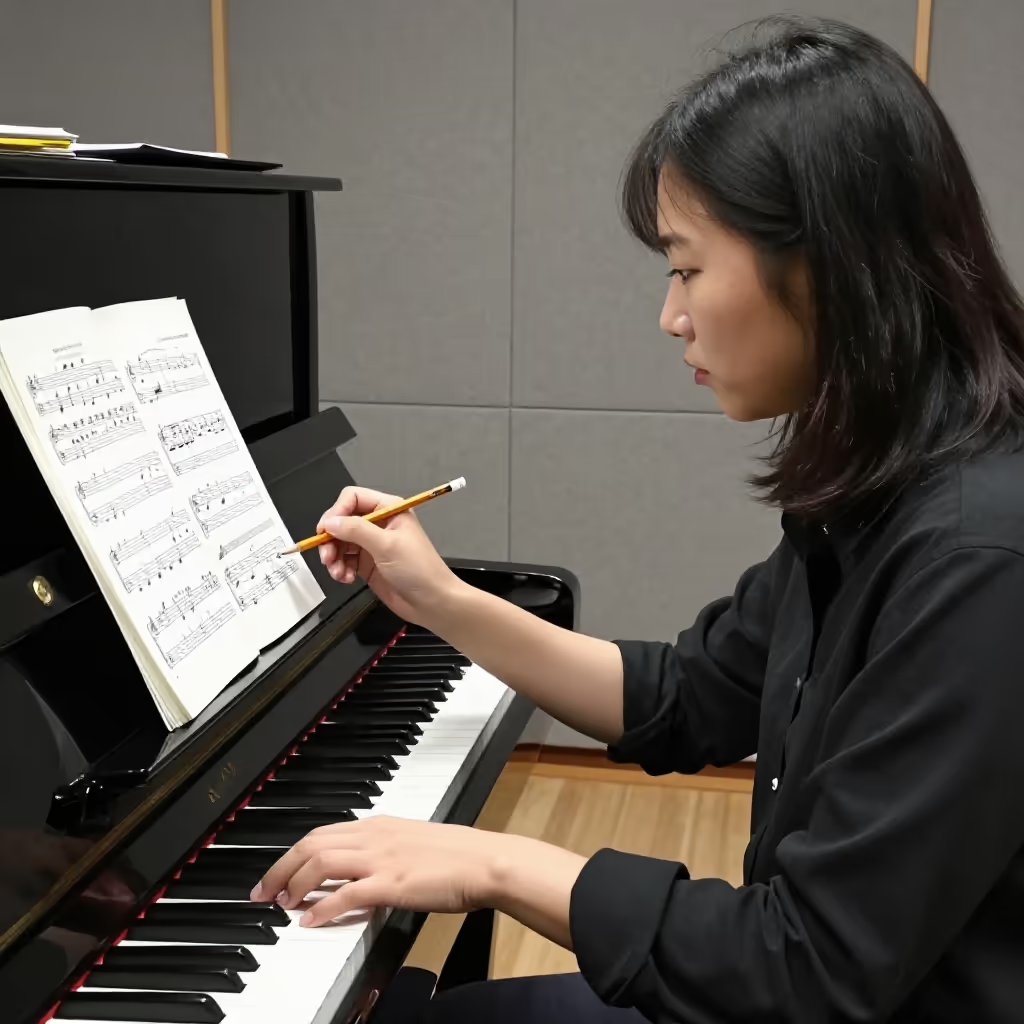
The meaning of 'Phrase' (phrase) depends heavily on the context. In language/grammar, it means a group of words. In everyday language, it often refers to a meaningless expression. In a musical context, it means a short melodic section.
EXAMPLE
Der Satz „der große, rote Ball“ ist eine Nominalphrase.
The expression 'the big red ball' is a noun phrase.
Typical collocations
In the most common everyday meaning, 'Phrase' (phrase/platitude) is often used negatively. Typical combinations are 'leere Phrase' (empty phrase) or 'hohle Phrasen' (hollow phrases). The verb 'dreschen' (to thresh) is used in the expression 'Phrasen dreschen', which means 'to spout empty phrases'.
EXAMPLE
Seine Rede bestand nur aus leeren Phrasen ohne konkrete Vorschläge.
His speech consisted only of empty platitudes without any concrete proposals.
Register: Technical language
The meanings in the linguistic and musical fields are technical terms. They are mainly used by experts in these areas.
EXAMPLE
In der Linguistik unterscheidet man verschiedene Arten von Phrasen.
In linguistics, different types of phrases are distinguished.
Compare with
near_synonym · confusable
Phrase vs Thema
topic / theme
'das Thema' and 'die Phrase' can both describe parts of a melody in music. A 'Thema' is usually the central musical idea of a piece. It often returns and is developed further. A 'Phrase' is more of a short melodic section that forms a small unit on its own. Learners may confuse the words because both can refer to something musical. As a practical rule: when it is about the main idea of the music, 'Thema' fits. When it is about a short section within the melody, 'Phrase' fits better.
Phrase
Die Sängerin wiederholt die letzte Phrase sehr leise.
The singer repeats the last phrase very quietly.
Thema
Im zweiten Teil des Stücks hört man das Thema wieder, aber etwas schneller.
In the second part of the piece, you hear the theme again, but a little faster.