
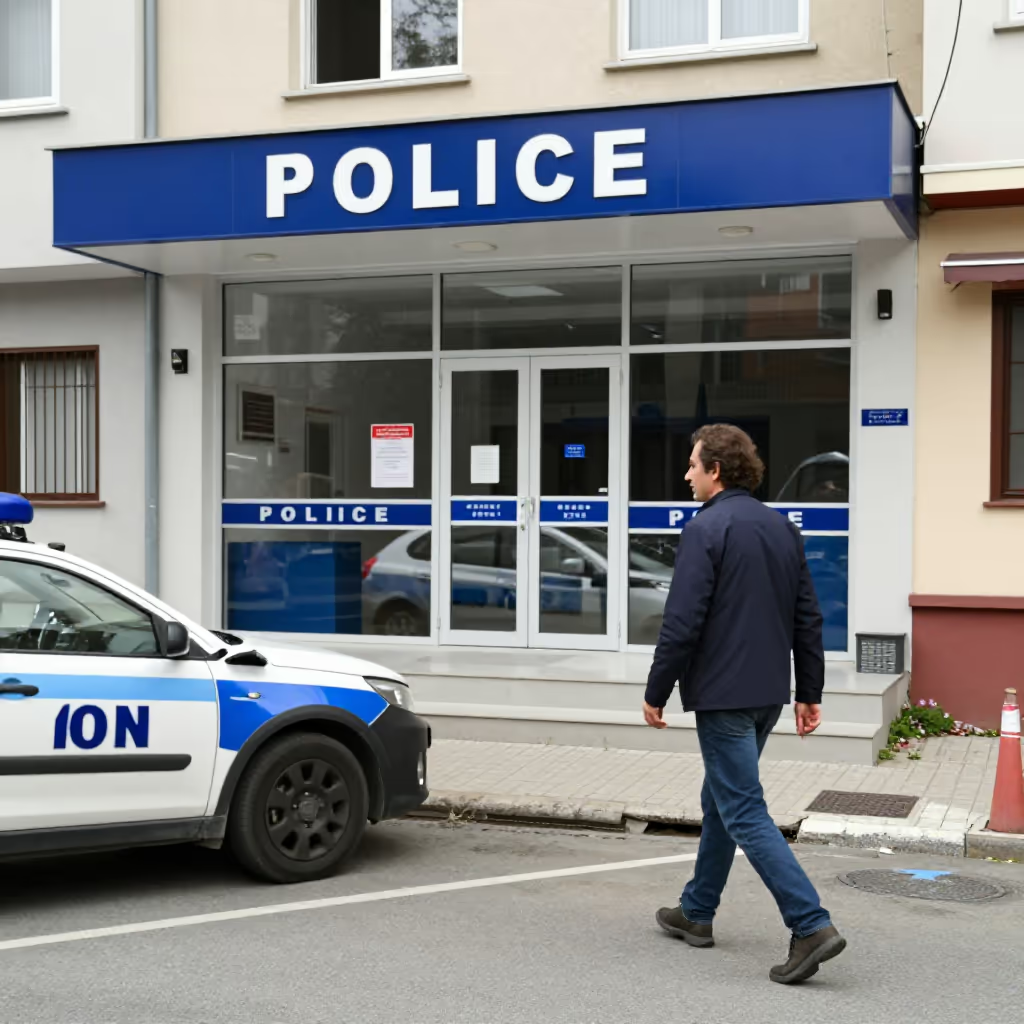
The state institution responsible for maintaining public safety and order, as well as investigating and prosecuting crimes.
example
Nach dem Einbruch haben wir sofort die Polizei gerufen.
After the break-in, we called the police immediately.
Usage tips
Always singular
Although 'die Polizei' refers to a group of people, the word is a singular noun in German. Therefore, a singular verb is always used.
EXAMPLE
Die Polizei ist schon auf dem Weg.
The police are already on their way.
Correct preposition
To express movement, you use 'zur Polizei gehen' (to go to the police / police station). To describe a place or affiliation, you use 'bei der Polizei' (at/with the police).
EXAMPLE
Er musste wegen seines verlorenen Ausweises zur Polizei.
He had to go to the police because of his lost ID.
Typical collocations
Common verbs used with 'Polizei' in the meaning of 'institution' are 'rufen' (to call), 'alarmieren' (to alert), or 'verständigen' (to notify).
EXAMPLE
Die Nachbarn haben wegen des Lärms die Polizei verständigt.
The neighbors notified the police because of the noise.
Compare with
confusable
Polizei vs Polizist
police officer
'die Polizei' and 'der Polizist' belong to the same area, but they do not mean the same thing. 'die Polizei' is the institution, meaning the authority, or sometimes also the police station as a place. 'der Polizist' is an individual male person who works for the police. Learners can easily confuse the words because in many situations you deal with both. If you mean the authority or the emergency call, you say 'die Polizei'. If you mean one individual person, you say 'der Polizist'.
Polizei
Nach dem Unfall ruft der Fahrer die Polizei.
After the accident, the driver calls the police.
Polizist
Im Zug fragt ein Polizist den Mann nach seinem Ausweis.
On the train, a police officer asks the man for his ID.