


die Power
power
Colloquial for energy, strength, force, or performance capacity.
EXAMPLE
Nach einem kurzen Nickerchen hatte er wieder genug Power für den Rest des Tages.
After a short nap, he had enough power again for the rest of the day.
power
Loading your saved state.
power
Colloquial for energy, strength, force, or performance capacity.
Nach einem kurzen Nickerchen hatte er wieder genug Power für den Rest des Tages.
After a short nap, he had enough power again for the rest of the day.
'Power' is a word from English that is very common in German colloquial speech. It is used to express energy or strength, especially in informal conversation.
Mir fehlt heute die Power, um ins Fitnessstudio zu gehen.
I don't have the power today to go to the gym.
The word 'Power' is used almost exclusively in the singular. A plural form is unusual in German and sounds very foreign.
Dieser kleine Motor hat erstaunlich viel Power.
This small engine has an amazing amount of power.
Common phrases with this word are 'Power haben' (to have power/energy), 'keine Power mehr haben' (to have no power/energy left), or 'jemandem Power geben' (to give someone power/energy). It often describes a personal, felt energy.
Ein guter Kaffee am Morgen gibt mir richtig Power.
A good coffee in the morning gives me real power.
strength / force
Kraft and Power can both refer to a person's or machine's ability to do something with great force. Kraft is the neutral term in standard German, while Power sounds colloquial and more dynamic. Kraft is more suitable in factual texts, while Power is also possible in casual conversation.
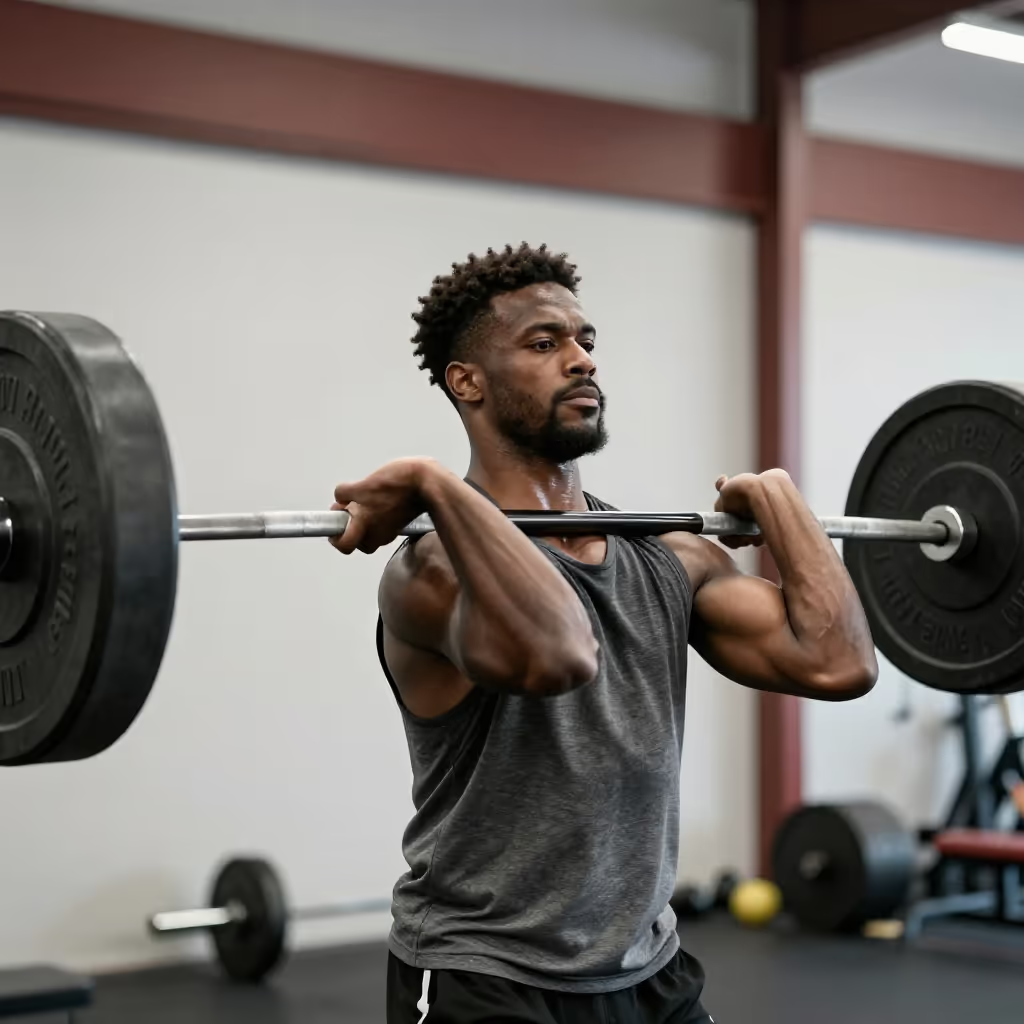
Der Motor hat ordentlich Power, um den Anhänger den Berg hinaufzuziehen.
The engine has plenty of power to pull the trailer up the hill.
Der Motor hat genug Kraft, um den Anhänger den Berg hinaufzuziehen.
The engine has enough power to pull the trailer up the hill.