
die Stärke
strength
A positive quality, a special ability, or an advantage of a person or thing.
Ihre größte Stärke ist ihre Fähigkeit, komplexe Probleme schnell zu lösen.
Her greatest strength is her ability to solve complex problems quickly.
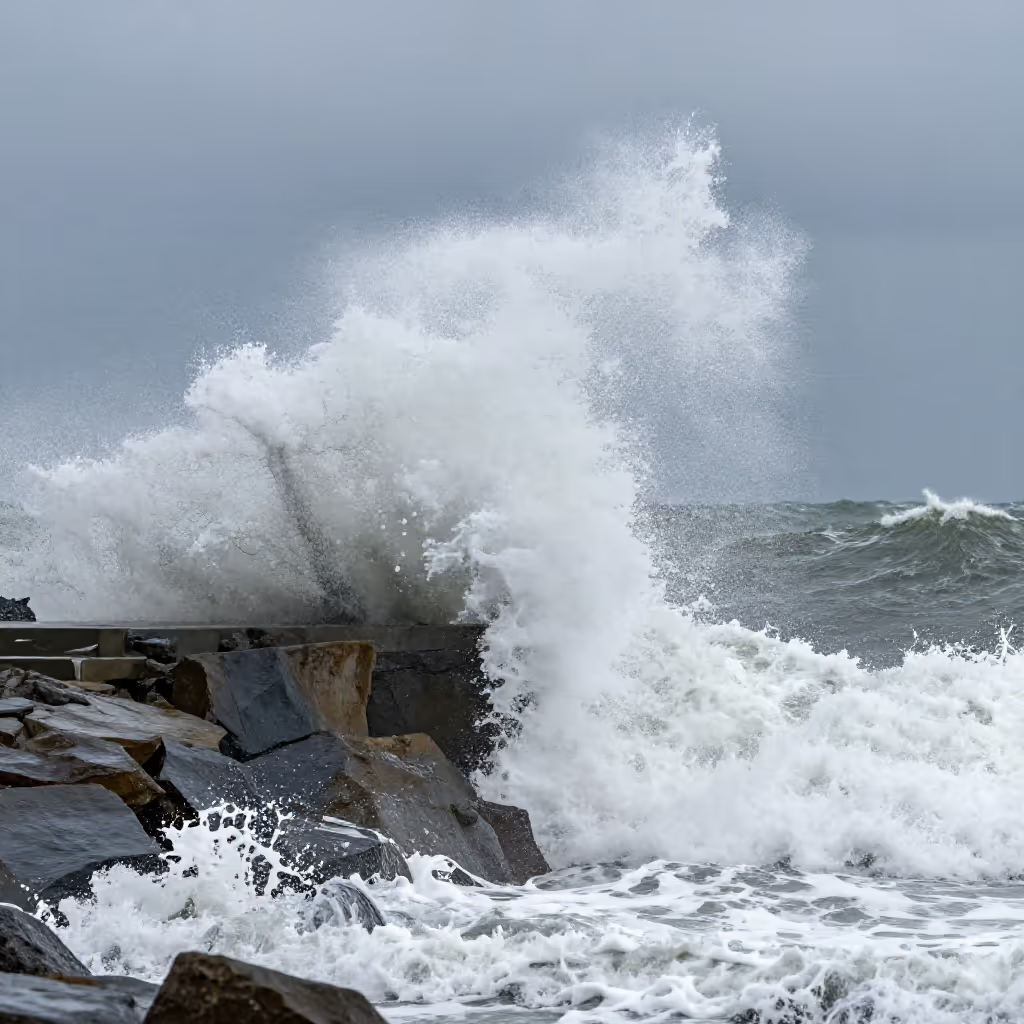
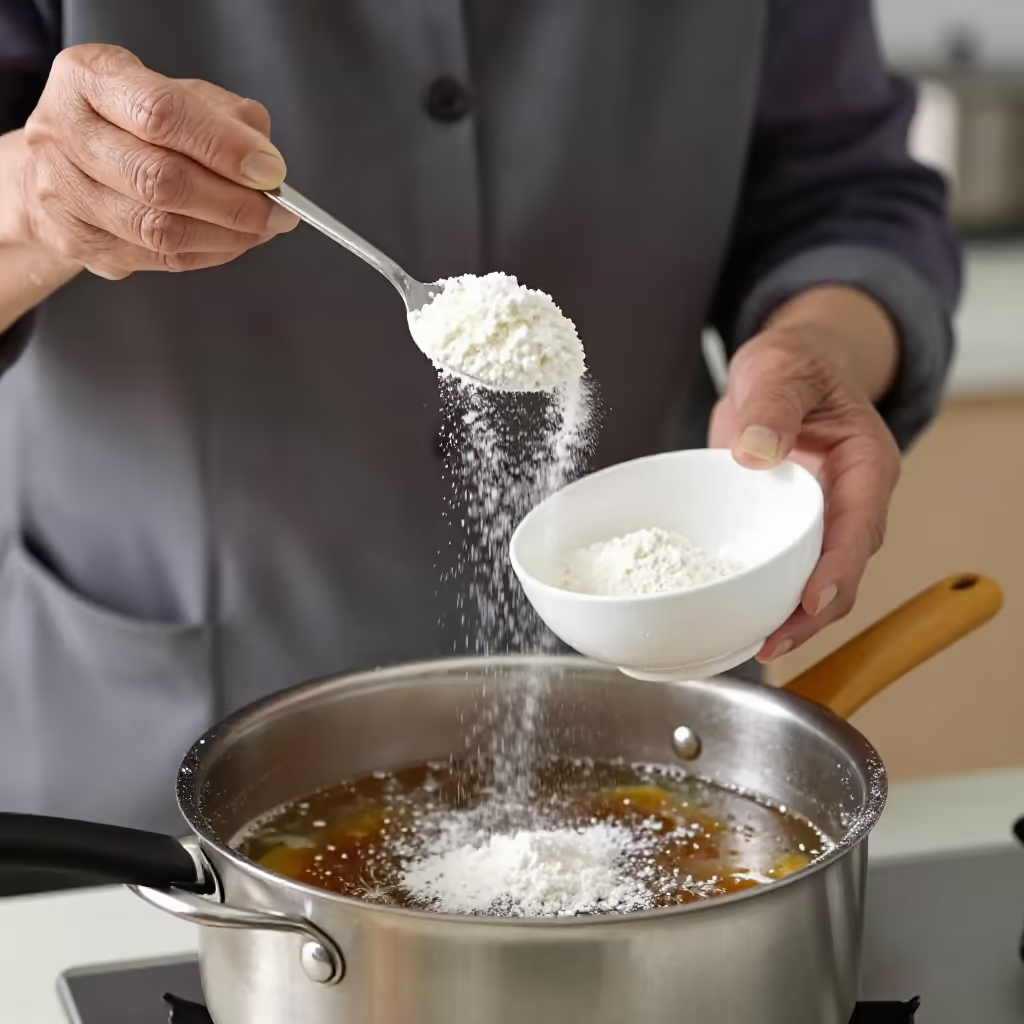
strength / starch
Loading your saved state.
strength
A positive quality, a special ability, or an advantage of a person or thing.
Ihre größte Stärke ist ihre Fähigkeit, komplexe Probleme schnell zu lösen.
Her greatest strength is her ability to solve complex problems quickly.
'Die Stärke' (strength) is the noun from the adjective 'stark' (strong). This conversion from an adjective to a feminine noun is common in German, for example also with 'groß' (big) → 'die Größe' (size) or 'kalt' (cold) → 'die Kälte' (coldness/cold).
Die wahre Stärke eines Teams zeigt sich in schwierigen Situationen.
The true strength of a team shows itself in difficult situations.
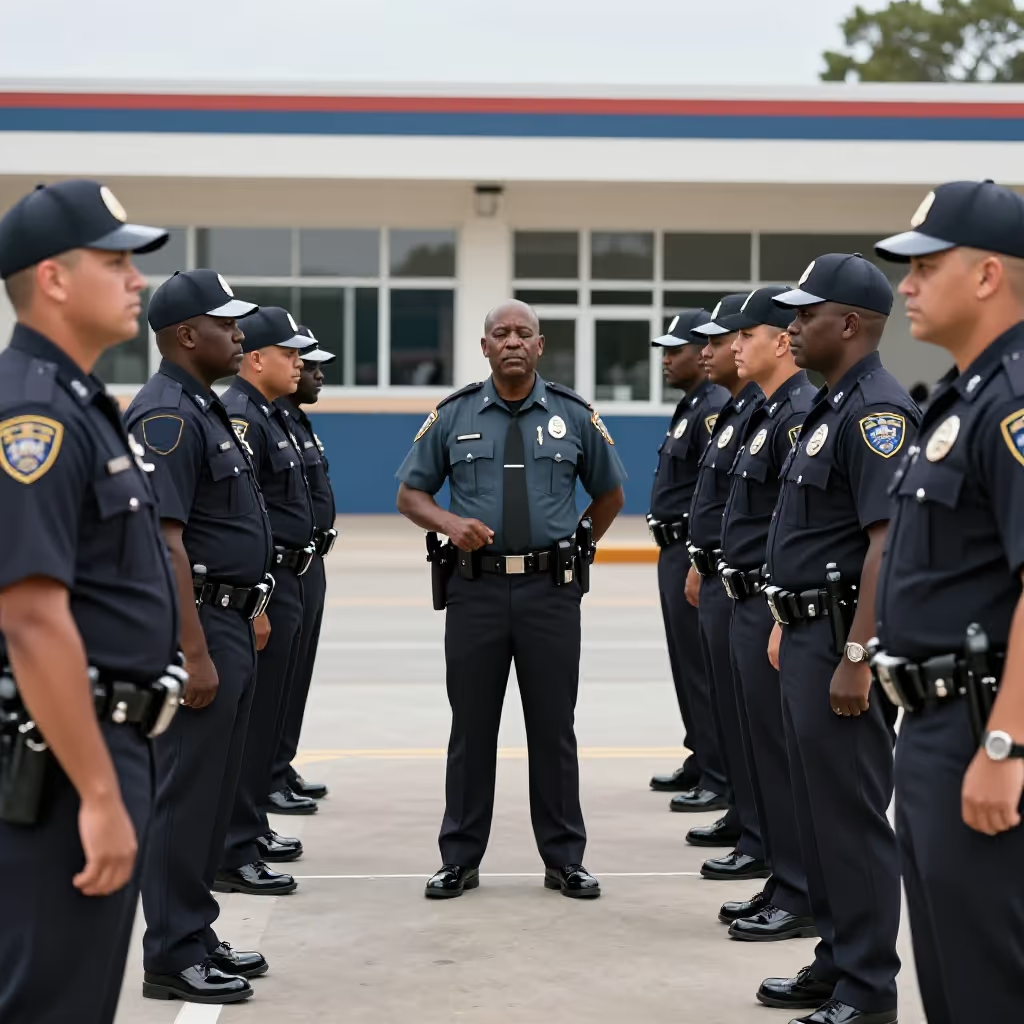
The four meanings of 'Stärke' (strength/starch) are clearly separated by context: personal abilities (m01), physical forces such as wind (m02), an ingredient in cooking (m03), or the number of people in a group (m04).
Die Stärke des Motors war für das schwere Fahrzeug nicht ausreichend.
The strength of the engine was not sufficient for the heavy vehicle.
In connection with personal abilities, 'Stärke' (strength) is often used in the plural and as the opposite of 'Schwächen' (weaknesses). In job interviews, people often ask about your own strengths and weaknesses.
Geduld ist nicht gerade eine meiner Stärken.
Patience is not exactly one of my strengths.
When 'Stärke' (starch) means a cooking ingredient, it is often used with verbs such as 'anrühren' (to mix/stir), 'zugeben' (to add), or 'binden' (to thicken). For example, you thicken a sauce with starch.
Für den Pudding musst du zuerst die Stärke mit etwas kalter Milch anrühren.
For the pudding, you first have to mix the starch with a little cold milk.
The meaning 'number of people' is technical language used mainly in the military or by the police. A fixed expression for this is 'in voller Stärke' (at full strength), which means 'with all available personnel'.
Die Feuerwehr rückte in voller Stärke zum Einsatzort aus.
The fire department went to the scene at full strength.
degree
'der Grad' and 'die Stärke' can both describe how intense something is. 'der Grad' is a general measure of the extent of something, for example 'der Grad der Gefahr' (the degree of danger) or 'der Grad der Veränderung' (the degree of change). 'die Stärke' is used more naturally when talking about force or intensity, for example with wind, pain, light, or noise. The words can be confused because both express an amount or intensity. Remember: 'Grad' often sounds more general and measurement-focused. 'Stärke' sounds more concrete when something is noticeably strong or weak.

Am Wochenende nahm die Stärke des Windes deutlich zu.
Over the weekend, the strength of the wind increased significantly.
Nach dem Unfall prüfte die Ärztin den Grad der Verletzung.
After the accident, the doctor assessed the degree of the injury.