

praktisch
practical
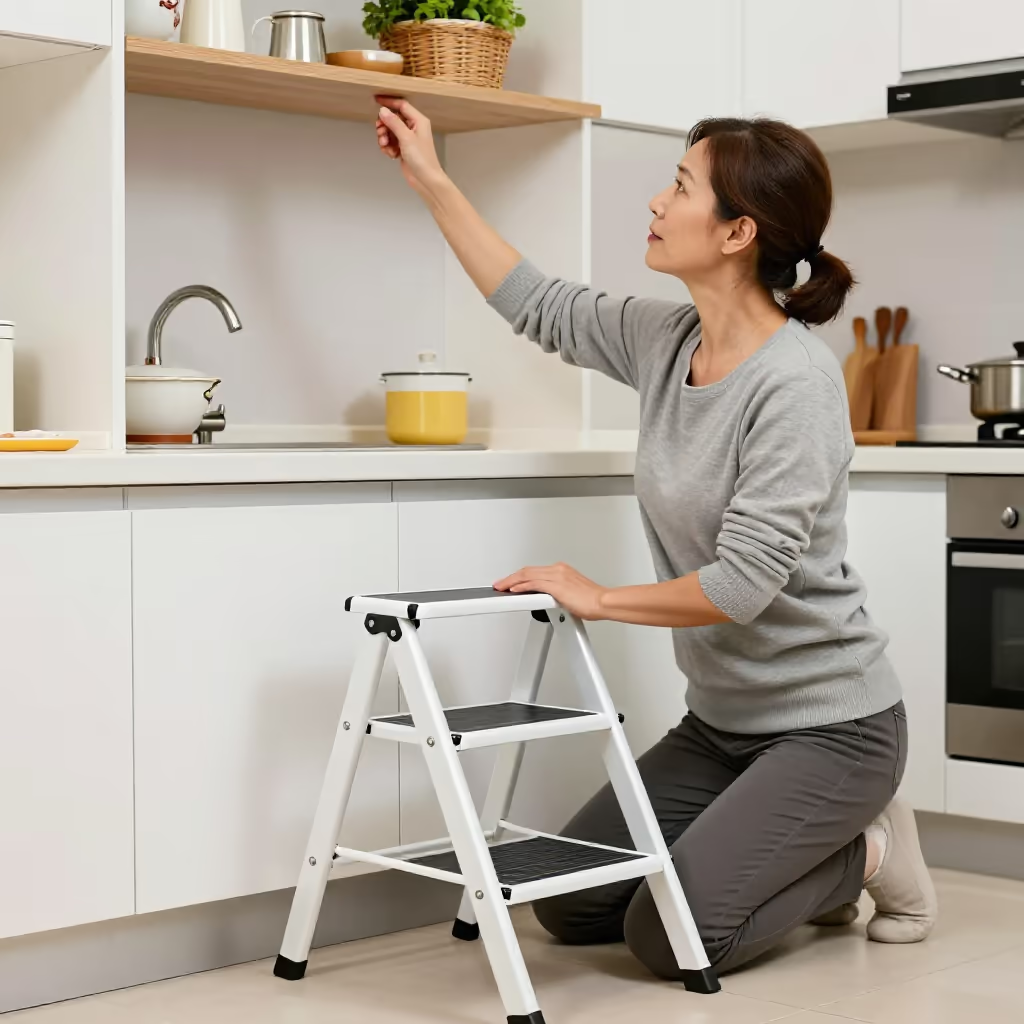
Useful and well suited for a particular purpose; functional.
EXAMPLE
Ein Klapptisch ist sehr praktisch für kleine Wohnungen.
A folding table is very practical for small apartments.
practical / virtually
Loading your saved state.
practical
Useful and well suited for a particular purpose; functional.
Ein Klapptisch ist sehr praktisch für kleine Wohnungen.
A folding table is very practical for small apartments.

virtually
Nearly, almost; as good as. Used colloquially as an adverb.
Das Projekt ist praktisch fertig, es fehlen nur noch Kleinigkeiten.
The project is virtually finished; only a few small things are still missing.
practical
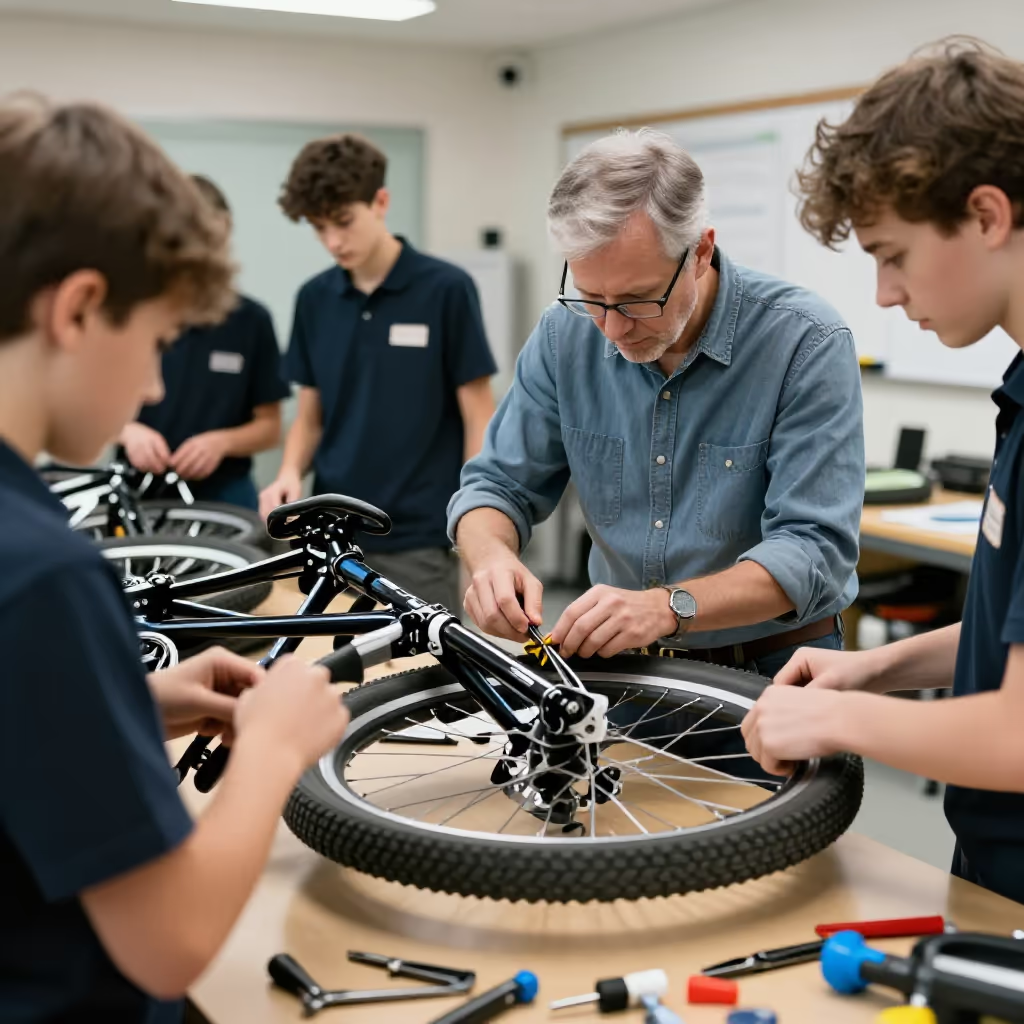
Related to practice or application, as opposed to theory.
Sie hat viel praktische Erfahrung in ihrem Beruf gesammelt.
She has gained a lot of practical experience in her profession.
The adjective 'praktisch' (practical) is closely related to the noun 'die Praxis' (practice). Something is 'praktisch' (practical) if it relates to application in reality or is useful for everyday use.
In der Theorie klingt das gut, aber ist es auch praktisch umsetzbar?
In theory that sounds good, but is it also practically feasible?
When 'praktisch' (virtually) does not describe a noun, but stands before another word (adjective, verb, noun), it means 'almost' or 'nearly'. So its position in the sentence changes the meaning completely.
Ich bin praktisch fertig, ich brauche nur noch fünf Minuten.
I'm virtually finished; I just need five more minutes.
The meaning 'almost' or 'nearly' is especially common in colloquial speech. In formal or written texts, this use is less common.
Wir haben praktisch kein Geld mehr für diesen Monat.
We have virtually no money left for this month.
In the meaning 'related to practice', 'praktisch' (practical) is often connected with knowledge and learning. Typical combinations are 'praktische Erfahrung' (practical experience), 'eine praktische Prüfung' (a practical exam), or 'praktische Fähigkeiten' (practical skills).
Für diesen Job ist praktische Erfahrung wichtiger als ein guter Studienabschluss.
For this job, practical experience is more important than a good university degree.
almost
“Praktisch” means “so gut wie” (virtually) in colloquial usage and assesses a situation based on the actual circumstances. “Nahezu” neutrally expresses that a measurable state or quantity has almost been reached. “Praktisch” fits a practical assessment, while “nahezu” is more appropriate for a precise approximation.
Ohne Einladung ist der Zugang zur Veranstaltung praktisch unmöglich.
Without an invitation, access to the event is virtually impossible.
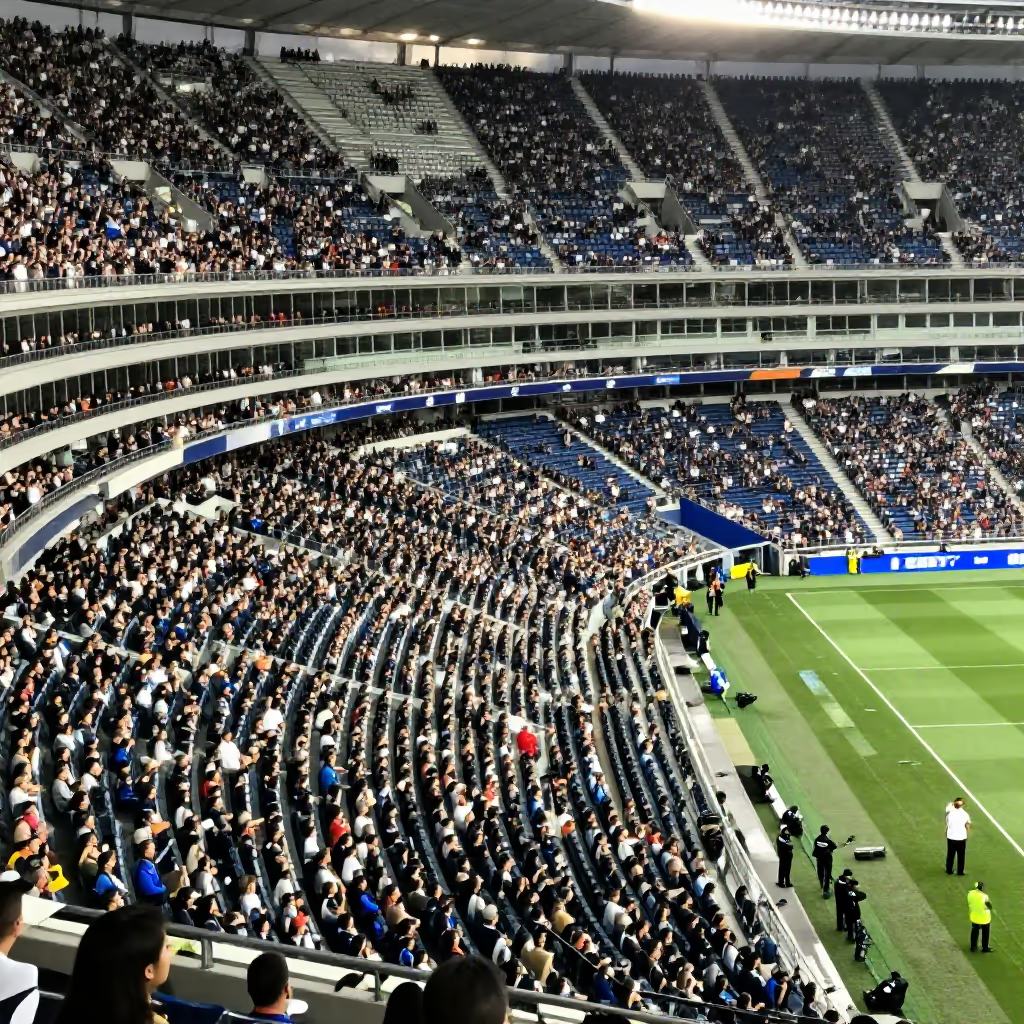
Kurz vor Beginn ist der Saal für die Veranstaltung nahezu voll.
Just before it begins, the event hall is almost full.