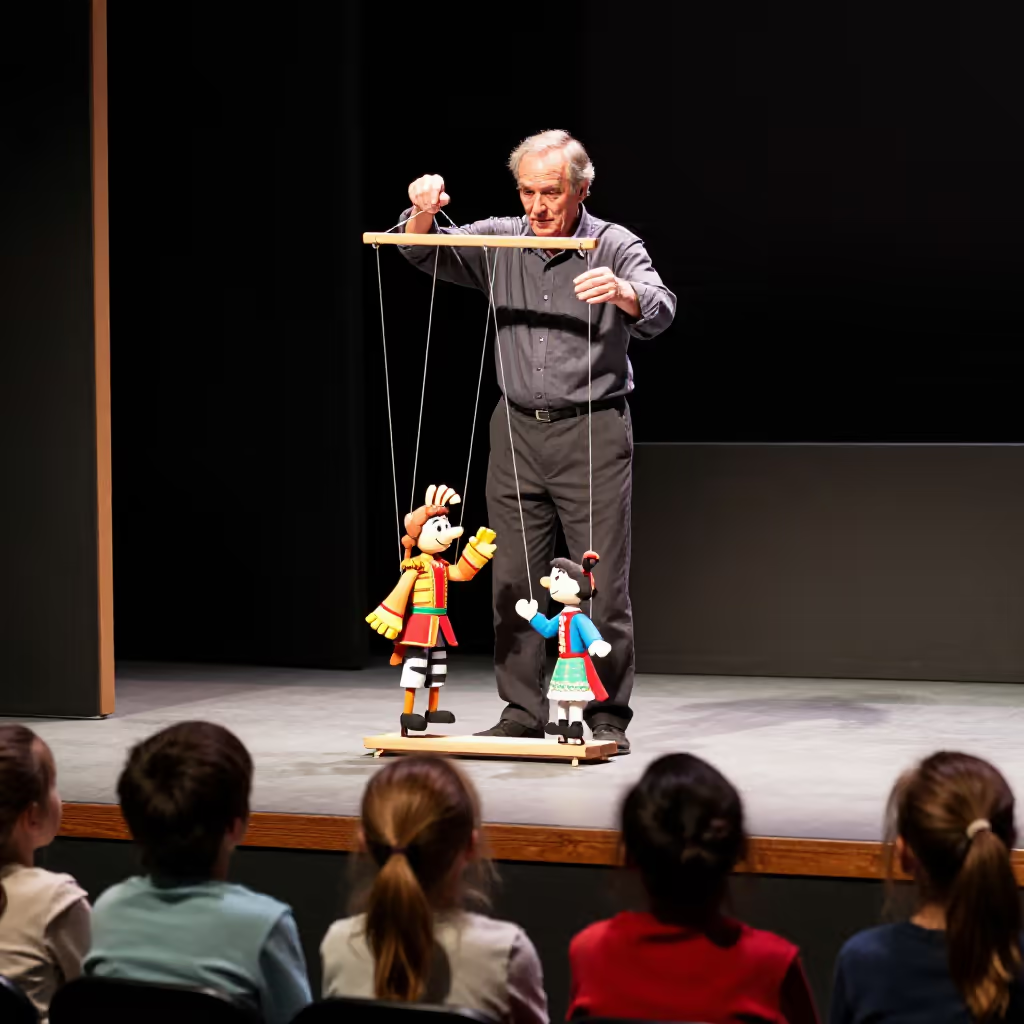
A person who, professionally or as a hobby, moves puppets (e.g. hand puppets, marionettes) in a puppet theater and gives them a voice.
example
Der talentierte Puppenspieler faszinierte die Kinder mit seiner Vorstellung.
The talented puppeteer fascinated the children with his performance.

Usage tips
Word composition
The word is made up of 'die Puppe' (the doll/puppet) and 'der Spieler' (the player). So it literally describes a person who plays with puppets or moves them professionally.
EXAMPLE
Als Kind wollte er unbedingt Puppenspieler werden.
As a child, he really wanted to become a puppeteer.
Context clue
You can recognize the figurative meaning from the context of power, control, and manipulation, often with expressions like 'hinter den Kulissen' (behind the scenes). The literal meaning appears in the context of theater, art, and entertainment for children.
EXAMPLE
Der Puppenspieler trat auf einem Kindergeburtstag auf.
The puppeteer performed at a children's birthday party.
Typical collocations
In the literal meaning, 'Puppenspieler' (puppeteer) is often combined with the type of puppets (e.g. 'Marionetten' (marionettes), 'Handpuppen' (hand puppets)) or the place where the person works ('Puppentheater' (puppet theater)).
EXAMPLE
Der Puppenspieler ließ die Marionette elegant über die Bühne tanzen.
The puppeteer made the marionette dance elegantly across the stage.
Typical expression
The figurative meaning is closely connected with the idiom 'die Fäden ziehen' (to pull the strings). A 'Puppenspieler' (puppet master) is therefore someone who pulls the strings in the background.
EXAMPLE
Niemand weiß genau, wer in diesem Skandal wirklich die Fäden zieht, aber es gibt einen Puppenspieler.
No one knows exactly who is really pulling the strings in this scandal, but there is a puppet master.
Compare with
near_synonym · confusable
Puppenspieler vs Drahtzieher
mastermind
'der Drahtzieher' and 'der Puppenspieler' can both figuratively refer to a person who controls others from behind the scenes. In this use, both words sound negative. 'Drahtzieher' is used especially for secret plans, intrigues, or criminal actions. 'Puppenspieler' is more figurative: the others seem like puppets being controlled by someone. Important: 'Puppenspieler' can also literally mean a person in a puppet theater. In this relationship, however, the figurative meaning is meant. If you mean a secretive, manipulative person, both are possible; 'Drahtzieher' often sounds more concrete when referring to a plan or an action.
Puppenspieler
Viele glaubten, der Chef sei nur ein Puppenspieler im Hintergrund.
Many believed the boss was just a puppet master in the background.
Drahtzieher
Hinter der falschen Nachricht stand offenbar ein politischer Drahtzieher.
There was apparently a political mastermind behind the false report.