

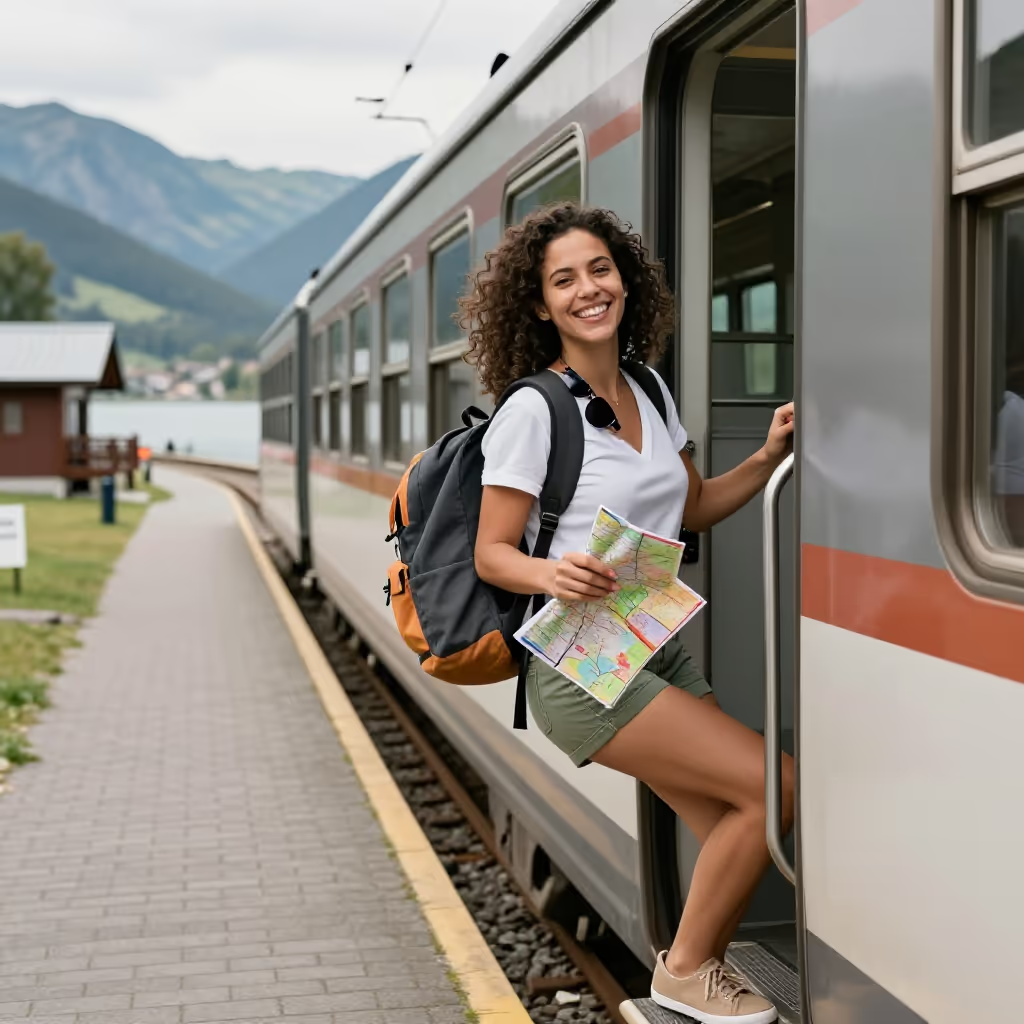
der Trip
trip
A short journey or outing, often for pleasure.
EXAMPLE
Am Wochenende planen wir einen Trip nach Hamburg.
We're planning a trip to Hamburg for the weekend.
trip
Loading your saved state.
trip
A short journey or outing, often for pleasure.
Am Wochenende planen wir einen Trip nach Hamburg.
We're planning a trip to Hamburg for the weekend.

trip
An intoxicated state caused by the use of hallucinogenic drugs, with altered perception.
Nach dem Konsum der Pilze hatte er einen schlechten Trip.
After taking the mushrooms, he had a bad trip.
'Trip' is a colloquial word borrowed from English. It is used mainly in spoken language and informal contexts.
Was für einen coolen Trip habt ihr da gemacht?
What a cool trip you took!
When 'Trip' (trip) means a journey, it often appears with verbs like 'machen' (to take/do) or 'planen' (to plan) and place information. Common combinations are 'Wochenendtrip' (weekend trip) or 'Städtetrip' (city trip).
Wir machen einen Trip an die Ostsee.
We're taking a trip to the Baltic Sea.
In the meaning 'Drogenrausch' (drug high), 'Trip' (trip) is often used with verbs like 'haben' (to have) or 'sein auf' (to be on). Adjectives like 'gut' (good), 'schlecht' (bad), or 'schlimm' (awful) describe the experience.
Er war auf einem schlechten Trip und hatte Halluzinationen.
He was on a bad trip and had hallucinations.
journey / trip
Reise and Trip can both refer to the same short undertaking. Reise is the neutral term and is not tied to a particular duration. Trip sounds more colloquial and often refers to a short, fairly informal journey, usually for pleasure.
Im Gespräch mit Freunden erzählt Lea von ihrem kurzen Trip nach Wien.
In a conversation with friends, Lea talks about her short trip to Vienna.
In ihrem formellen Bericht beschreibt Lea ihre kurze Reise nach Wien.
In her formal report, Lea describes her short trip to Vienna.