


reisen
to travel
To move over a longer distance from one place to another, often for pleasure, for business reasons, or to discover something.
Nächstes Jahr wollen wir durch Südostasien reisen.
Next year we want to travel through Southeast Asia.

to travel
Loading your saved state.

to travel
To move over a longer distance from one place to another, often for pleasure, for business reasons, or to discover something.
Nächstes Jahr wollen wir durch Südostasien reisen.
Next year we want to travel through Southeast Asia.

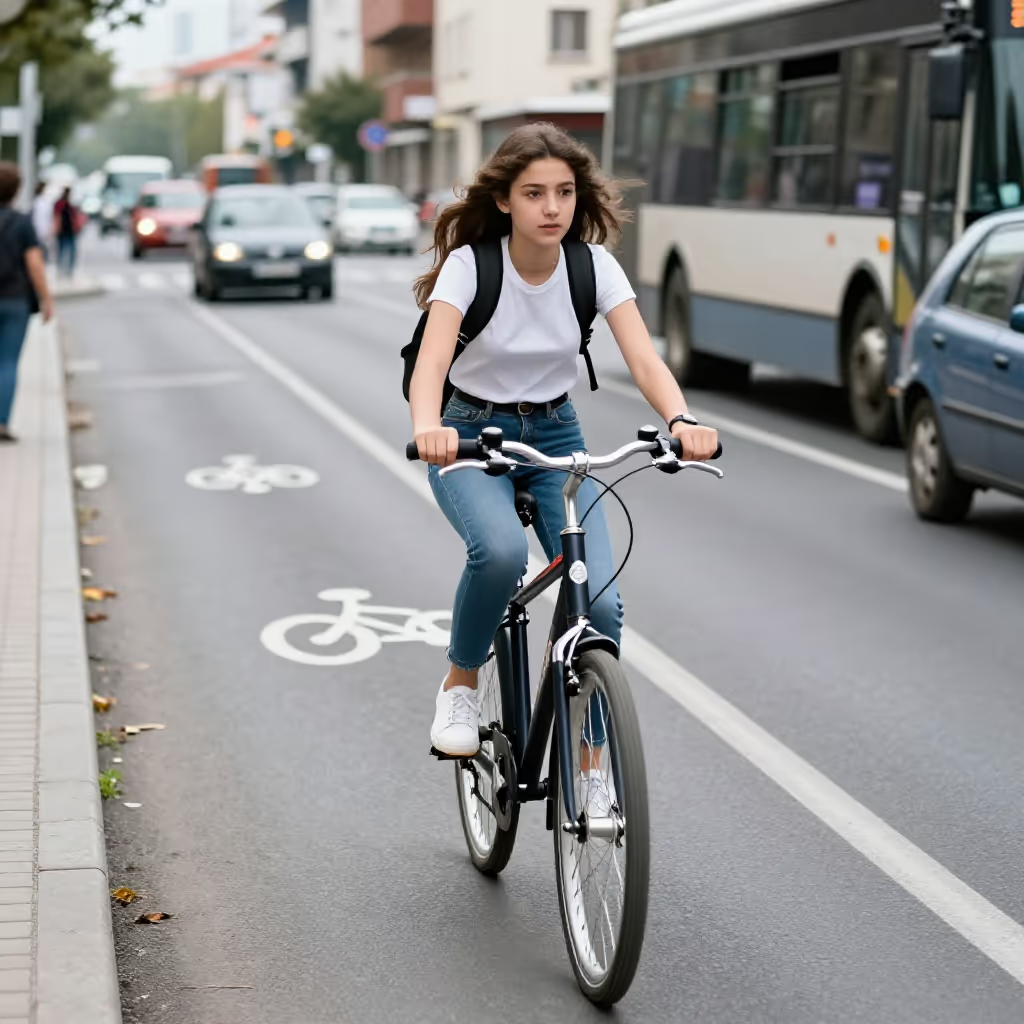
to travel
In a figurative sense, a mental or thematic movement through a time, a topic, or a fantasy world.
Mit diesem Roman können die Leser in die Welt des Mittelalters reisen.
With this novel, readers can travel into the world of the Middle Ages.
'Reisen' (to travel) is a verb of movement and always forms the perfect tense with the auxiliary verb 'sein' (to be). So it is 'ich bin gereist' (I traveled / have traveled), not 'ich habe gereist'.
Letzten Sommer sind wir nach Italien gereist.
Last summer we traveled to Italy.
The verb 'reisen' (to travel) belongs to the word family around 'die Reise' (the trip/journey). If you know one word, you can understand and use the other more easily.
Unsere Reise durch die Berge war unvergesslich.
Our trip through the mountains was unforgettable.
The preposition after 'reisen' (to travel) depends on the destination. You travel 'nach' cities and most countries, 'in' countries with an article (e.g., in die Schweiz), and 'durch' regions or areas.
Nächstes Jahr reise ich nach Spanien.
Next year I am traveling to Spain.
'Reisen' (to travel) is often combined with adverbs that describe the purpose or type of trip. Common examples are 'geschäftlich reisen' (to travel for business), 'privat reisen' (to travel privately), 'allein reisen' (to travel alone), or 'mit der Familie reisen' (to travel with the family).
Mein Chef reist sehr oft geschäftlich.
My boss travels for business very often.
to drive / ride
Fahren and reisen can both describe traveling a longer distance to a destination. Fahren emphasizes traveling by vehicle and is often understood that way even when no means of transport is mentioned. Reisen focuses more on the trip as a whole, including its purpose and the stay at the destination.

Wir reisen morgen für eine Woche nach Wien.
We’re traveling to Vienna tomorrow for a week.
Wir fahren morgen mit dem Zug nach Wien und bleiben dort eine Woche.
We’re taking the train to Vienna tomorrow and staying there for a week.