


sichern
to secure
To protect something from danger, loss, or damage; to make something safe.
EXAMPLE
Die Feuerwehrleute sicherten das einsturzgefährdete Gebäude.
The firefighters secured the building that was at risk of collapse.
to secure / save
Loading your saved state.
to secure
To protect something from danger, loss, or damage; to make something safe.
Die Feuerwehrleute sicherten das einsturzgefährdete Gebäude.
The firefighters secured the building that was at risk of collapse.

to save
To save data on a computer or another electronic device in order to protect it from loss.
Vergiss nicht, dein Dokument zu sichern, bevor du das Programm schließt.
Don't forget to save your document before you close the program.
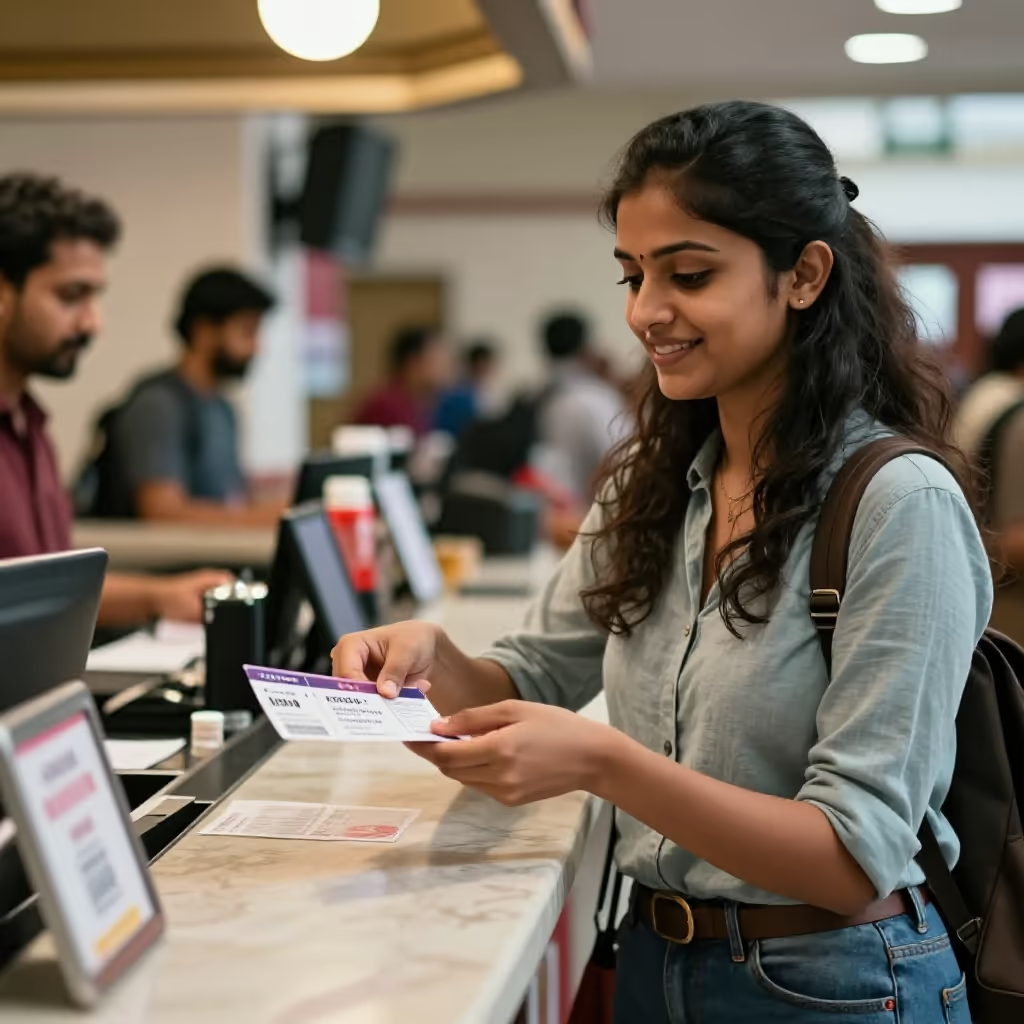
to secure for oneself
To obtain or guarantee something for oneself through effort or forward planning.
Sie hat sich mit dem frühen Kauf noch ein günstiges Ticket gesichert.
By buying early, she secured herself a cheap ticket.

to collect / secure
To collect and preserve evidence or traces at a crime scene for further investigation.
Die Polizei konnte am Tatort Fingerabdrücke sichern.
The police were able to secure fingerprints at the crime scene.
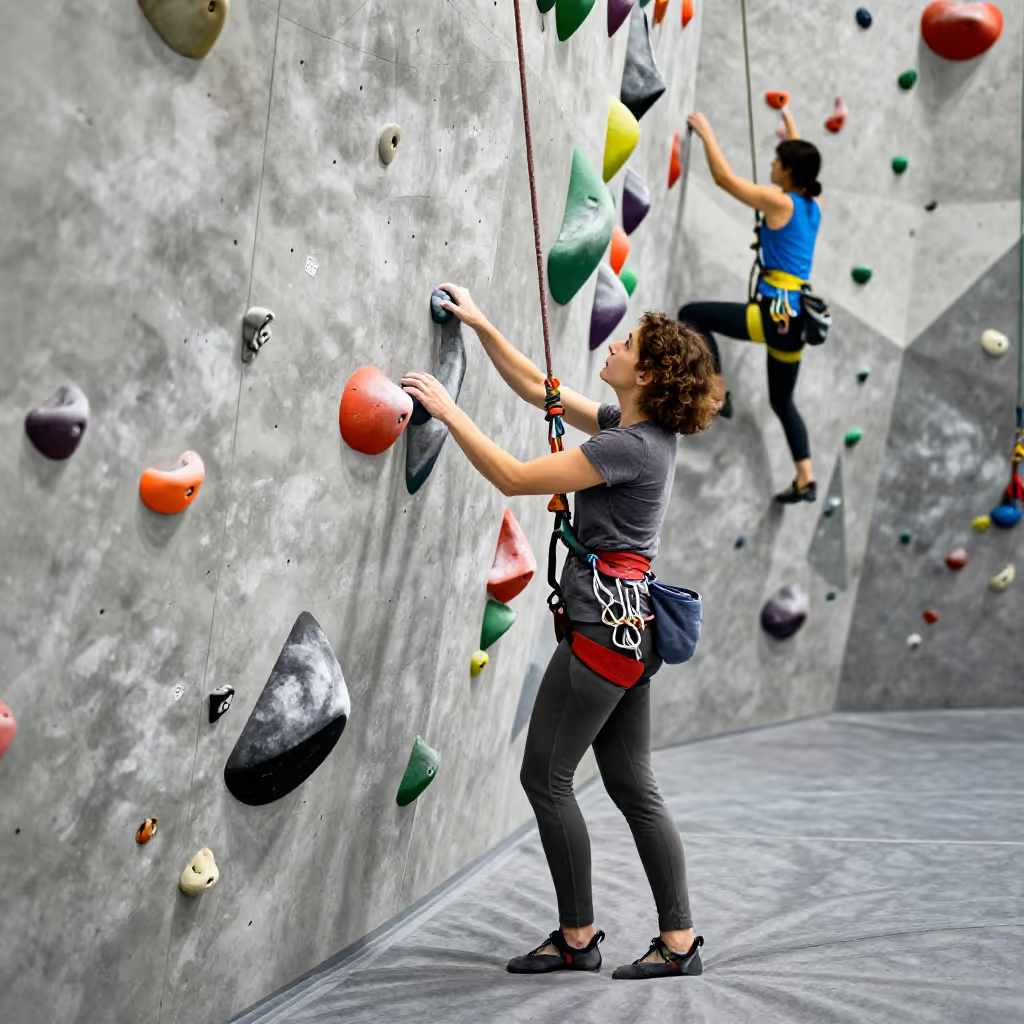
to belay
In climbing, to protect a person from falling using a rope and special equipment.
Erfahrene Kletterer wissen, wie man den Partner richtig sichert.
Experienced climbers know how to belay their partner correctly.
The verb 'sichern' (to secure) is derived directly from the adjective 'sicher' (safe/sure). So the act of 'Sichern' (securing) always has the goal of bringing something into a safe state.
Bist du sicher, dass du die Tür abgeschlossen hast?
Are you sure you locked the door?
If you want to express what something is being protected from, you use the prepositions 'vor' (from) or 'gegen' (against). The preposition is always followed by the dative with 'vor' and the accusative with 'gegen'.
Man sollte sein Haus vor Einbrüchen sichern.
You should secure your house against break-ins.
In the meaning 'sich etwas verschaffen' (to obtain something for oneself), 'sichern' is used reflexively with a dative pronoun and an accusative object. The structure is: subject + sichert + sich (dative) + etwas (accusative).
Die Mannschaft sicherte sich den Sieg in letzter Minute.
The team secured the victory in the last minute.
In connection with computers, programs, and data, 'sichern' almost always means 'speichern' (to save). Watch for words like 'Datei' (file), 'Dokument' (document), or 'Festplatte' (hard drive).
Ich muss meine Fotos schnell auf einer externen Festplatte sichern.
I need to quickly save my photos on an external hard drive.
In a police or criminological context, 'sichern' means collecting and preserving traces or evidence. Typical words in this context are 'Tatort' (crime scene), 'Spuren' (traces), and 'Beweismittel' (evidence).
Die Ermittler konnten am Tatort wichtige Spuren sichern.
The investigators were able to secure important traces at the crime scene.
In a sports context, especially in climbing or mountaineering, 'sichern' has the specific meaning of protecting another person from falling with a rope.
Beim Klettern ist es lebenswichtig, den Partner korrekt zu sichern.
When climbing, it is vital to belay your partner correctly.
to protect
Schützen and sichern can both mean keeping something safe from theft, danger, or damage. „Sichern“ emphasizes the concrete measures used to make something safe, while „schützen“ describes the protective effect more generally. Use „sichern“ for the measure and „schützen“ for its purpose.
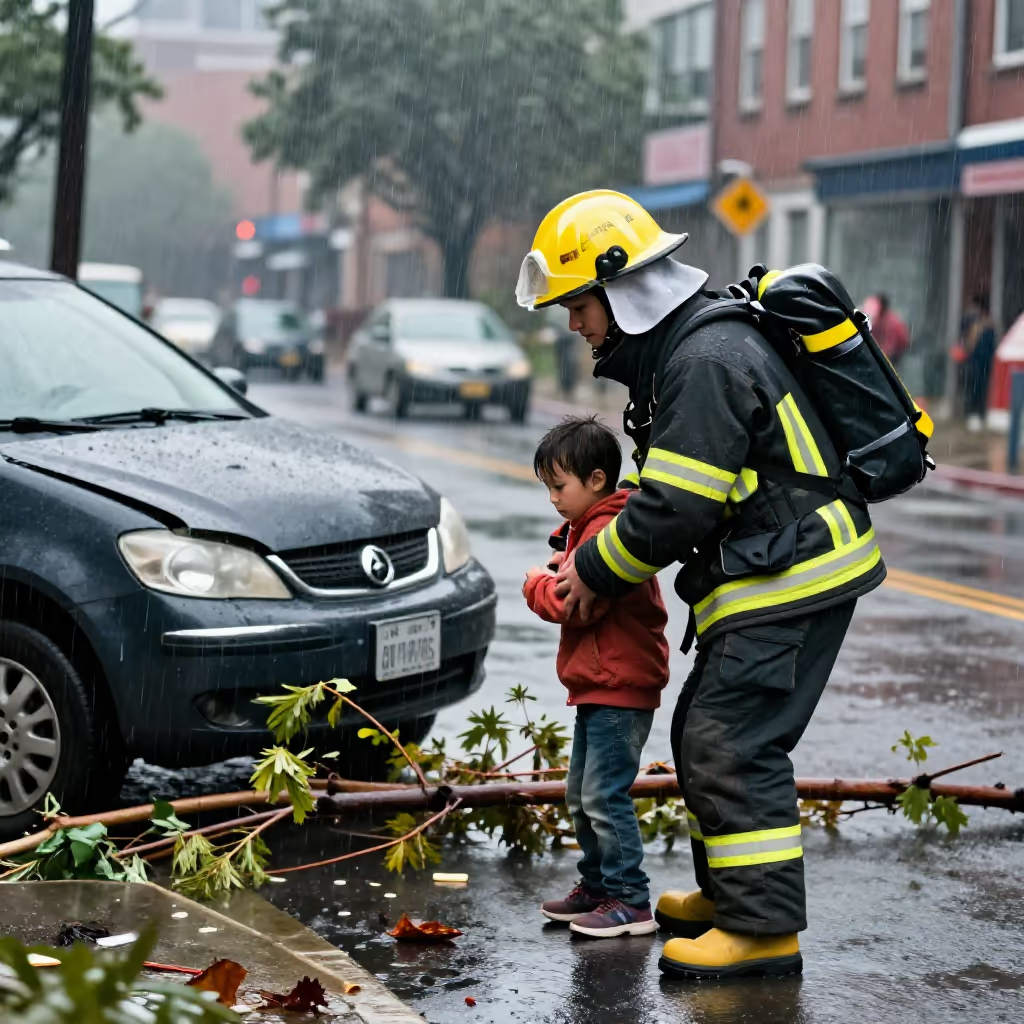
Die Familie sichert das Haus mit einer Alarmanlage gegen Einbrecher.
The family secures the house against burglars with an alarm system.
Die Alarmanlage schützt das Haus vor Einbrechern.
The alarm system protects the house from burglars.