

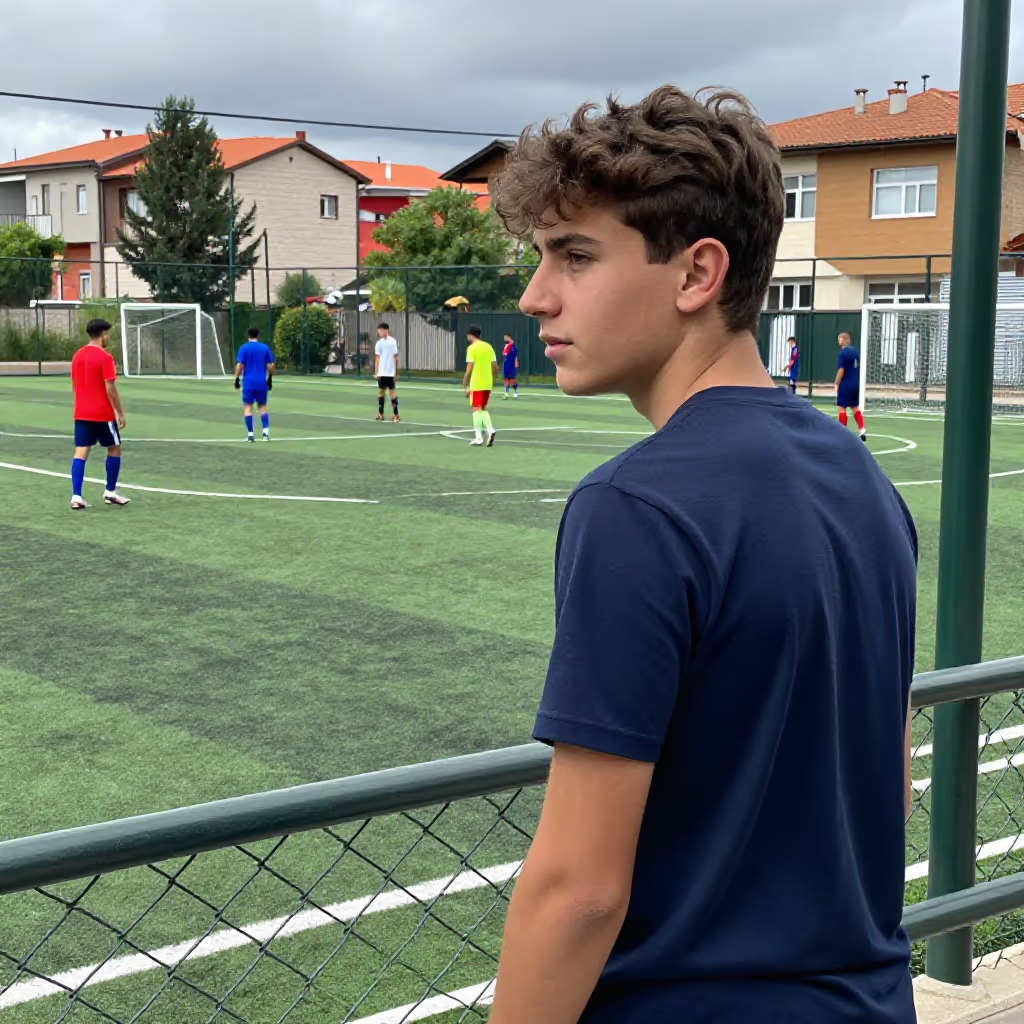
zuschauen
to watch
To follow an event with your eyes without taking part in it yourself; to observe something.
EXAMPLE
Vom Ufer aus schauten wir den Segelbooten auf dem See zu.
From the shore, we watched the sailboats on the lake.
to watch
Loading your saved state.
to watch
To follow an event with your eyes without taking part in it yourself; to observe something.
Vom Ufer aus schauten wir den Segelbooten auf dem See zu.
From the shore, we watched the sailboats on the lake.

to stand by
To remain inactive and do nothing while something, usually something negative, is happening.
Wir können nicht einfach nur zuschauen, wie die Situation immer schlimmer wird.
We can't just stand by and watch as the situation gets worse and worse.
'Zuschauen' (to watch) is a separable verb. The prefix 'zu' comes at the end in a main clause, while in a subordinate clause it remains attached to the verb. In the infinitive with 'zu', 'zu' is placed between the prefix and the verb.
Ich schaue dir gern bei der Arbeit zu.
I'm happy to watch you while you work.
The person or thing being watched is often in the dative. If you want to emphasize the activity, you use the preposition 'bei' followed by the dative.
Kann ich Ihnen beim Kochen zuschauen?
May I watch you while you cook?
The negative meaning 'untätig bleiben' (to remain inactive) is often signaled by words like 'einfach nur' (just), 'tatenlos' (idly), or by a negation with modal verbs such as 'können nicht' (cannot) or 'dürfen nicht' (must not).
Man kann nicht tatenlos zuschauen, wenn jemand Hilfe braucht.
You can't stand by idly when someone needs help.
to look / watch
Schauen can refer to a game or another extended activity as an event being watched. Zuschauen places more emphasis on observing other people’s ongoing actions without taking part oneself. With zuschauen, you therefore often mention the people acting or the activity you are observing them doing.
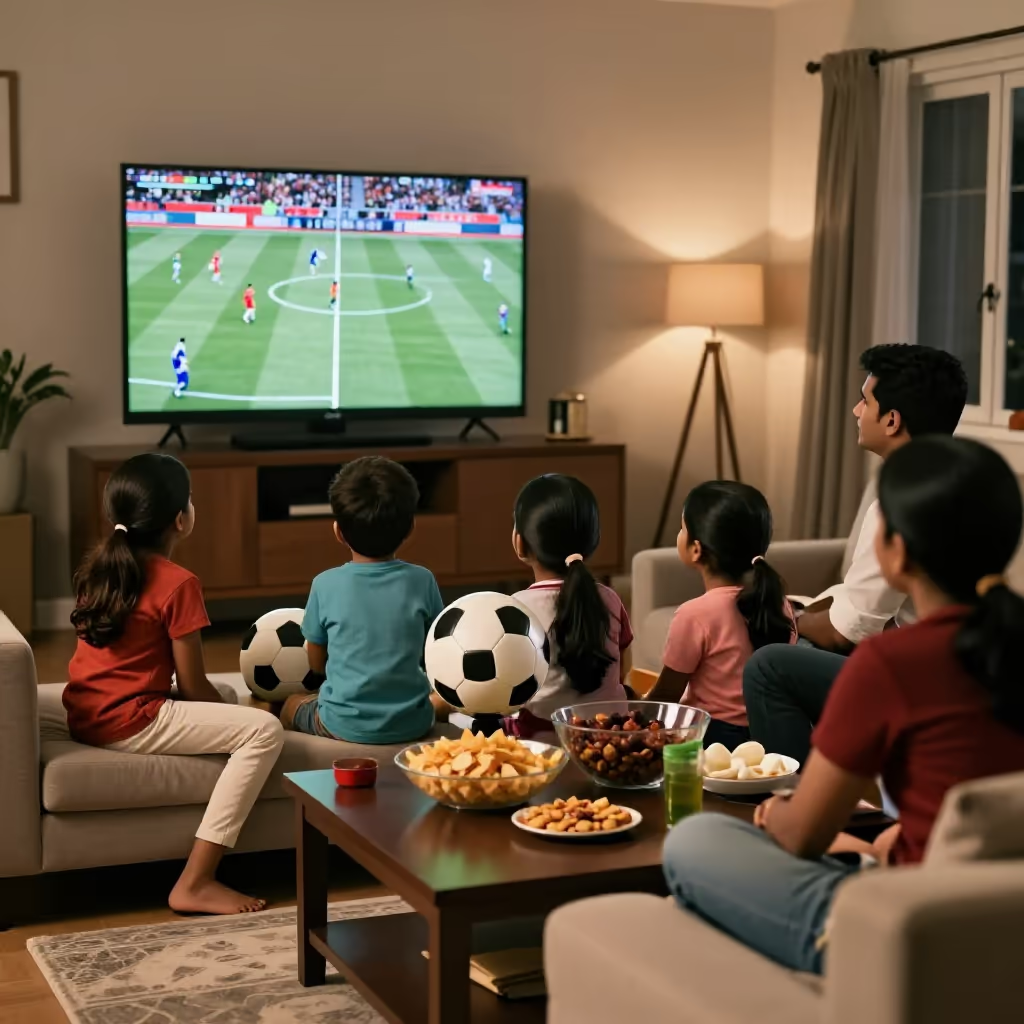
Wir schauen am Nachmittag den Spielern beim Fußballspiel zu.
We’re watching the players during the football game this afternoon.
Wir schauen am Nachmittag das Fußballspiel.
We’re watching the football game this afternoon.