

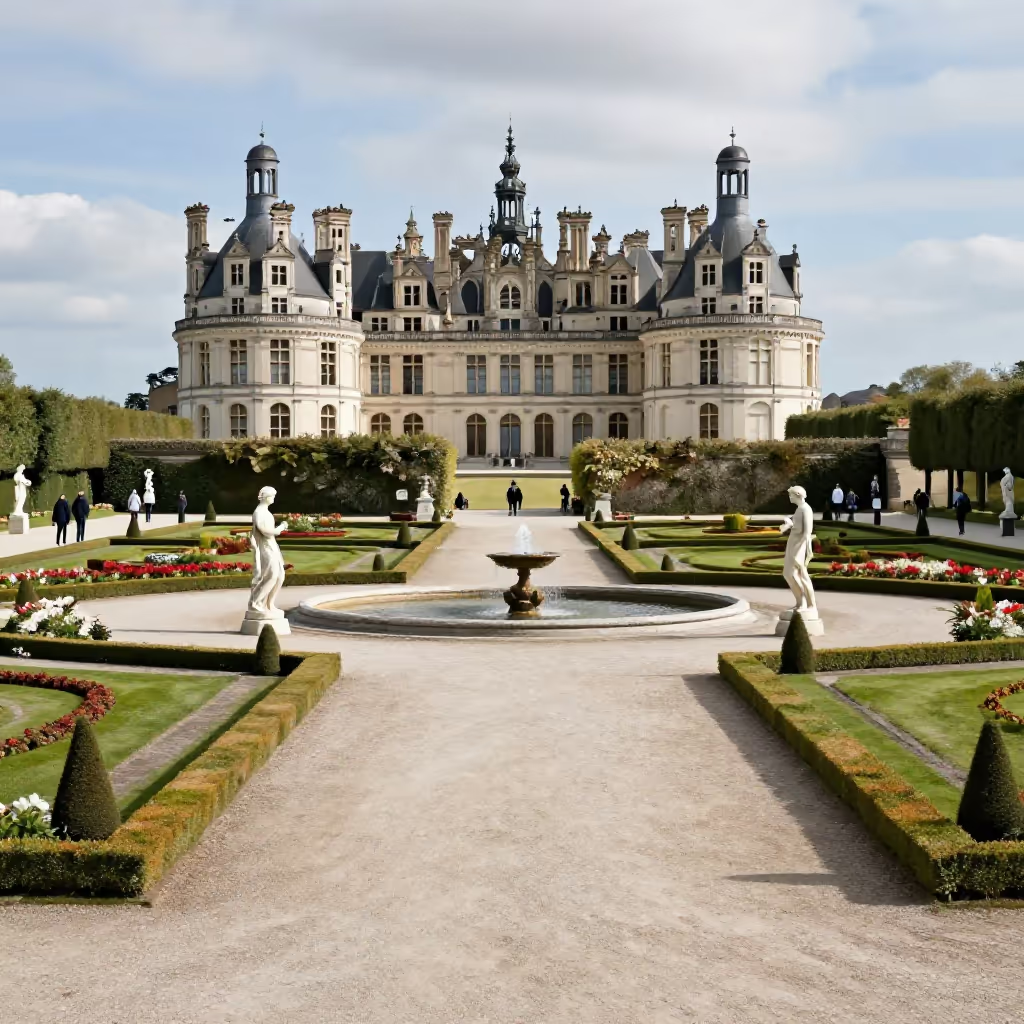
A large, often artistically designed park that belongs to a palace or palace-like residence.
example
Am Sonntag sind wir im Schlosspark von Sanssouci spazieren gegangen.
On Sunday we went for a walk in the palace park of Sanssouci.
Usage tips
Word composition
The word is a clear compound made up of 'das Schloss' (the palace/castle) and 'der Park' (the park). The 's' in the middle is a linking s, which connects the two words.
EXAMPLE
Der alte Schlosspark ist für die Öffentlichkeit zugänglich.
The old palace park is open to the public.
Word family
'Schloss-' is a productive component of many words that refer to a palace or castle. Other examples are 'der Schlossgarten' (palace garden), 'das Schlossmuseum' (palace museum), or 'der Schlosshof' (palace courtyard).
EXAMPLE
Im Schlossmuseum sind wertvolle Gemälde ausgestellt.
Valuable paintings are on display in the palace museum.
Location phrases
Pay attention to the prepositions and case: you go 'in den Schlosspark' (into the palace park; accusative for direction), but you are 'im Schlosspark' (in the palace park; dative for location).
EXAMPLE
Lass uns morgen in den Schlosspark gehen.
Let's go to the palace park tomorrow.
Compare with
near_synonym · confusable
Schlosspark vs Schlossgarten
palace garden
'der Schlosspark' and 'der Schlossgarten' both refer to a designed area that belongs to a palace or castle. The difference is often only slight. 'Schlosspark' sounds more like a larger park area with paths, lawns, and old trees. 'Schlossgarten' emphasizes the garden character more, for example flower beds, flowers, or a particularly well-kept design. In many places, however, the official name is simply what matters. The words are easy to confuse because both can be used for similar grounds.
Schlosspark
Am Sonntag spazierten wir lange durch den Schlosspark.
On Sunday, we took a long walk through the palace park.
Schlossgarten
Im Schlossgarten blühen im Frühling viele Rosen und Tulpen.
Many roses and tulips bloom in the palace garden in spring.