

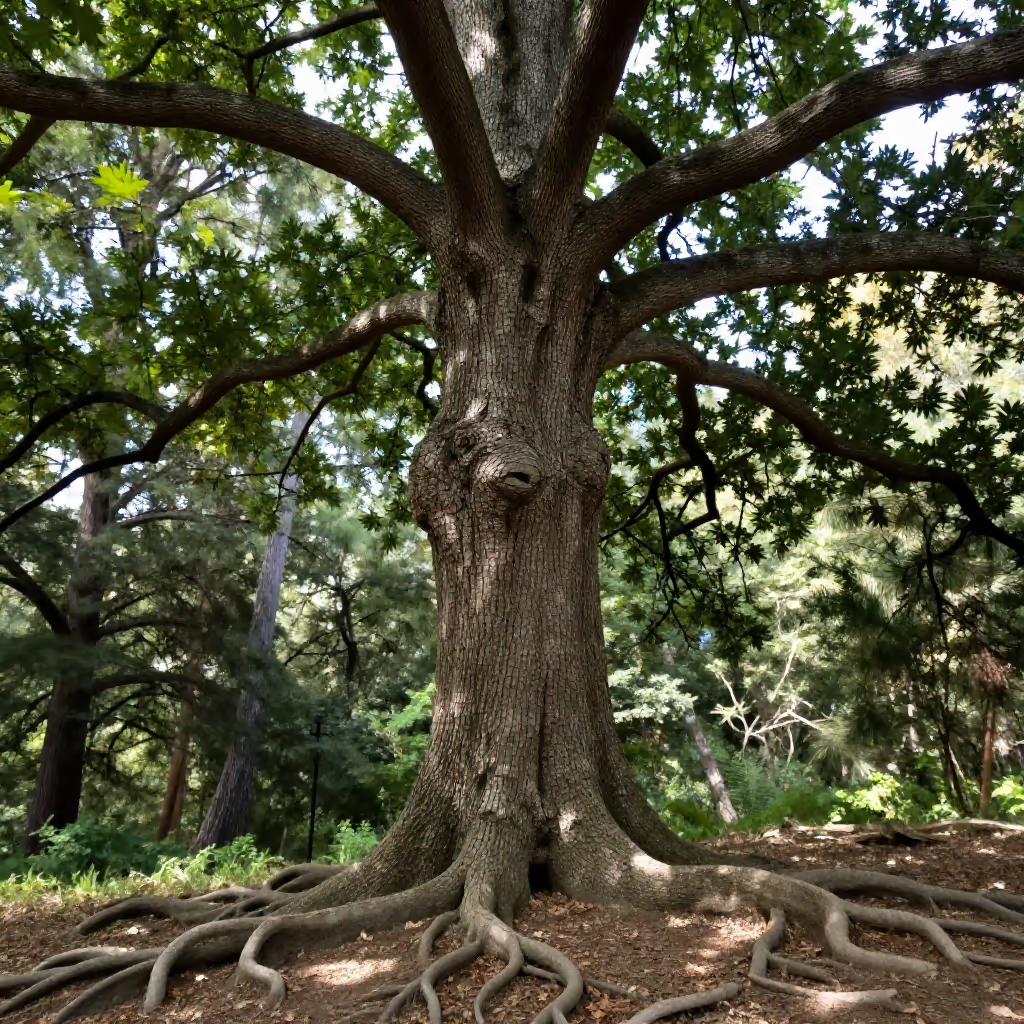
der Stamm
trunk
The thick, woody main part of a tree that grows out of the ground and supports the branches.
EXAMPLE
Der Stamm dieser alten Eiche hat einen Umfang von drei Metern.
The trunk of this old oak tree has a circumference of three meters.
trunk / tribe
Loading your saved state.
trunk
The thick, woody main part of a tree that grows out of the ground and supports the branches.
Der Stamm dieser alten Eiche hat einen Umfang von drei Metern.
The trunk of this old oak tree has a circumference of three meters.
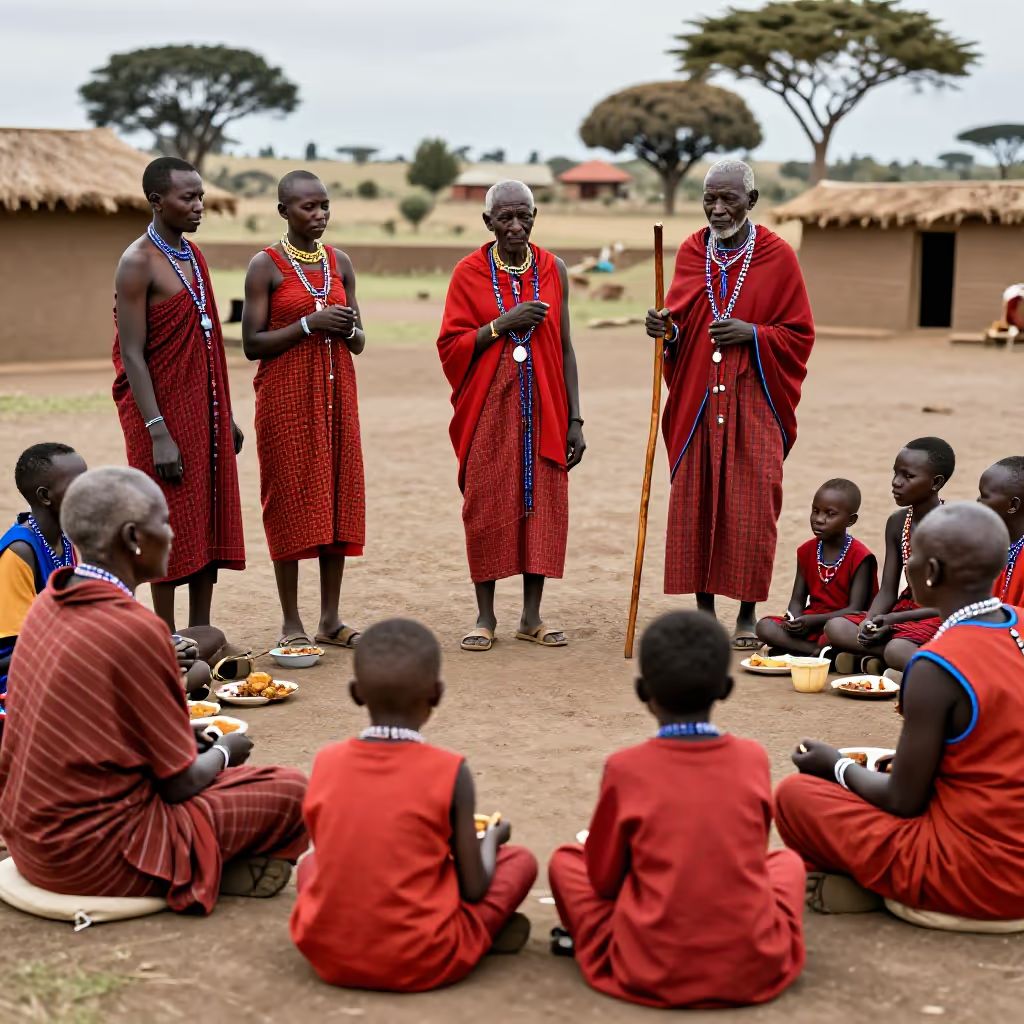
tribe
A social group of people connected by common ancestry, culture, language, and traditions.
Forscher untersuchen die Rituale eines indigenen Stammes im Amazonasgebiet.
Researchers are studying the rituals of an indigenous tribe in the Amazon region.

regulars
The group of regular, loyal customers of a bar, shop, or restaurant.
Die Kellnerin kennt den Stamm ihrer Kneipe und weiß, was jeder trinkt.
The waitress knows the regulars at her pub and knows what everyone drinks.
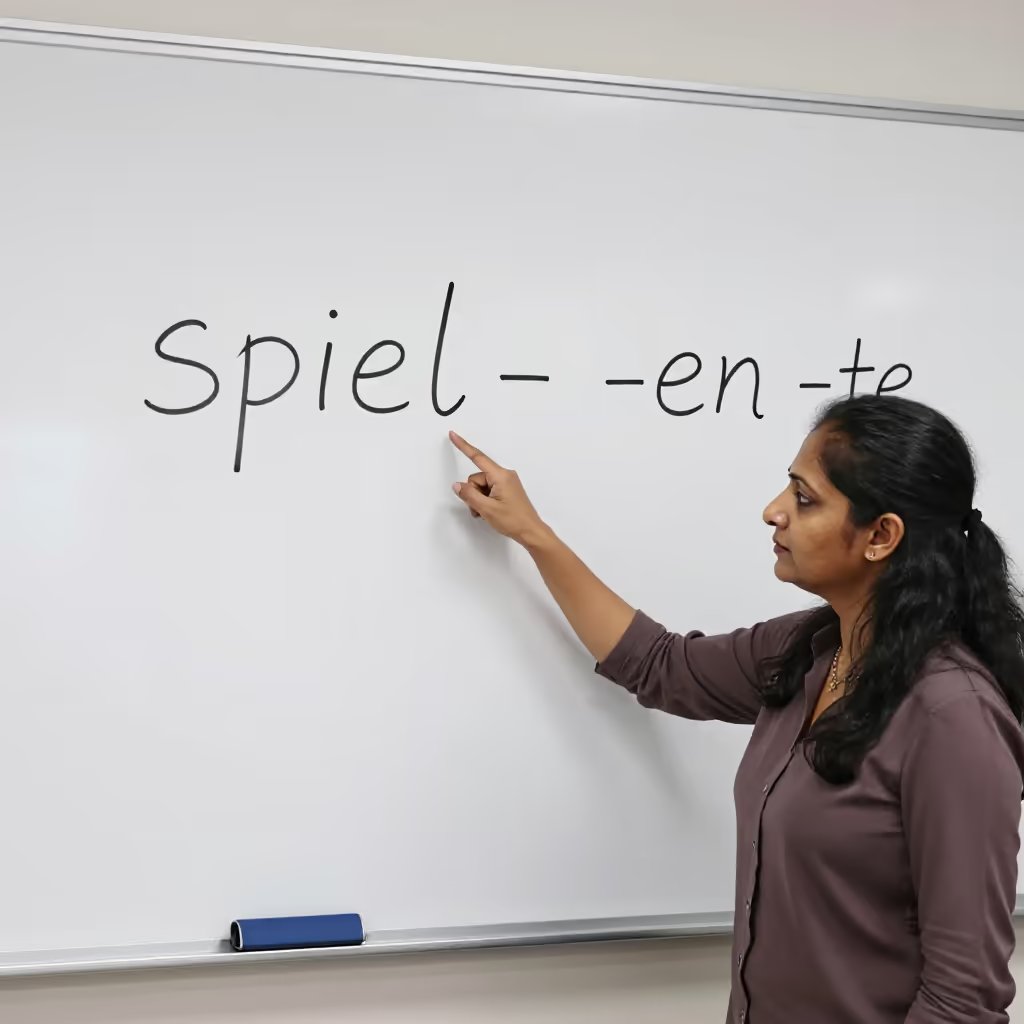
stem
In linguistics, the base form of a word to which endings or prefixes are attached.
Der Stamm des Wortes 'läuft' ist 'lauf'.
The stem of the word 'läuft' is 'lauf'.

phylum
In biology, a high level of classification for living organisms, below kingdom and above class (phylum).
Der Mensch gehört zum Stamm der Chordatiere.
Humans belong to the phylum Chordata.

lineage
The entirety of a family's ancestors and descendants; the line of descent.
Er kann seinen Stamm bis ins 17. Jahrhundert zurückverfolgen.
He can trace his lineage back to the 17th century.
The noun 'der Stamm' (trunk/tribe) is closely related to the verb 'stammen' (to come from, to originate). This connection helps you understand the meanings related to origin, as in a tribe or family lineage.
Diese Tradition stammt von einem alten germanischen Stamm.
This tradition comes from an old Germanic tribe.
Because 'Stamm' has many meanings, context is crucial. Words like 'Baum' (tree) or 'Holz' (wood) point to the tree trunk, 'Kneipe' (pub) or 'Kunde' (customer) to regular customers, and 'Grammatik' (grammar) or 'Wort' (word) to the word stem.
Der Holzarbeiter fällte den Stamm mit einer Axt.
The woodworker felled the trunk with an axe.
The meanings of 'Stamm' in biology (classification of living organisms) and linguistics (base form of a word) are technical terms. They are rarely used in everyday language.
In der Biologie gehört der Mensch zum Stamm der Wirbeltiere.
In biology, humans belong to the phylum of vertebrates.
When talking about a tree, 'Stamm' is often combined with adjectives like 'dick' (thick), 'alt' (old), or 'hohl' (hollow). A typical preposition is 'am' to describe a position.
Ein Specht klopfte ein Loch in den dicken Stamm der Birke.
A woodpecker pecked a hole in the thick trunk of the birch tree.
In the meaning of 'regular customers', 'Stamm' is very often used as the first part of compound words. The most important ones are 'der Stammgast' (regular guest), 'der Stammkunde' (regular customer), and 'die Stammkneipe' (regular pub).
Als Stammkunde erhalten Sie bei uns 10 % Rabatt.
As a regular customer, you receive a 10% discount with us.
In connection with family history, 'Stamm' is often used with verbs like 'zurückverfolgen' (to trace back) or 'nachweisen' (to prove/document) to document a family's origins.
Sie konnte den Stamm ihrer Familie bis ins Mittelalter zurückverfolgen.
She was able to trace her family's lineage back to the Middle Ages.
people / nation
Volk and Stamm can both refer to communities with a shared language and culture. Volk generally refers to a larger community with a shared history and identity, while Stamm places greater emphasis on common ancestry and traditions within a more closely connected group.
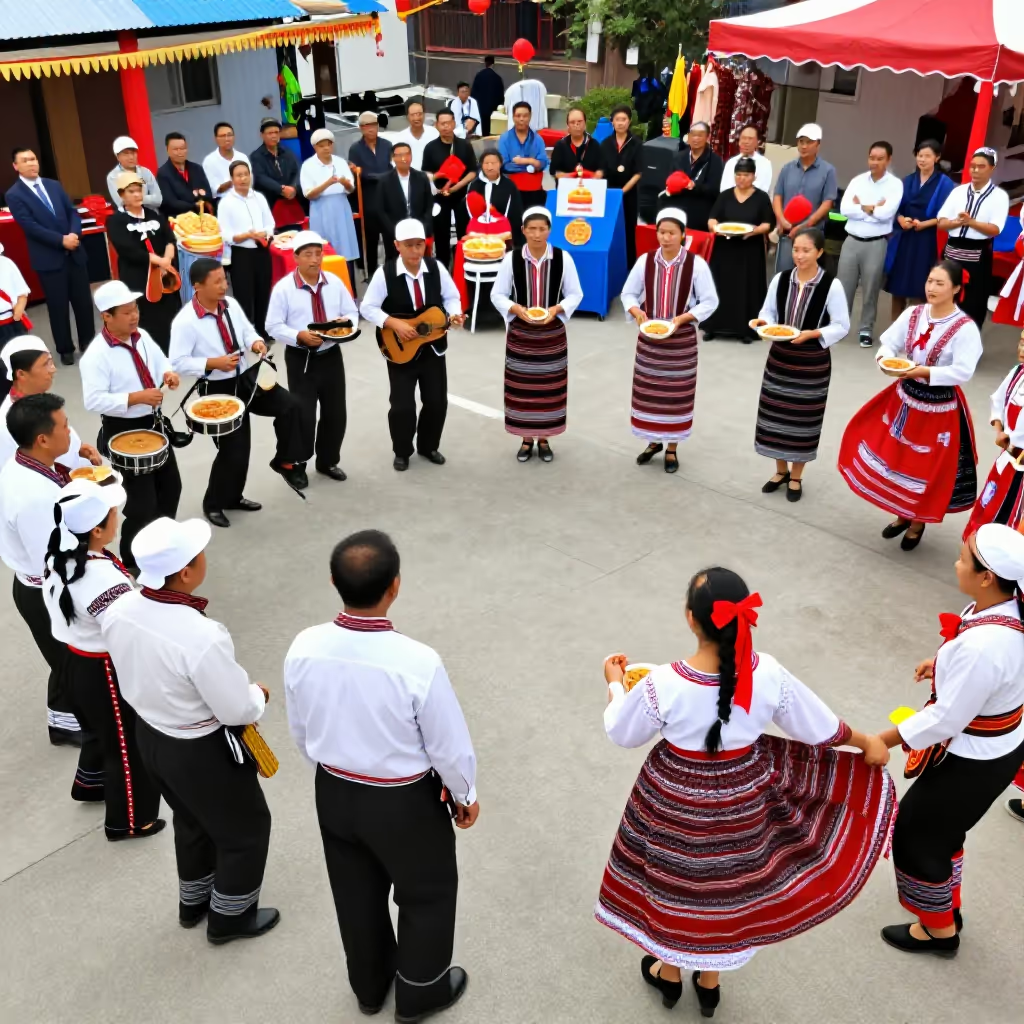
Die kleinere Gemeinschaft versteht sich wegen ihrer gemeinsamen Abstammung und Traditionen als ein Stamm.
Because of their common ancestry and traditions, the smaller community considers itself a tribe.
Die große Gemeinschaft versteht sich wegen ihrer gemeinsamen Sprache und Geschichte als ein Volk.
Because of their shared language and history, the large community considers itself a people.