


sexy
A person or thing that seems sexually attractive or arousing.
EXAMPLE
Er findet sie in diesem Kleid besonders sexy.
He finds her especially sexy in this dress.
Loading your saved state.
A person or thing that seems sexually attractive or arousing.
Er findet sie in diesem Kleid besonders sexy.
He finds her especially sexy in this dress.
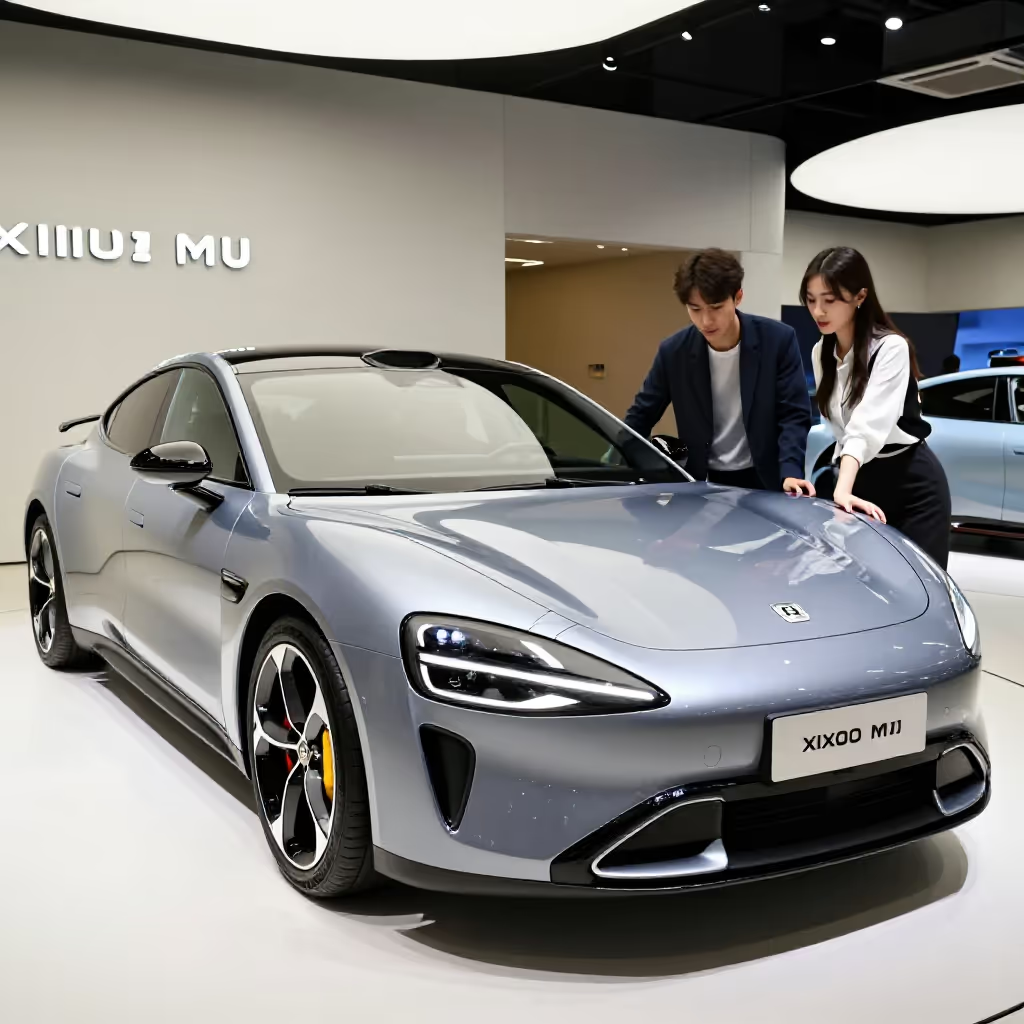
Colloquially, something that is modern, exciting, interesting, or desirable.
Datenanalyse ist vielleicht kein sexy Thema, aber es ist extrem wichtig für den Erfolg.
Data analysis may not be a sexy topic, but it is extremely important for success.
As an adjective borrowed from English, 'sexy' is often not declined when it comes after the noun (predicative use). However, when it comes before the noun (attributive use), it is declined like a normal German adjective.
Dieses Auto ist wirklich sexy.
This car is really sexy.
'Sexy' is a loanword from English and belongs to modern colloquial language. It is often used in the media, advertising, and everyday speech, but rather rarely in very formal or official texts.
Die neue Werbekampagne soll jünger und sexyer wirken.
The new advertising campaign is meant to come across as younger and sexier.
In colloquial language, 'sexy' is often used metaphorically for things that are not people. It then means something like 'attractive', 'modern', or 'trendy'. For example, an idea, a job, or a product can be 'sexy'.
Nachhaltigkeit ist das neue sexy Thema in der Wirtschaft.
Sustainability is the new sexy topic in business.
cool
When describing products or ideas, cool and sexy can both be positive forms of praise. Cool generally describes something as modern, impressive, or laid-back. Sexy is especially appropriate when something seems exciting and desirable and sparks strong interest.
Das Design des neuen E-Bikes ist sexy und macht sofort Lust auf eine Probefahrt.
The new e-bike's design is sexy and immediately makes you want to take it for a test ride.
Das Design des neuen E-Bikes ist cool und wirkt modern und lässig.
The new e-bike's design is cool and looks modern and laid-back.