

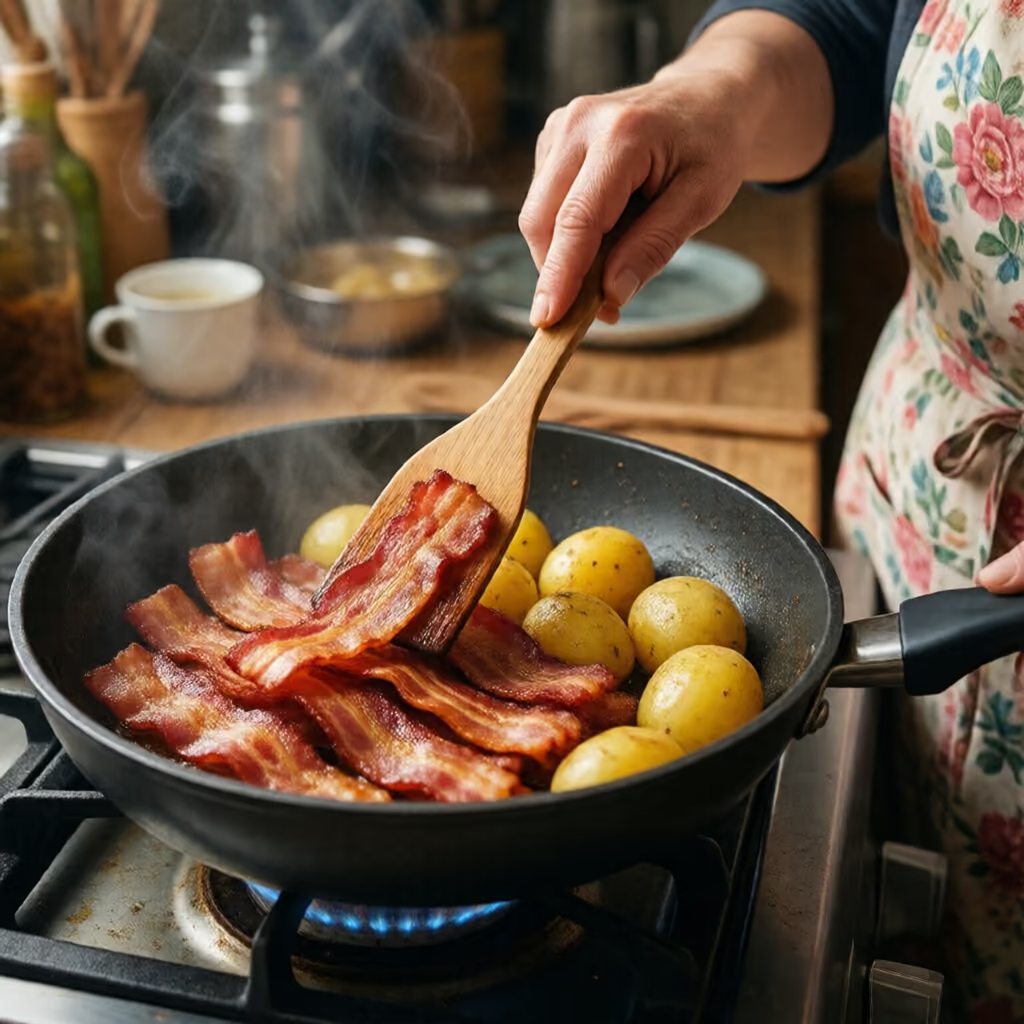
der Speck
bacon
Fatty meat, usually smoked or cured, from a pig and used as food.
EXAMPLE
Für die Kartoffeln brate ich etwas Speck in der Pfanne an.
I fry some bacon in the pan for the potatoes.
bacon
der Speck, die Specke
Loading your saved state.
bacon
Fatty meat, usually smoked or cured, from a pig and used as food.
Für die Kartoffeln brate ich etwas Speck in der Pfanne an.
I fry some bacon in the pan for the potatoes.
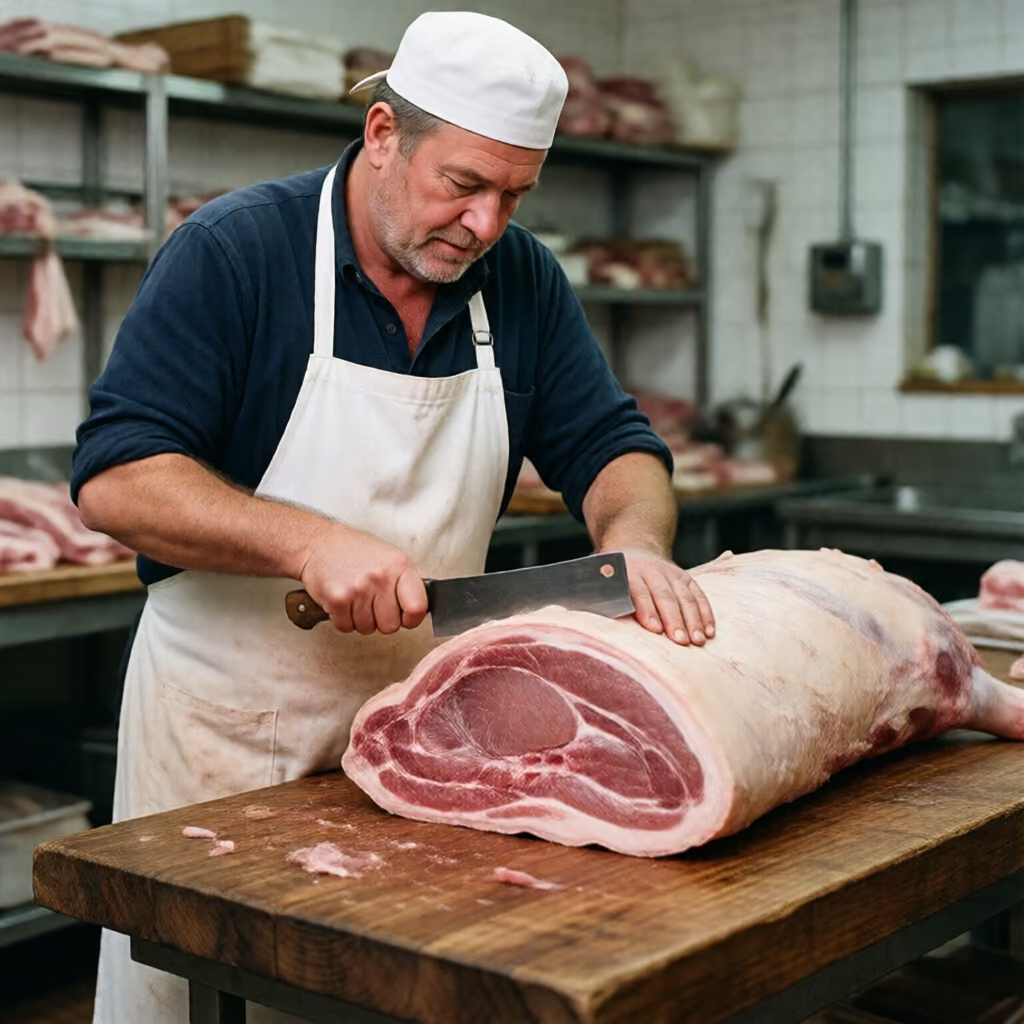
animal fat
Fatty tissue beneath an animal's skin, especially in pigs.
Der Metzger entfernte den Speck vom Schweinefleisch.
The butcher removed the fat from the pork.
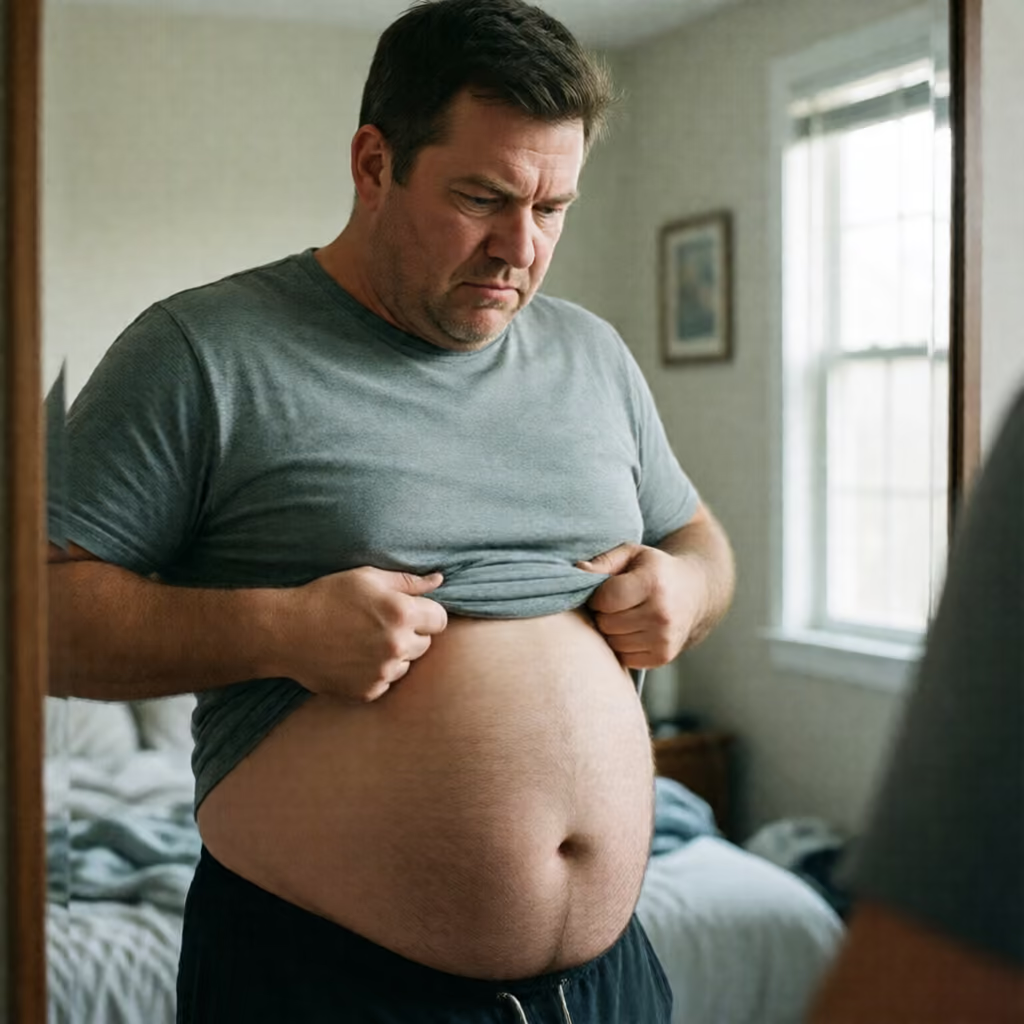
belly fat
Colloquial: visible body fat, especially around the stomach or hips.
Mit mehr Bewegung will er den Speck am Bauch wieder loswerden.
He wants to get rid of the belly fat through more exercise.

to put on belly fat
Colloquial: to gain body fat.
Seit er nicht mehr trainiert, setzt er langsam Speck an.
Since he stopped training, he has slowly been putting on belly fat.

to lure someone with a reward
An attractive advantage or reward can be used to persuade someone to do something.
Mit Speck fängt man Mäuse, deshalb bietet die Firma einen Bonus an.
You can catch mice with bacon, so the company is offering a bonus.
| gender | masculine der |
|---|---|
| plural | die Specke |
| genitive | des Specks |
| singular | plural | |
|---|---|---|
| nominative | der Speck | die Specke |
| accusative | den Speck | die Specke |
| dative | dem Speck | den Specken |
| genitive | des Specks des Speckes | der Specke |
The article changes with the case; it is shown in colour.
When 'Speck' refers to visible body fat, the word is colloquial and can sound direct or humorous depending on the situation. For food and animal fat, 'Speck' is a neutral everyday term.
Er macht oft Witze über seinen Speck am Bauch.
He often jokes about his belly fat.
Für die Suppe kaufe ich geräucherten Speck.
I'm buying smoked bacon for the soup.
When referring to food, 'Speck' is often used with verbs such as 'braten' (to fry), 'würfeln' (to dice), and 'auslassen' (to render). Common combinations include 'Speckwürfel' (diced bacon) and 'geräucherter Speck' (smoked bacon).
Zuerst würfle ich den Speck und lasse ihn in der Pfanne aus.
First I dice the bacon and render it in the pan.
The meaning of animal fatty tissue is often clear from words related to meat processing or from references to an animal's body parts. In these contexts, it refers to part of the animal's body, not prepared food.
Unter der Haut des Schweins befindet sich eine dicke Schicht Speck.
There is a thick layer of fat beneath the pig's skin.
When referring to visible body fat, 'Speck' is especially often used with phrases such as 'am Bauch' (around the stomach) or 'an den Hüften' (around the hips). This meaning usually occurs in personal, colloquial conversations.
Durch das viele Sitzen hat sie etwas Speck an den Hüften bekommen.
She has put on some fat around her hips from sitting so much.
In the expression 'Speck ansetzen' (to put on belly fat), 'Speck' is used without an article and refers to increasing body size. The verb 'ansetzen' is separated when it appears in second position in a main clause.
Im Winter setzt er schnell Speck an.
He quickly puts on belly fat in winter.
'Mit Speck fängt man Mäuse' (you can catch mice with bacon) is used as a general explanation when an offer or reward is meant to attract someone. The idiom often stands alone or follows a statement and explains why an advantage works.
Sie versprach den Kindern einen Ausflug: Mit Speck fängt man Mäuse.
She promised the children a trip: You can catch mice with bacon.