


spinnen
to be crazy
Colloquial for being crazy, having nonsensical ideas, or behaving unreasonably.
EXAMPLE
Du willst ohne Jacke bei der Kälte raus? Du spinnst ja!
You want to go out in this cold without a jacket? You're crazy!
to spin / be crazy
Loading your saved state.
to be crazy
Colloquial for being crazy, having nonsensical ideas, or behaving unreasonably.
Du willst ohne Jacke bei der Kälte raus? Du spinnst ja!
You want to go out in this cold without a jacket? You're crazy!
to spin
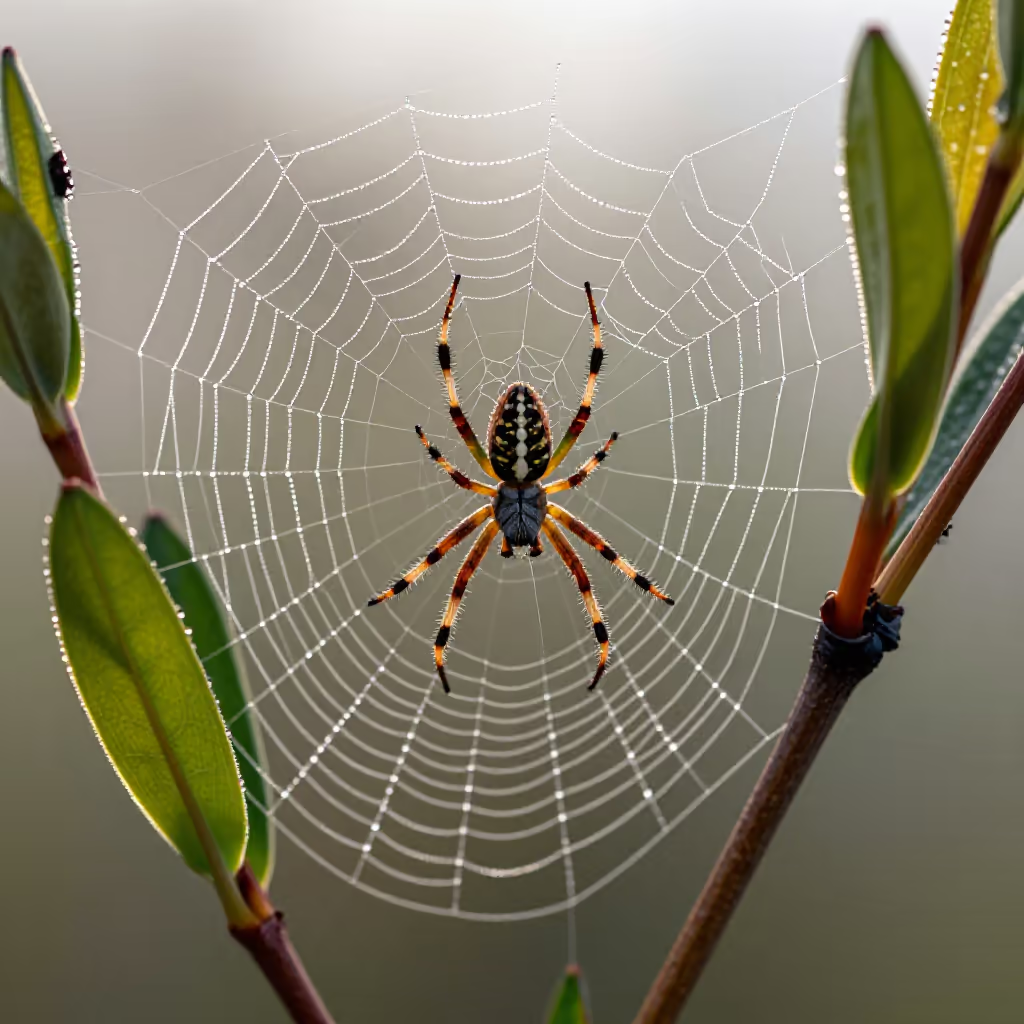
The activity of a spider producing threads and building a web from them.
Die Spinne hat über Nacht ein großes Netz in der Ecke gesponnen.
The spider spun a large web in the corner overnight.
to spin
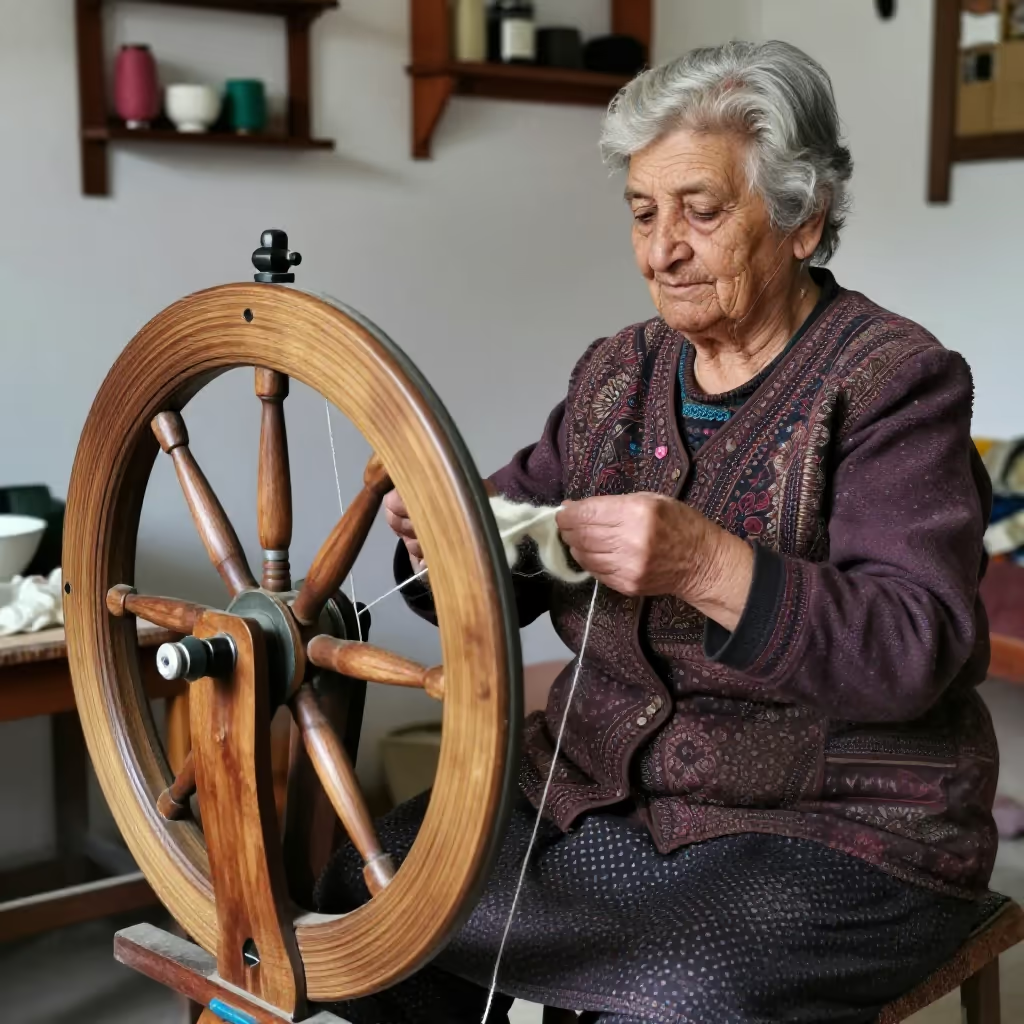
To process fibers such as wool or cotton into a thread, usually using a spinning wheel or spindle.
Früher haben die Frauen im Winter am Feuer gesessen und Wolle gesponnen.
In the past, the women sat by the fire in winter and spun wool.

to weave an intrigue
To devise and prepare a malicious, complex plan or conspiracy.
Hinter den Kulissen spann der Minister eine Intrige, um seinen Rivalen zu stürzen.
Behind the scenes, the minister wove an intrigue to bring down his rival.

to spin
To turn quickly without moving from the spot, especially of wheels on a slippery surface.
Die Räder des Autos spannen auf dem vereisten Parkplatz.
The car's wheels spun in the icy parking lot.
'Spinnen' (to spin / be crazy) is a strong, irregular verb. The past forms are 'spann' (simple past) and 'hat gesponnen' (perfect tense), and they apply to all meanings of the word.
Früher spann meine Großmutter ihre eigene Wolle.
In the past, my grandmother spun her own wool.
The meaning of 'spinnen' (to spin / be crazy) is easy to recognize from the subject or object. A spider spins a web, wheels spin on ice, and people spin wool or weave intrigues.
Die Spinne in der Ecke hat ein großes Netz gesponnen.
The spider in the corner spun a large web.
In the meaning 'verrückt sein' (to be crazy), 'spinnen' is very colloquial. It is used among friends or in informal situations, but not in formal conversations or texts.
Du willst bei diesem Sturm wandern gehen? Ich glaube, du spinnst!
You want to go hiking in this storm? I think you're crazy!
The colloquial meaning is often used as a direct question ('Spinnst du?' — Are you crazy?) or as an exclamation ('Du spinnst doch!' — You're crazy!), to express surprise or lack of understanding about someone's behavior.
Was, du hast deinen Job gekündigt? Spinnst du total?
What, you quit your job? Are you completely crazy?
In the figurative meaning of devising a plan, 'spinnen' (to spin) is used almost exclusively in the fixed expression 'eine Intrige spinnen' (to weave an intrigue). It describes the secret and complex planning of a conspiracy.
Die beiden Konkurrenten spannen im Geheimen eine Intrige gegen den Firmenchef.
The two competitors secretly wove an intrigue against the head of the company.
to turn / film
Both words can describe a wheel's movement. Drehen refers generally to rotation, while spinnen emphasizes the specific case of a wheel spinning rapidly on a slippery surface and making little or no progress. Drehen is appropriate for the movement itself; when there is no traction, spinnen is more precise.

Auf dem glatten Boden spinnt das Rad durch, obwohl das Auto steht.
On the slippery ground, the wheel spins even though the car is stationary.
Auf dem glatten Boden dreht sich das Rad weiter, obwohl das Auto steht.
On the slippery ground, the wheel keeps turning even though the car is stationary.