

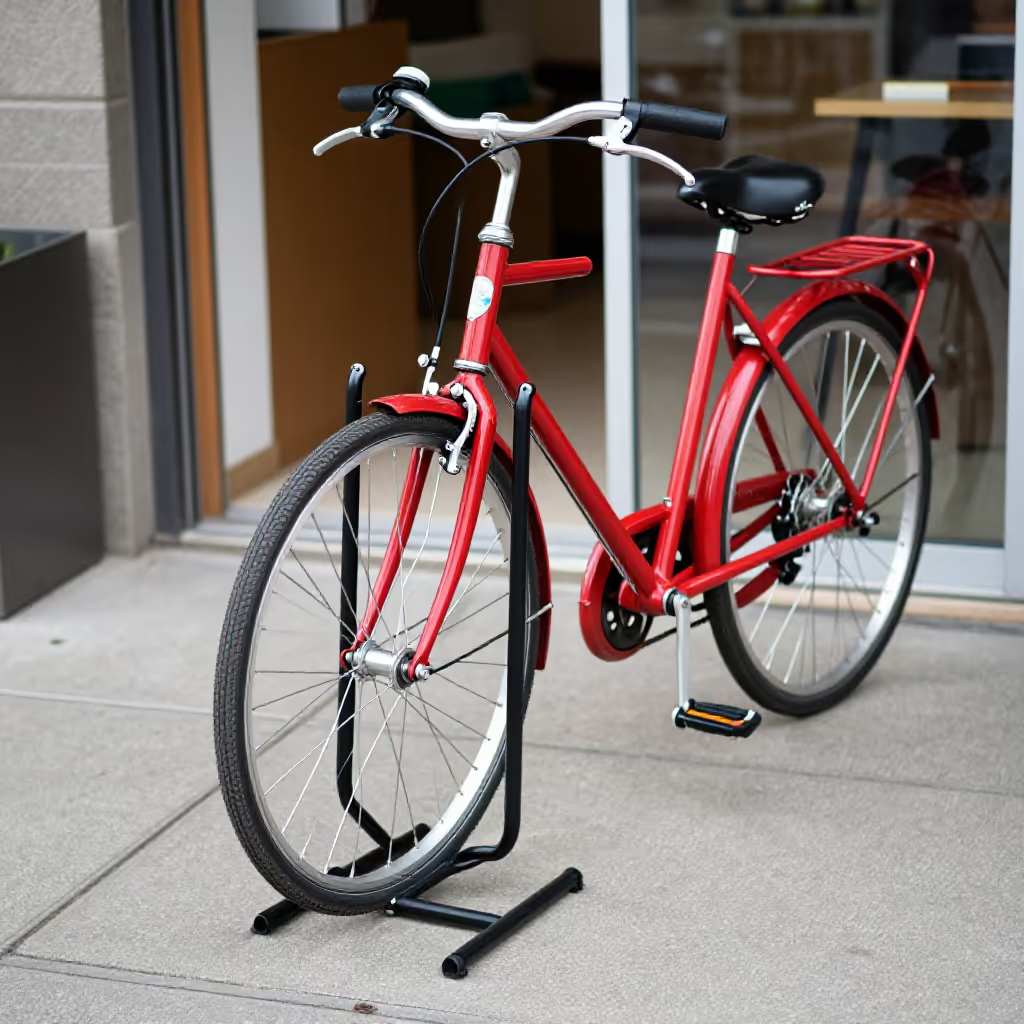
der Ständer
stand
A device or frame used to keep an object upright or to set it down.
EXAMPLE
Stell das Fahrrad bitte in den Ständer, damit es nicht umfällt.
Please put the bicycle in the stand so it doesn't fall over.
stand / boner / post
Loading your saved state.
stand
A device or frame used to keep an object upright or to set it down.
Stell das Fahrrad bitte in den Ständer, damit es nicht umfällt.
Please put the bicycle in the stand so it doesn't fall over.

boner
Colloquial and vulgar for an erection of the male organ.
Witze über das Thema fand er pubertär, aber als er sie nackt sah, bekam er sofort einen Ständer.
He found jokes about the topic juvenile, but when he saw her naked, he immediately got a boner.

upright post
In construction engineering, a vertical post or support in a frame structure, for example in a half-timbered house.
Der Zimmermann ersetzte die morschen Ständer im alten Gebälk.
The carpenter replaced the rotten upright posts in the old timber framework.
'Der Ständer' (the stand) is derived from the verb 'stehen' (to stand). It is a device that helps an object stand upright by itself.
Ohne den Ständer würde das Motorrad umkippen.
Without the stand, the motorcycle would tip over.
The meaning of the word only becomes clear from context. If people are talking about objects such as bicycles or sheet music, it means a stand. In the context of construction engineering, it is a post. In conversations about the human body, it has a sexual, vulgar meaning.
Der Notenständer ist zu niedrig eingestellt.
The music stand is set too low.
In its main meaning, 'Ständer' (stand) is often part of compound words that describe the purpose more precisely, e.g. 'Fahrradständer' (bicycle stand), 'Wäscheständer' (drying rack), 'Notenständer' (music stand), or 'Kleiderständer' (clothes rack).
Häng deine Jacke bitte auf den Kleiderständer.
Please hang your jacket on the clothes rack.
In the meaning 'Erektion' (erection), the word is vulgar and belongs to colloquial speech. It should absolutely be avoided in formal or polite conversations.
In der Umkleidekabine machten die Jungen darüber unanständige Witze.
In the changing room, the boys made indecent jokes about it.
The meaning 'senkrechter Pfosten' (vertical post) is technical language from construction, especially timber construction and carpentry. You will rarely hear this meaning in everyday life.
Für die Reparatur des Fachwerks benötigen wir neue Ständer aus Eichenholz.
For the repair of the half-timbered structure, we need new upright posts made of oak.
post
Pfosten and Ständer can both be vertical load-bearing elements. Pfosten is the more general term and emphasizes a single anchored structural element. In construction, Ständer is the more precise term for a vertical member within a frame structure, such as a half-timbered structure.
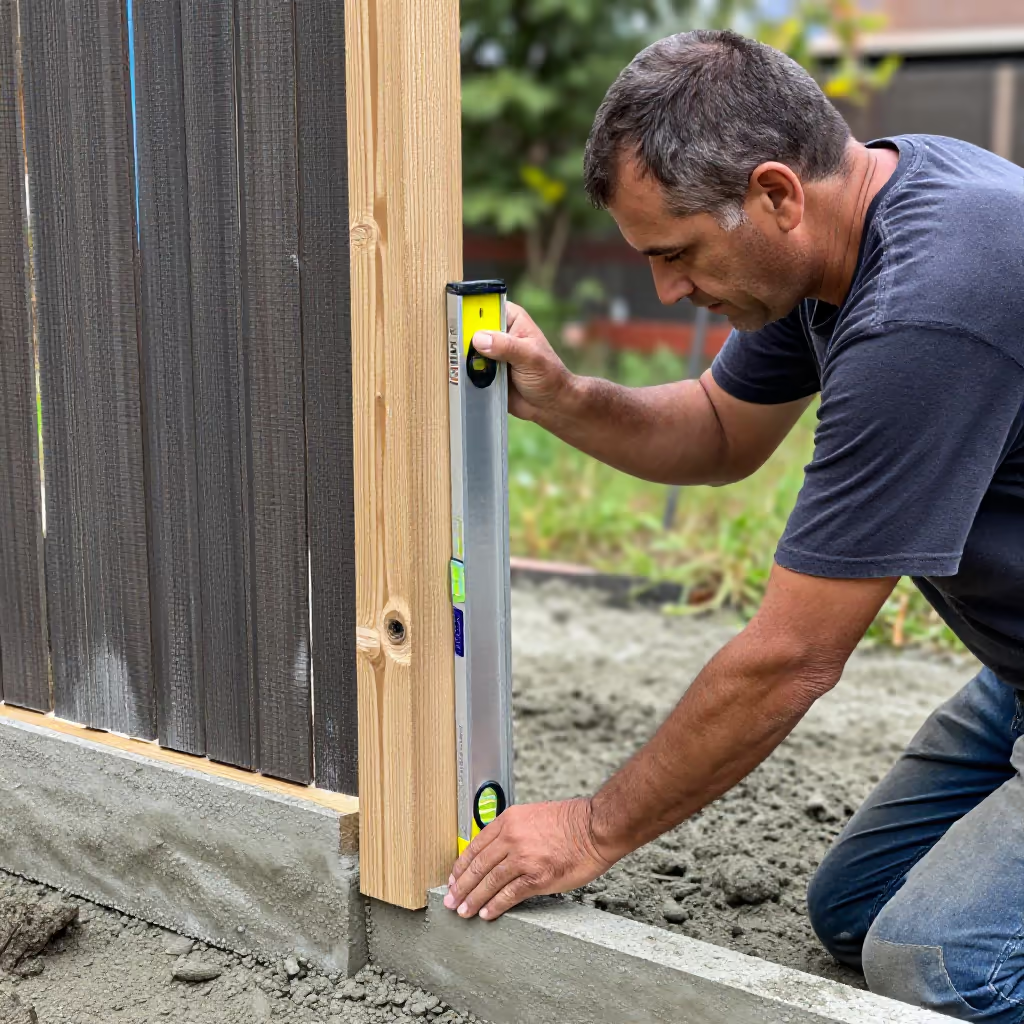
Der Zimmermann setzt einen Ständer als senkrechtes Glied in den Holzrahmen.
The carpenter installs an upright post as a vertical member in the wooden frame.
Der Zimmermann verankert einen einzelnen Pfosten neben dem Eingang.
The carpenter anchors a single post beside the entrance.