


der Stock
stick
A long, thin piece of wood that comes from a tree or branch and is often used as a walking stick, for hiking, or as a tool.
EXAMPLE
Der alte Mann stützte sich beim Gehen auf einen Stock.
The old man leaned on a stick while walking.
stick / floor
Loading your saved state.
stick
A long, thin piece of wood that comes from a tree or branch and is often used as a walking stick, for hiking, or as a tool.
Der alte Mann stützte sich beim Gehen auf einen Stock.
The old man leaned on a stick while walking.

floor
A floor or story in a building.
Wir wohnen im vierten Stock, zum Glück gibt es einen Aufzug.
We live on the fourth floor; luckily there is an elevator.
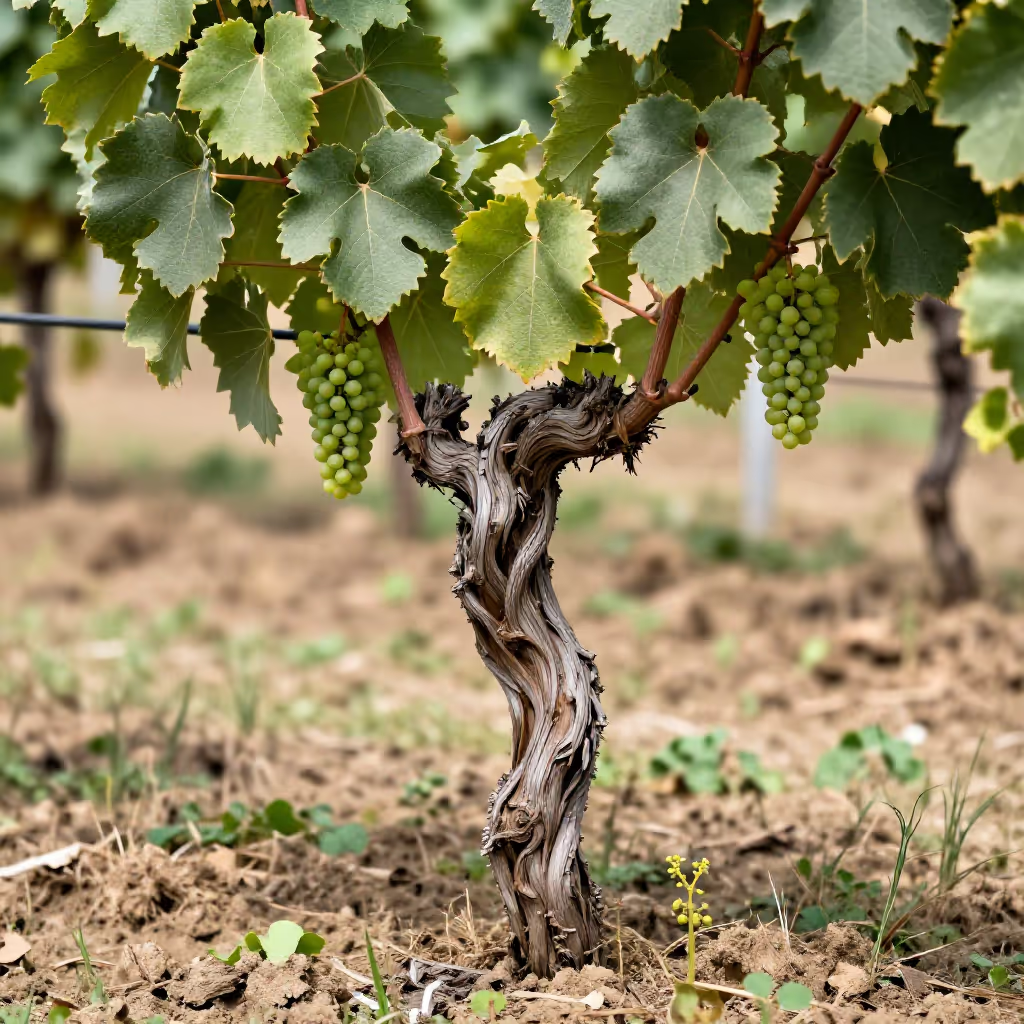
stock
The main stem of a plant, especially a perennial one such as a grapevine.
Die Trauben von diesem alten Stock sind besonders aromatisch.
The grapes from this old stock are especially aromatic.
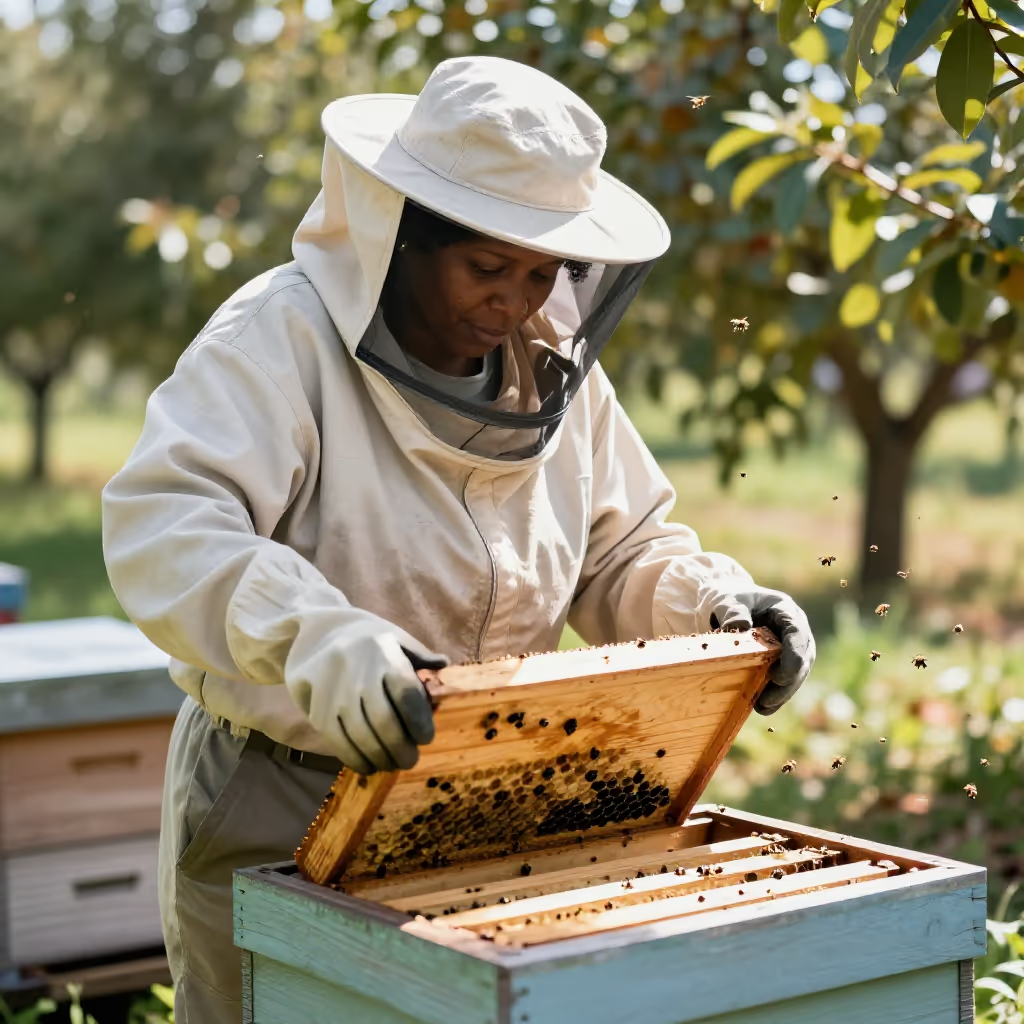
hive
A home for a colony of bees; a beehive.
Der Imker kontrollierte, ob im Stock noch genug Honig für den Winter war.
The beekeeper checked whether there was still enough honey in the hive for the winter.
'Der Stock' is a false friend of the English word 'stock'. Depending on context, the German word means 'Gehstock' (walking stick) or 'Stockwerk' (floor/story), but never 'inventory' or 'share/stock'.
Ich brauche einen Stock zum Wandern in den Bergen.
I need a stick for hiking in the mountains.
The two most common meanings, 'Gehstock' (walking stick) and 'Stockwerk' (floor/story), are easy to recognize from context. If people are talking about buildings or apartments, a floor is meant. If it is about walking, hiking, or wood, a stick is meant.
Er wohnt im dritten Stock.
He lives on the third floor.
The word 'Stock' is a common component of compound nouns. Examples are 'Gehstock' (walking stick), 'Wanderstock' (hiking pole), 'Bienenstock' (beehive), or 'Weinstock' (grapevine).
Für die Wanderung packte er seine Wanderstöcke ein.
For the hike, he packed his hiking poles.
With the meaning 'Stockwerk' (floor/story), the preposition is important. 'Im ersten Stock' (on the first floor, dative) describes a location, while 'in den ersten Stock' (to the first floor, accusative) describes movement to that place.
Die Toilette befindet sich im zweiten Stock.
The restroom is located on the second floor.
Floors are always counted with ordinal numbers (first, second, third...). The 'erste Stock' (first floor) is the first upper floor, meaning the floor above the ground floor.
Meine Wohnung liegt im ersten Stock, direkt über dem Erdgeschoss.
My apartment is on the first floor, directly above the ground floor.
trunk / tribe
Stock and Stamm can both refer to the important main part of a plant or tree. Stock is used especially for a perennial plant, such as a grapevine, while Stamm refers to the thick, woody main part of a tree. Therefore, use Stock for such plants and Stamm for trees.

Der Winzer schnitt im Frühjahr den alten Stock der Weinrebe zurück.
In spring, the winegrower pruned back the old grapevine stock.
Der Förster untersuchte im Frühjahr den dicken Stamm des alten Baumes.
In spring, the forester examined the thick trunk of the old tree.