

stationieren
to station
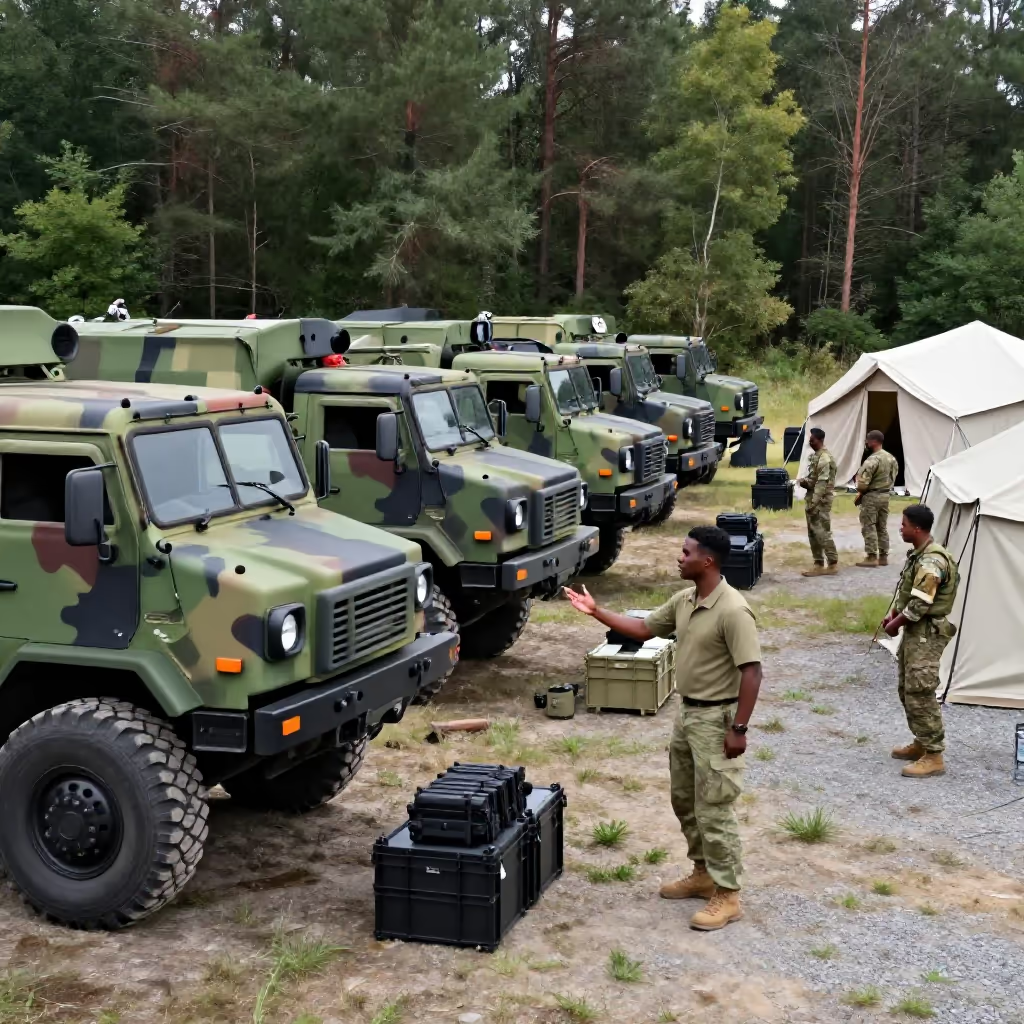
To place military units or equipment at a specific location for a certain period of time.
EXAMPLE
Die NATO hat zusätzliche Truppen an der Ostflanke stationiert.
NATO has stationed additional troops on the eastern flank.
to station
Loading your saved state.
to station
To place military units or equipment at a specific location for a certain period of time.
Die NATO hat zusätzliche Truppen an der Ostflanke stationiert.
NATO has stationed additional troops on the eastern flank.
to station
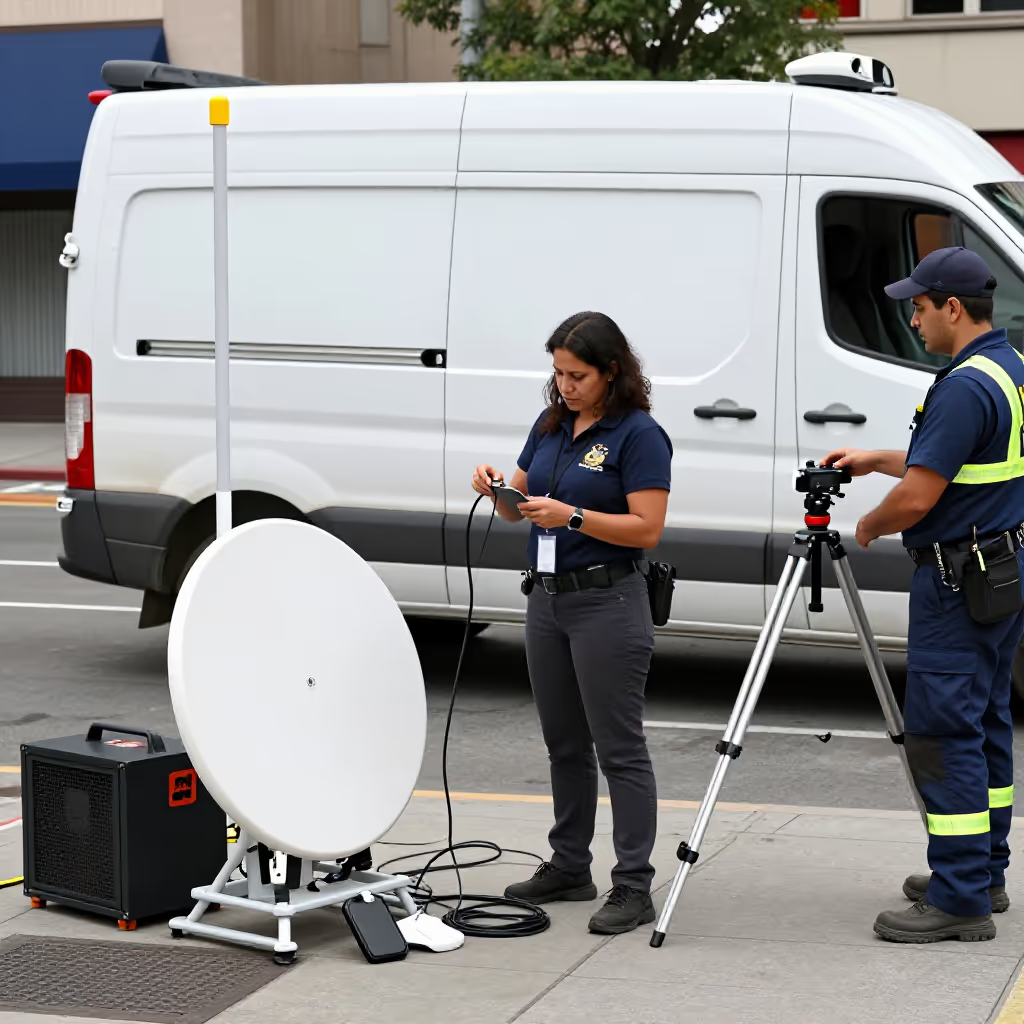
To position personnel or technical equipment at a specific location for an operation or task.
Für das Festival wurden an allen wichtigen Punkten Sanitäter stationiert.
For the festival, paramedics were stationed at all important points.
The verb 'stationieren' (to station) is derived from the noun 'die Station' (station). The ending '-ieren' forms a verb with the meaning of placing something at a station or location.
Die Hilfsorganisation stationierte ihre Teams in der Krisenregion.
The aid organization stationed its teams in the crisis region.
This verb is used very frequently in the passive voice (werden + past participle). The focus is then on who or what is stationed, not on who carries out the action.
An der Grenze wurden zusätzliche Polizisten stationiert.
Additional police officers were stationed at the border.
Typical objects for 'stationieren' (to station) are military units such as 'Truppen' (troops) or 'Soldaten' (soldiers), but also civilian personnel such as 'Mitarbeiter' (employees), 'Experten' (experts), or 'Sanitäter' (paramedics).
Das Unternehmen stationiert seine besten Ingenieure im neuen Werk.
The company is stationing its best engineers at the new plant.
'Stationieren' (to station) belongs to formal language. It is often found in news reports, official reports, and military or logistical contexts.
Laut dem Bericht wird die Flotte im Pazifik stationiert.
According to the report, the fleet will be stationed in the Pacific.
to insert / to begin / to use
Both verbs can connect personnel or equipment with a task. Einsetzen emphasizes that someone or something is actively used, while stationieren highlights placement at a location and availability there. If the specific activity is the focus, Einsetzen is more likely; if the fixed location of the deployment is the focus, stationieren is more appropriate.

Die Stadt stationierte zusätzliches Personal dauerhaft an der neuen Beratungsstelle.
The city permanently stationed additional staff at the new advice center.
Die Stadt setzte zusätzliches Personal für die Betreuung der Flüchtlinge ein.
The city used additional staff to provide care for the refugees.