

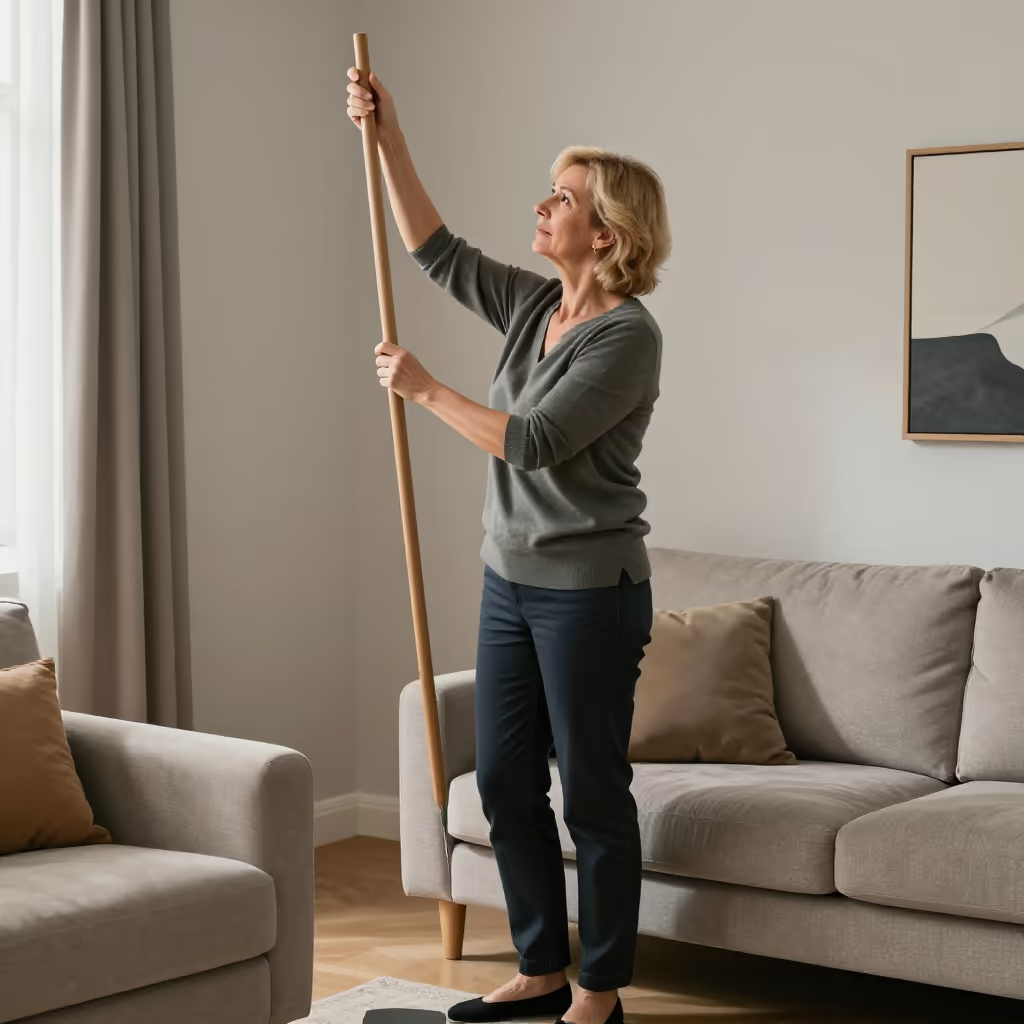
aufstellen
to set up
To put an object in a place, usually in an upright position.
EXAMPLE
Wir müssen das Zelt aufstellen, bevor es dunkel wird.
We have to set up the tent before it gets dark.
to set up / nominate
Loading your saved state.
to set up
To put an object in a place, usually in an upright position.
Wir müssen das Zelt aufstellen, bevor es dunkel wird.
We have to set up the tent before it gets dark.

to draw up
To create or formulate something abstract, such as a rule, theory, list, or plan.
Der Trainer wird eine Liste mit den neuen Regeln für das Team aufstellen.
The coach will draw up a list of the new rules for the team.

to nominate
To nominate a person as a candidate for an election or a position.
Die Partei hat für die Bürgermeisterwahl eine neue Kandidatin aufgestellt.
The party nominated a new female candidate for the mayoral election.

to line up
To position a group of people or objects in a particular order or formation.
Der Trainer hat die Mannschaft sehr defensiv aufgestellt.
The coach lined up the team very defensively.
'Aufstellen' is a separable verb. The prefix 'auf-' goes at the end in a main clause. In subordinate clauses and in the infinitive with 'zu', the verb stays together.
Er stellt die Stühle im Garten auf.
He sets up the chairs in the garden.
In this meaning, the verb is used for physical objects that you put somewhere. Typical examples are: 'ein Zelt aufstellen' (to set up a tent), 'Möbel aufstellen' (to arrange furniture), 'ein Schild aufstellen' (to put up a sign), or 'eine Leiter aufstellen' (to set up a ladder).
Die Stadt hat neue Bänke im Park aufgestellt.
The city set up new benches in the park.
This meaning refers to creating abstract things. Common combinations are: 'Regeln aufstellen' (to establish rules), 'eine Liste aufstellen' (to draw up a list), 'eine Theorie aufstellen' (to put forward a theory), or 'einen neuen Rekord aufstellen' (to set a new record).
Der Wissenschaftler hat eine neue Hypothese aufgestellt.
The scientist put forward a new hypothesis.
When it is about nominating people, 'aufstellen' (to nominate) is almost always found in a political context. Signal words are 'Kandidat' (candidate), 'Partei' (party), and 'Wahl' (election).
Welchen Kandidaten stellt Ihre Partei für die Wahl auf?
Which candidate is your party nominating for the election?
The meaning 'position' is very often used in sports when a coach arranges the players for a game. A typical object is 'die Mannschaft' (the team) or 'das Team' (the team).
Der Trainer hat die Mannschaft sehr offensiv aufgestellt.
The coach lined up the team very offensively.
to put / to set
Stellen and aufstellen can both mean bringing an object to a place in an upright position. Stellen describes general placement, while aufstellen also emphasizes setting something up or making it ready for a purpose. Use stellen for neutral movement and aufstellen when the new arrangement is important.
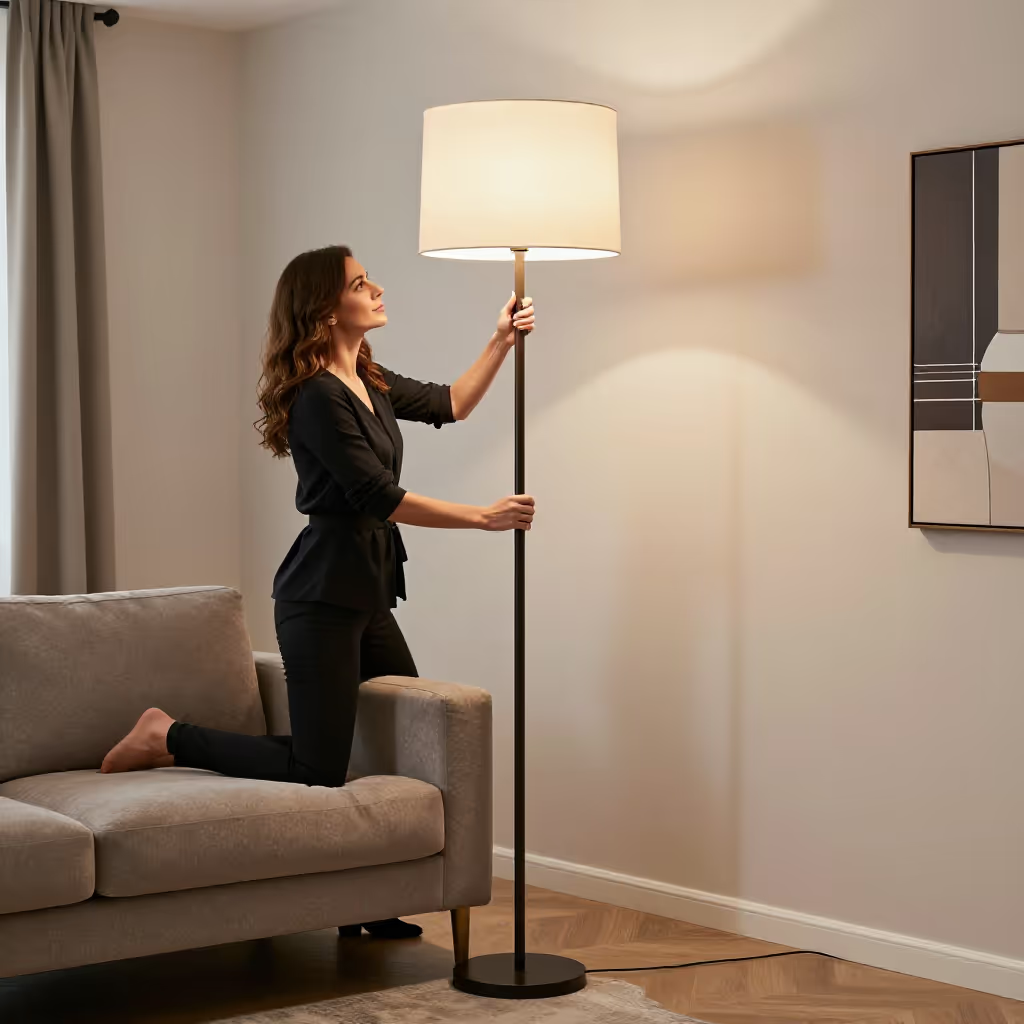
Vor dem Fest stellen wir die Lampe neben dem Eingang auf.
Before the party, we set up the lamp next to the entrance.
Ich stelle die Lampe neben das Sofa.
I put the lamp next to the sofa.