

der Tango
tango
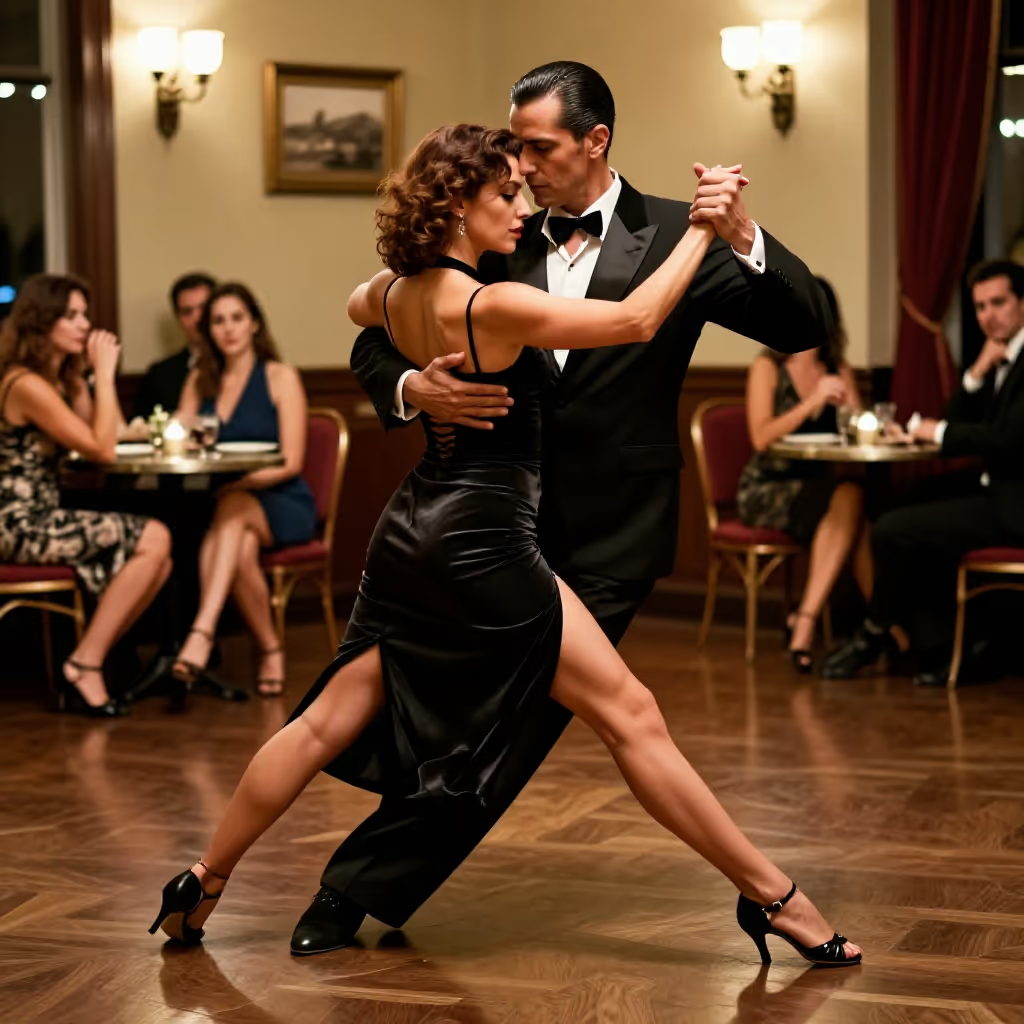
A social and competitive dance that originally comes from Argentina and Uruguay and is known for its passionate and dramatic style.
EXAMPLE
Sie haben die ganze Nacht Tango getanzt.
They danced tango all night.
tango
Loading your saved state.
tango
A social and competitive dance that originally comes from Argentina and Uruguay and is known for its passionate and dramatic style.
Sie haben die ganze Nacht Tango getanzt.
They danced tango all night.
tango
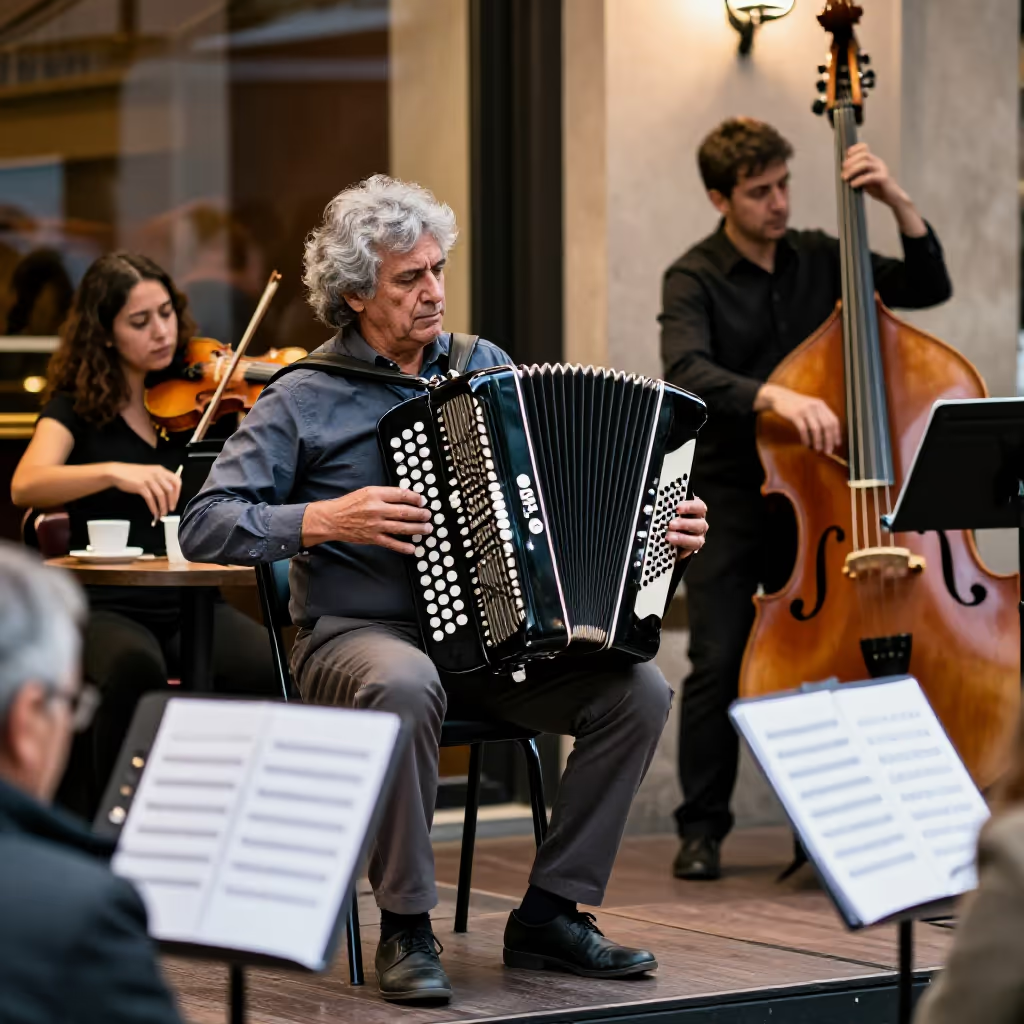
The characteristic music danced to in tango, often played with instruments such as the bandoneon.
Im Radio lief ein alter Tango von Astor Piazzolla.
An old tango by Astor Piazzolla was playing on the radio.
Whether the dance or the music is meant can usually be recognized from the verb. Verbs like 'tanzen' (to dance) or 'lernen' (to learn) refer to the dance, while verbs like 'hören' (to hear/listen to), 'spielen' (to play), or 'laufen' (to be playing) point to the music.
Sie lernt seit einem Jahr, Tango zu tanzen.
She has been learning to dance tango for a year.
When 'Tango' (tango) means the dance, the verb 'tanzen' (to dance) is almost always used. The fixed combination is 'Tango tanzen' (to dance tango).
Auf der Party haben wir bis spät in die Nacht Tango getanzt.
At the party, we danced tango until late into the night.
When 'Tango' (tango) refers to the music, it is often combined with verbs such as 'einen Tango hören' (to listen to a tango), 'einen Tango spielen' (to play a tango), or 'einen Tango komponieren' (to compose a tango).
Der Pianist spielte einen berühmten Tango für die Gäste.
The pianist played a famous tango for the guests.