


tief
deep
Describes a large extension downward, inward, or away from the surface.
EXAMPLE
Der See ist an dieser Stelle über 50 Meter tief.
The lake is over 50 meters deep at this point.
deep
Loading your saved state.
deep
Describes a large extension downward, inward, or away from the surface.
Der See ist an dieser Stelle über 50 Meter tief.
The lake is over 50 meters deep at this point.
deep
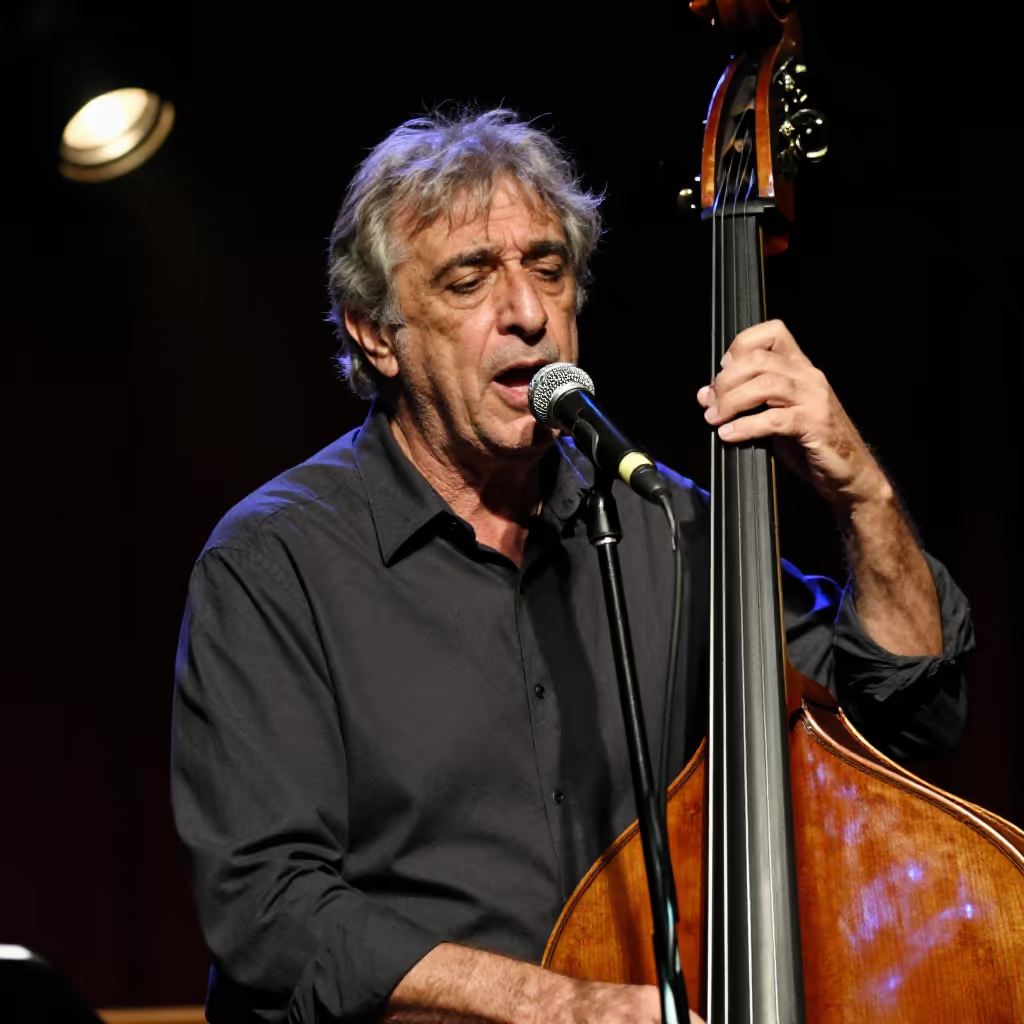
Describes a tone or voice with a low frequency.
Er hat eine sehr angenehme, tiefe Stimme.
He has a very pleasant, deep voice.

deep
Describes a feeling, thought, or state as intense, strong, or profound.
Sie empfindet eine tiefe Zuneigung für ihn.
She feels a deep affection for him.

deep
Refers to a firm, intense state, especially with sleep or concentration.
Das Baby war in einem tiefen Schlaf und wachte nicht auf.
The baby was in a deep sleep and did not wake up.

deep
Describes a color as dark, rich, and intense.
Sie trug ein Kleid in einem tiefen Rot.
She wore a dress in a deep red.

deep
Refers to a position far down or far inside an area.
Die Hütte liegt tief im Wald versteckt.
The hut lies hidden deep in the forest.
The literal meaning of 'tief' (deep)—a large extension downward—is transferred to many other areas. A feeling, a sound, a color, or sleep can also be 'tief' (deep), which then means 'intense' or 'strong'.
Er hat einen tiefen Respekt vor seiner Lehrerin.
He has deep respect for his teacher.
'Tief' (deep / deeply) can be used as an adverb to modify a verb. It then often means 'intensely' or 'thoroughly'. Typical examples are 'tief einatmen' (to breathe in deeply), 'tief nachdenken' (to think deeply), or 'tief blicken' (to look deeply).
Bevor du antwortest, atme erst einmal tief durch.
Before you answer, take a deep breath first.
In relation to acoustics, 'tief' (deep / low) describes a low frequency. The most common collocations are 'eine tiefe Stimme' (a deep voice) or 'ein tiefer Ton' (a low tone).
Der Bass erzeugt sehr tiefe Töne.
The bass produces very low tones.
To express the intensity of emotions, 'tief' (deep) is often combined with nouns for feelings. Common examples are 'tiefe Trauer' (deep grief), 'tiefe Freude' (deep joy), or 'tiefes Mitgefühl' (deep sympathy).
Nach dem Tod ihres Hundes war sie in tiefer Trauer.
After her dog's death, she was in deep grief.
In connection with states such as sleep or concentration, 'tief' (deep) means that the state is very intense and stable. The best-known collocation is 'im tiefen Schlaf sein' (to be in a deep sleep).
Er war so in tiefe Gedanken versunken, dass er die Frage nicht hörte.
He was so lost in deep thought that he did not hear the question.
With colors, 'tief' (deep) means something like 'rich' or 'dark'. For example, people say 'tiefes Schwarz' (deep black), 'tiefes Blau' (deep blue), or 'tiefes Rot' (deep red).
Der Himmel hatte ein tiefes Blau.
The sky was a deep blue.
To describe a position far inside an area, 'tief' (deep) is often used with prepositions such as 'in' or 'auf'. Typical phrases are 'tief im Meer' (deep in the sea) or 'tief in der Erde' (deep in the earth).
Wir sind tief in den Wald gewandert.
We hiked deep into the forest.
firm / fixed
Fest and tief can both describe sound sleep and are often similar. Fest schlafen emphasizes that someone continues sleeping undisturbed and does not wake up easily. Tief schlafen focuses more strongly on the intense state of sleep.

Kurz nach dem Einschlafen schläft das Kind schon tief.
Shortly after falling asleep, the child is already sleeping deeply.
Das Kind schläft trotz des Lärms fest weiter.
The child continues to sleep soundly despite the noise.