


toben
to romp
To move around, play, or run about in a wild, loud, and unrestrained way. Often used for children or animals.
EXAMPLE
Die Kinder toben nach der Schule im Garten.
The children romp around in the garden after school.
to romp / rage
Loading your saved state.
to romp
To move around, play, or run about in a wild, loud, and unrestrained way. Often used for children or animals.
Die Kinder toben nach der Schule im Garten.
The children romp around in the garden after school.

to rage
To be very angry and express this loudly and violently.
Er tobte vor Wut, als er von der Entscheidung erfuhr.
He raged with anger when he found out about the decision.
to rage
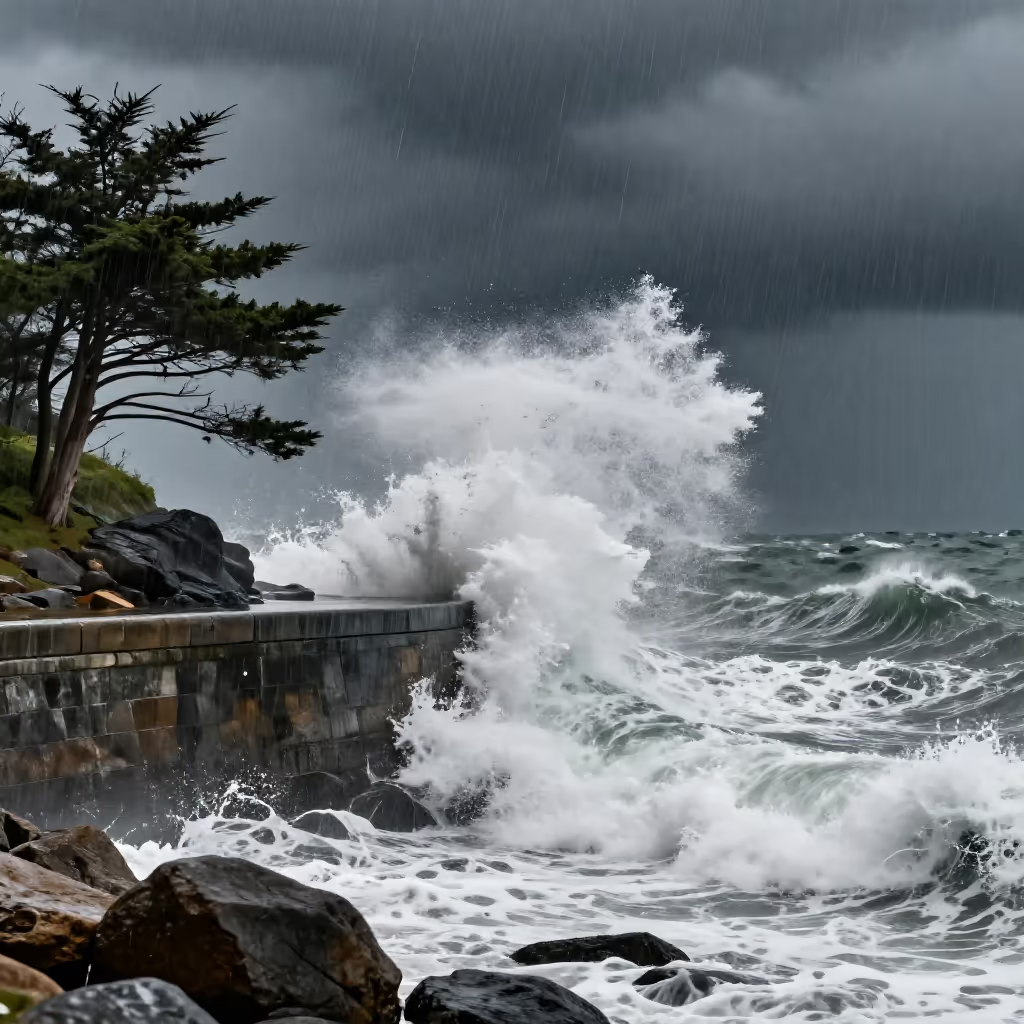
Describes forces of nature such as storms or the sea that rage with great force and intensity.
Draußen tobt ein heftiger Sturm mit Regen und Gewitter.
Outside, a fierce storm is raging with rain and thunder.

to rage
Describes a dispute, fight, or debate that is being carried out very intensely and emotionally.
Im Parlament tobt ein Streit über das neue Gesetz.
A dispute over the new law is raging in parliament.
The verb 'toben' (to romp/rage) always describes a form of wild, loud, and uncontrolled energy. This energy can be playful (children), emotional (anger), natural (storm), or metaphorical (dispute).
Die Fans tobten vor Begeisterung im Stadion.
The fans went wild with excitement in the stadium.
When the subject is children, animals, or a group of people in a playful context, 'toben' means to move around loudly and wildly. Typical places for this are the garden, the playground, or the children's room.
Die Welpen toben den ganzen Tag durch die Wohnung.
The puppies romp through the apartment all day.
To express extreme anger, 'toben' is very often used with the preposition 'vor' (with/from). The fixed phrase is 'vor Wut toben' (to rage with anger).
Mein Chef tobte vor Wut, als er den Fehler bemerkte.
My boss raged with anger when he noticed the mistake.
In connection with forces of nature such as 'Sturm' (storm), 'Meer' (sea), or 'Gewitter' (thunderstorm), 'toben' is used metaphorically. It describes these forces raging with great intensity.
Das Meer tobte und die Wellen schlugen gegen die Felsen.
The sea was raging, and the waves were crashing against the rocks.
When the subject is an abstract conflict, such as 'Streit' (dispute), 'Debatte' (debate), or 'Kampf' (fight), 'toben' means that it is being carried out very intensely and emotionally.
Seit Wochen tobt eine Debatte über die neuen Umweltgesetze.
A debate about the new environmental laws has been raging for weeks.
to do gymnastics
Turnen and toben can both describe a child moving around playfully. Turnen emphasizes skillful climbing, jumping, or other controlled movements; toben refers to wild, noisy, and uninhibited play. Use turnen when the child’s skill is noticeable, and toben for exuberant running around.
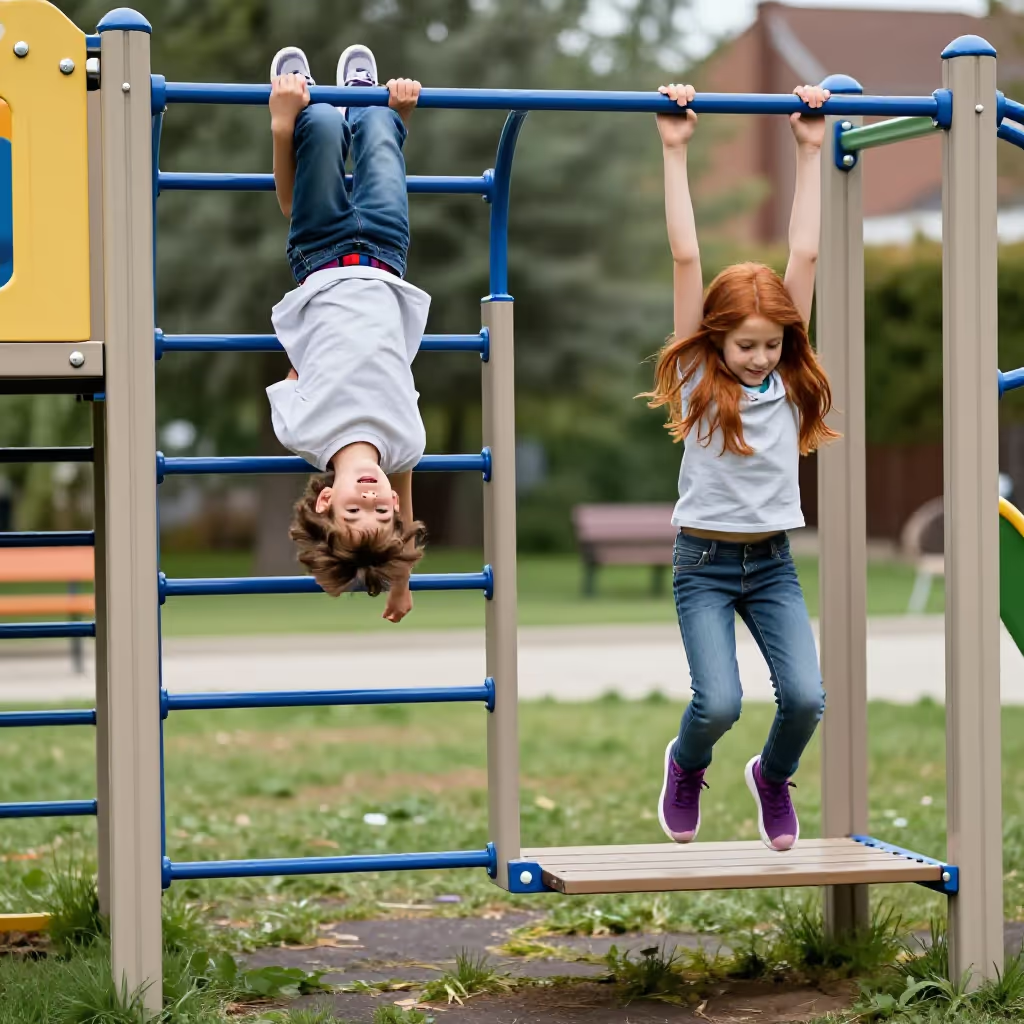
Das Kind tobte laut mit seinem Bruder über die Wiese im Garten.
The child ran wild and noisily across the lawn with his brother.
Das Kind turnte geschickt über die niedrige Kletterstange im Garten.
The child skillfully clambered over the low climbing bar in the garden.