

übersehen
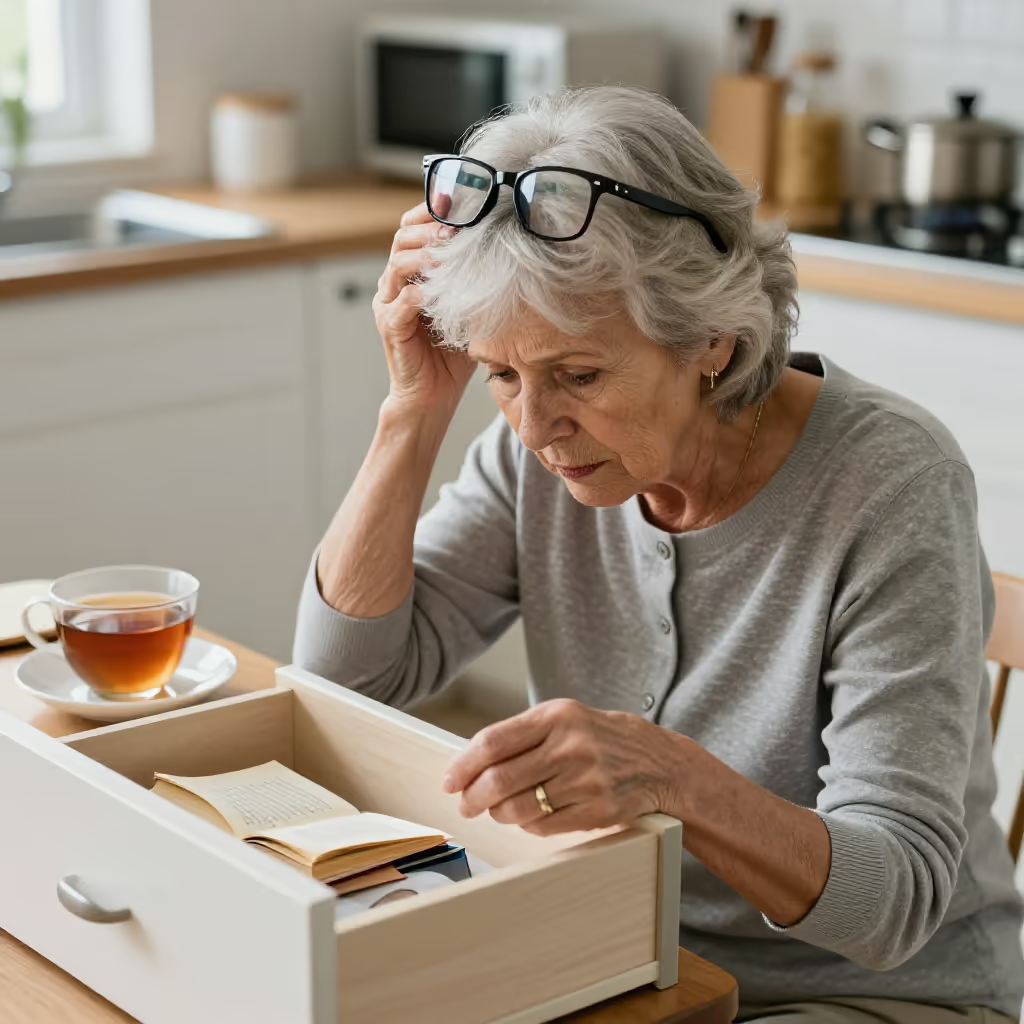
to overlook
To unintentionally not see or not notice something or someone.
EXAMPLE
Entschuldigung, ich habe das Stoppschild komplett übersehen.
Sorry, I completely overlooked the stop sign.
to overlook / survey
Loading your saved state.
to overlook
To unintentionally not see or not notice something or someone.
Entschuldigung, ich habe das Stoppschild komplett übersehen.
Sorry, I completely overlooked the stop sign.
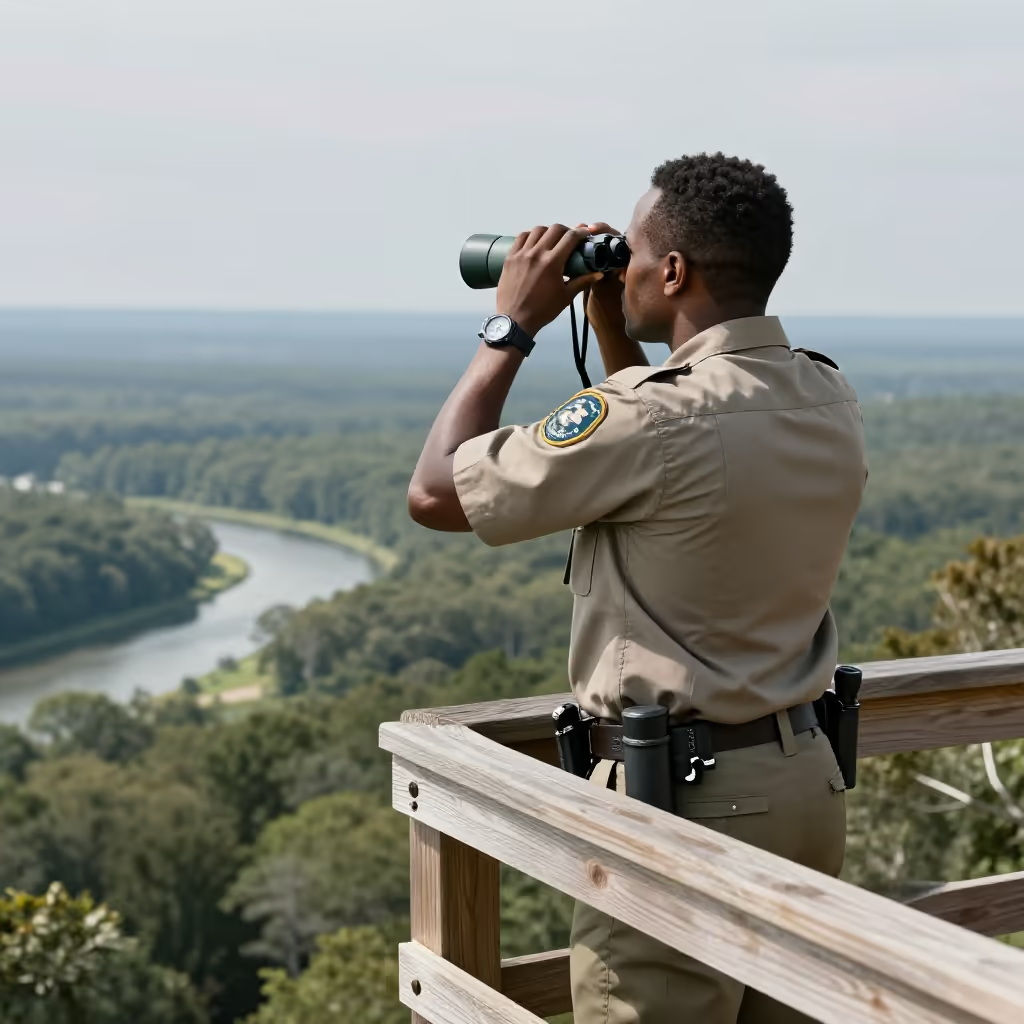
to survey
To have an overview of an area; to be able to see or take in everything from an elevated point.
Vom Turm der Burg kann man die ganze Stadt und das Umland übersehen.
From the castle tower, you can survey the whole city and the surrounding countryside.

to ignore
To deliberately pay no attention to someone or pretend not to see them, often as a sign of disrespect.
Seit unserem Streit übersehe ich sie konsequent, wenn wir uns auf dem Flur begegnen.
Since our argument, I consistently ignore her when we meet in the hallway.

to foresee
To fully grasp and understand the entirety or consequences of a situation. Often used in negative form.
Die langfristigen Folgen dieser politischen Entscheidung sind heute noch nicht zu übersehen.
The long-term consequences of this political decision cannot yet be foreseen today.
'Übersehen' is an inseparable verb. The prefix 'über-' always stays connected to the verb, even in main clauses. The past participle is therefore 'übersehen' (without 'ge-').
Ich habe die E-Mail gestern Abend völlig übersehen.
I completely overlooked the email last night.
In the meaning 'to unintentionally not notice', 'übersehen' is often combined with things that are easy to miss: 'einen Fehler übersehen' (to overlook a mistake), 'ein Detail übersehen' (to overlook a detail), or 'eine Warnung übersehen' (to overlook a warning).
Ich habe beim Korrekturlesen leider einen Tippfehler übersehen.
Unfortunately, I overlooked a typo while proofreading.
When 'übersehen' describes a physical view, it is often connected with a place from which one is looking, e.g. 'vom Turm' (from the tower), 'vom Fenster aus' (from the window).
Vom Balkon aus kann man den gesamten Park übersehen.
From the balcony, you can survey the entire park.
Whether someone is 'übersehen' (ignored / overlooked) intentionally or unintentionally is often revealed by the context. Adverbs like 'absichtlich' (intentionally) or 'konsequent' (consistently) point to a deliberate action.
Er hat mich auf der Party absichtlich übersehen, weil er sauer war.
He deliberately ignored me at the party because he was angry.
In the meaning 'to understand consequences', the verb is often negated or used in the construction 'sind nicht zu übersehen' (cannot be foreseen / cannot be overlooked). This emphasizes that the consequences are still unclear or too complex.
Die wirtschaftlichen Folgen der Pandemie sind noch gar nicht zu übersehen.
The economic consequences of the pandemic cannot yet be foreseen at all.
to escape / miss
Both words can express that someone failed to notice something. Übersehen focuses on the person's unintentional failure to notice it. With entgehen, the unnoticed detail is the subject, while the affected person is usually in the dative.
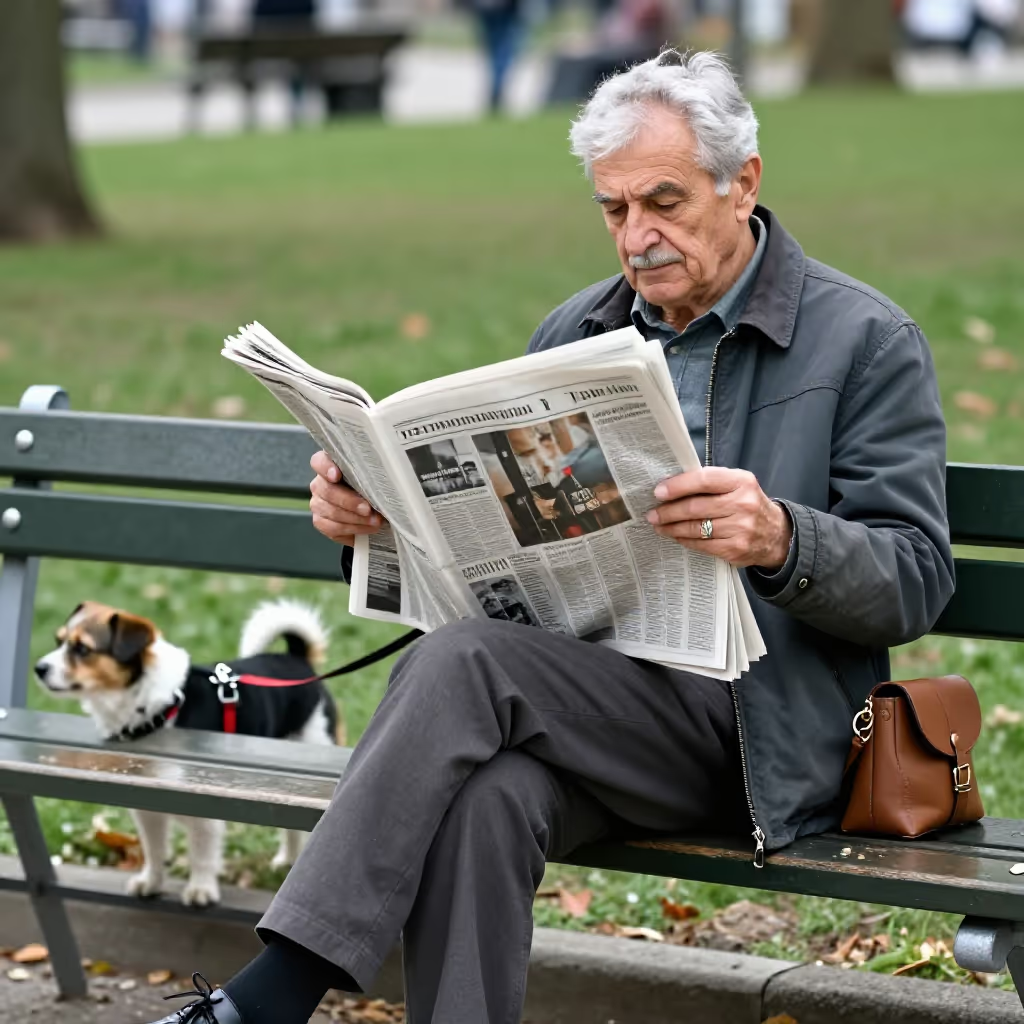
Ich habe den kleinen Hinweis am Ende der Nachricht übersehen.
I overlooked the small note at the end of the message.
Der kleine Hinweis am Ende der Nachricht ist mir entgangen.
The small note at the end of the message escaped my notice.