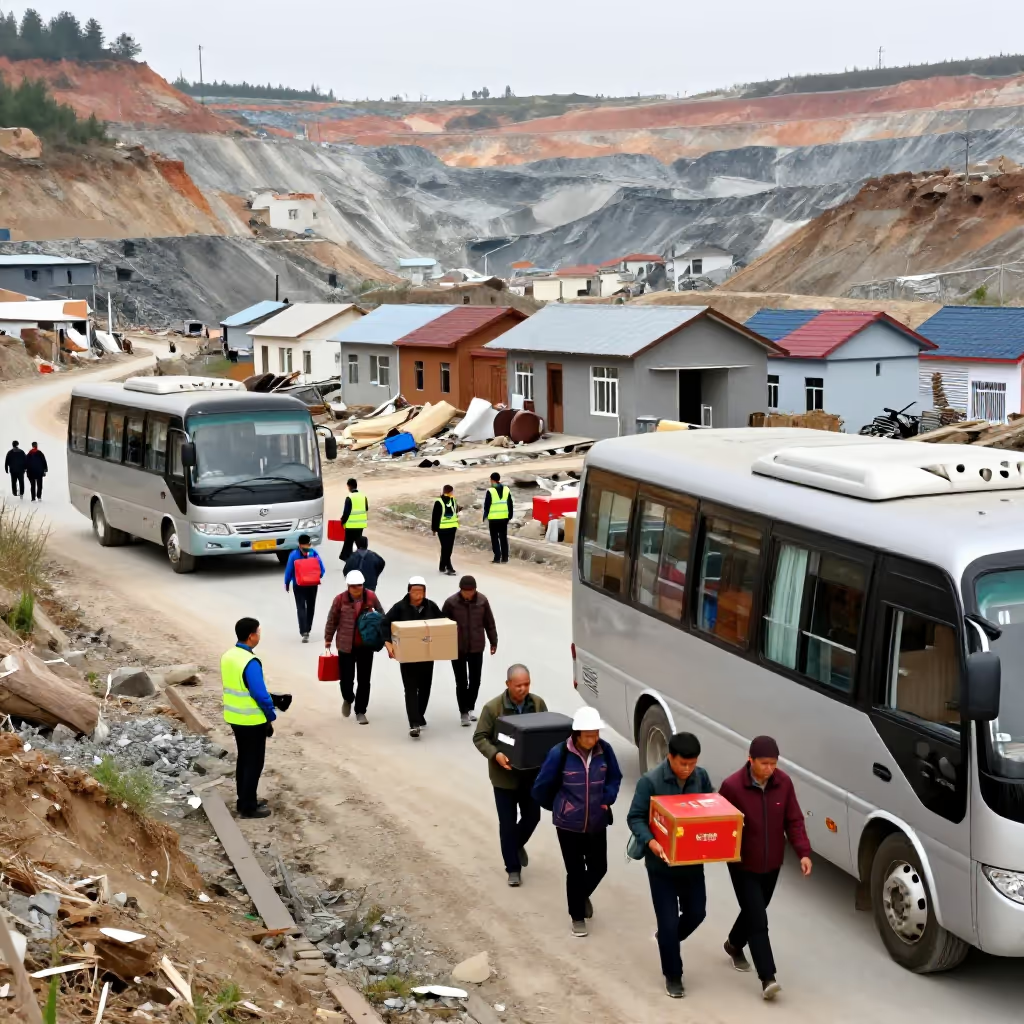
The organized process in which a group of people, a community, or the population of an entire place moves to a new place of residence. This often happens because of large-scale projects such as dams, open-cast mining, or by official order.
example
Die Umsiedlung des Dorfes für den neuen Braunkohletagebau stieß auf großen Widerstand.
The resettlement of the village for the new lignite open-cast mine met with strong resistance.
Usage tips
Word family
'Die Umsiedlung' (the resettlement) is the noun corresponding to the verb 'umsiedeln' (to resettle). The ending '-ung' turns the verb into a feminine noun that describes the process or result of the action.
EXAMPLE
Die Firma musste an einen neuen Standort umsiedeln.
The company had to relocate to a new site.
Register
The word 'Umsiedlung' (resettlement) is often used in a formal or official context, for example in the news, official documents, or academic texts.
EXAMPLE
In den Nachrichten wurde über die geplante Umsiedlung berichtet.
The planned resettlement was reported in the news.
Typical collocations
When referring to people, one often speaks of the 'Umsiedlung eines Dorfes' (resettlement of a village) or the 'Umsiedlung der Anwohner' (resettlement of local residents). A distinction is also made between a 'freiwillige' (voluntary) and an 'erzwungene' (forced) Umsiedlung.
EXAMPLE
Die erzwungene Umsiedlung war für die Bewohner sehr schmerzhaft.
The forced resettlement was very painful for the residents.
Context clue
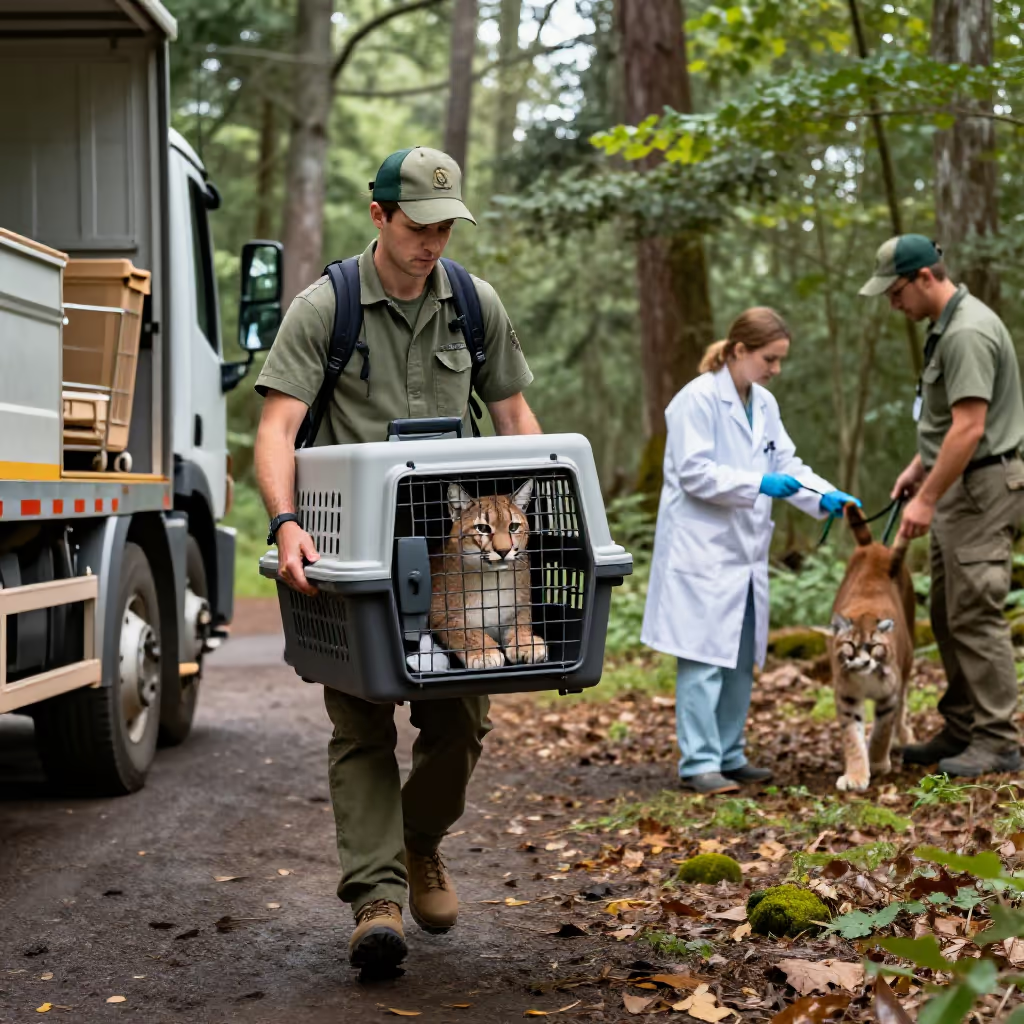
You can tell from the context whether people or animals are meant. Words like 'Dorf' (village) or 'Bewohner' (residents) point to people, while words like 'Tierart' (animal species), 'Wölfe' (wolves), or 'Fische' (fish) refer to the relocation of animals.
EXAMPLE
Die Umsiedlung der gesamten Dorfbevölkerung dauerte mehrere Monate.
The resettlement of the entire village population took several months.
Compare with
near_synonym · confusable
Umsiedlung vs Umzug
move / parade
'der Umzug' and 'die Umsiedlung' both have to do with a change of residence. 'Umzug' is normally used for individual people, families, or companies moving to another apartment, another house, or another office. 'Umsiedlung' sounds much larger and more organized. It is often about entire groups, villages, or residents of an area being brought to a new place because of a project or decision. Learners may confuse the words because both mean 'going to a new place to live'. For everyday private life, 'Umzug' is almost always the right fit; for planned large-scale changes, 'Umsiedlung' is more likely.
Umsiedlung
Wegen des neuen Staudamms begann die Umsiedlung der Familien aus dem Tal.
Because of the new dam, the resettlement of the families from the valley began.
Umzug
Yara plant ihren Umzug in die neue Wohnung für nächsten Samstag.
Yara is planning her move to the new apartment for next Saturday.