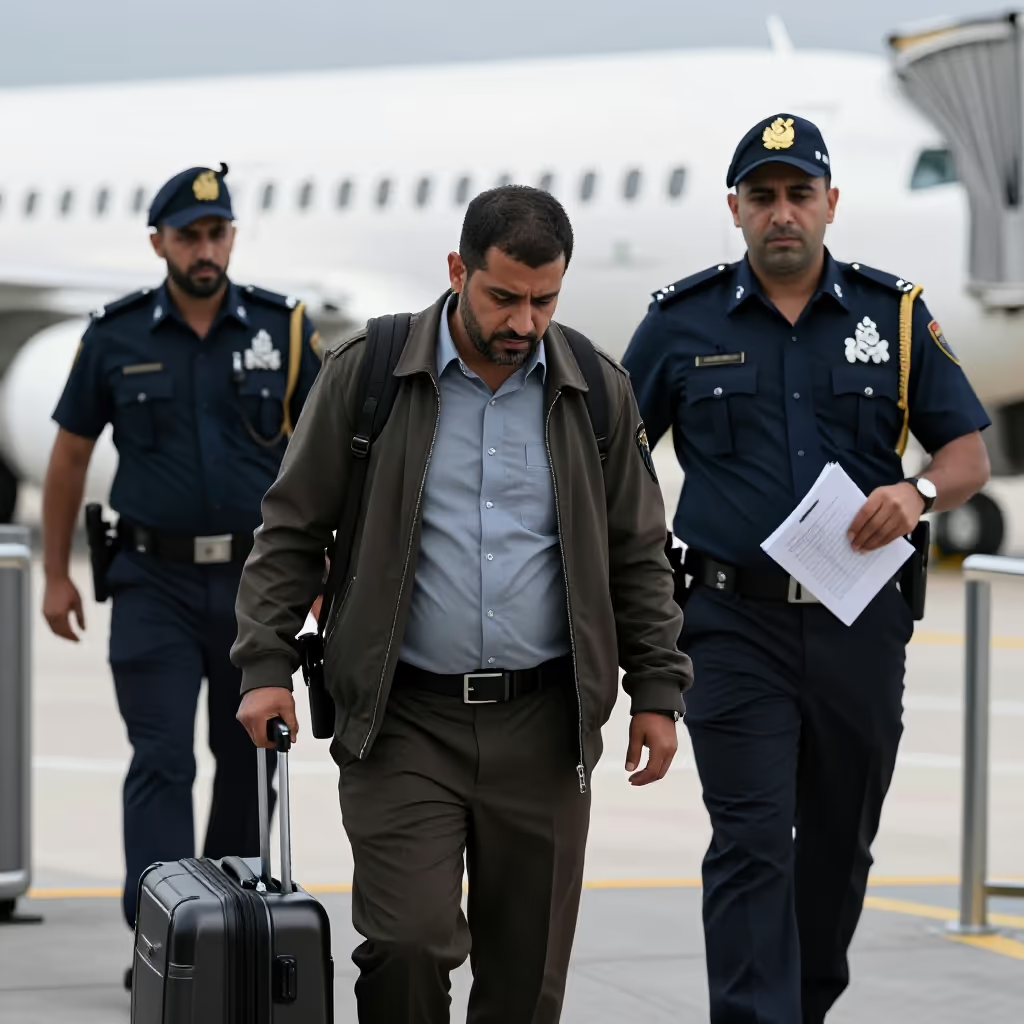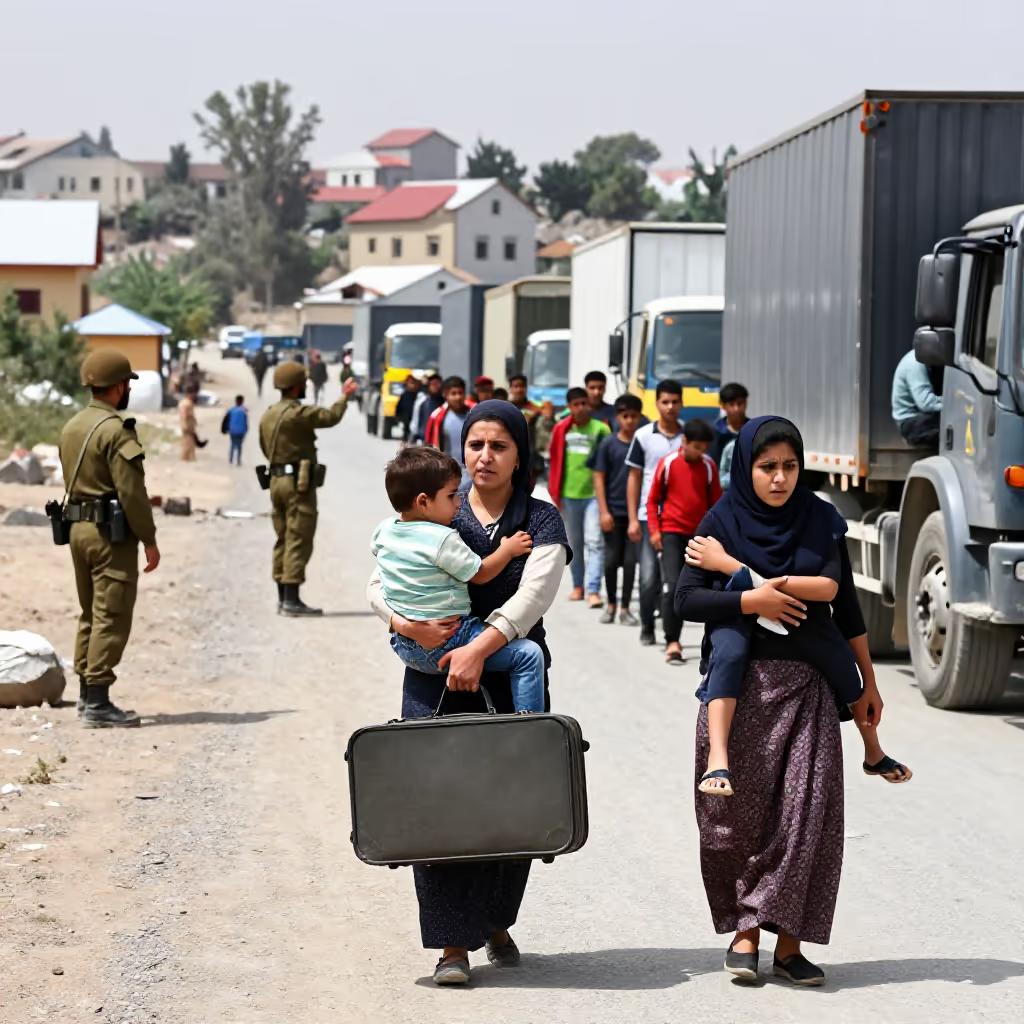
The violent and forced removal of people from their homeland, country, or region. The term is often used in the context of war, ethnic conflicts, or political persecution.
example
Die Geschichte des 20. Jahrhunderts ist von Flucht und Vertreibung vieler Völker geprägt.
The history of the 20th century is marked by the flight and expulsion of many peoples.

Usage tips
Word family
'Die Vertreibung' (the expulsion) is the noun form of the verb 'vertreiben' (to drive away / to expel). The verb means 'to force someone or something to leave a place.' The ending '-ung' turns the action into a noun.
EXAMPLE
Der Bauer versuchte, die Vögel vom Feld zu vertreiben.
The farmer tried to drive the birds away from the field.
Historical context
In this meaning, the word has strong historical and political weight. It is almost always used in connection with war, persecution, and the forced leaving of one's homeland by large groups of people.
EXAMPLE
Nach dem Krieg führte die Vertreibung zu großen Flüchtlingsströmen.
After the war, the expulsion led to large flows of refugees.
Typical collocations
Common combinations are 'Flucht und Vertreibung' (flight and expulsion) and 'die Vertreibung aus der Heimat' (expulsion from one's homeland). These expressions emphasize the involuntary and often violent nature of the event.
EXAMPLE
Das Museum dokumentiert das Schicksal von Flucht und Vertreibung.
The museum documents the fate of flight and expulsion.
Context clue
You can recognize this meaning when the context is about a specific, limited place (e.g., a garden, a house) and about animals or individual unwanted people. The context is usually everyday and not political.
EXAMPLE
Die Vertreibung der Mäuse aus dem Keller war erfolgreich.
Driving the mice out of the basement was successful.
Compare with
confusable
Vertreibung vs Flucht
escape / alignment
'die Flucht' and 'die Vertreibung' can both have to do with leaving one's homeland or a place. 'Flucht' emphasizes that people run away themselves because they are afraid, being persecuted, or in danger. 'Vertreibung' emphasizes that people are sent away by others through violence or coercion. Learners may confuse the words because the result is similar: people are no longer in their place. What matters is the direction of the action: with 'Flucht', the focus is on running away; with 'Vertreibung', it is on force by others.
Vertreibung
Die Vertreibung aus ihrem Dorf hat die Familie lange belastet.
The expulsion from their village weighed on the family for a long time.
Flucht
Viele Menschen mussten wegen des Krieges die Flucht antreten.