

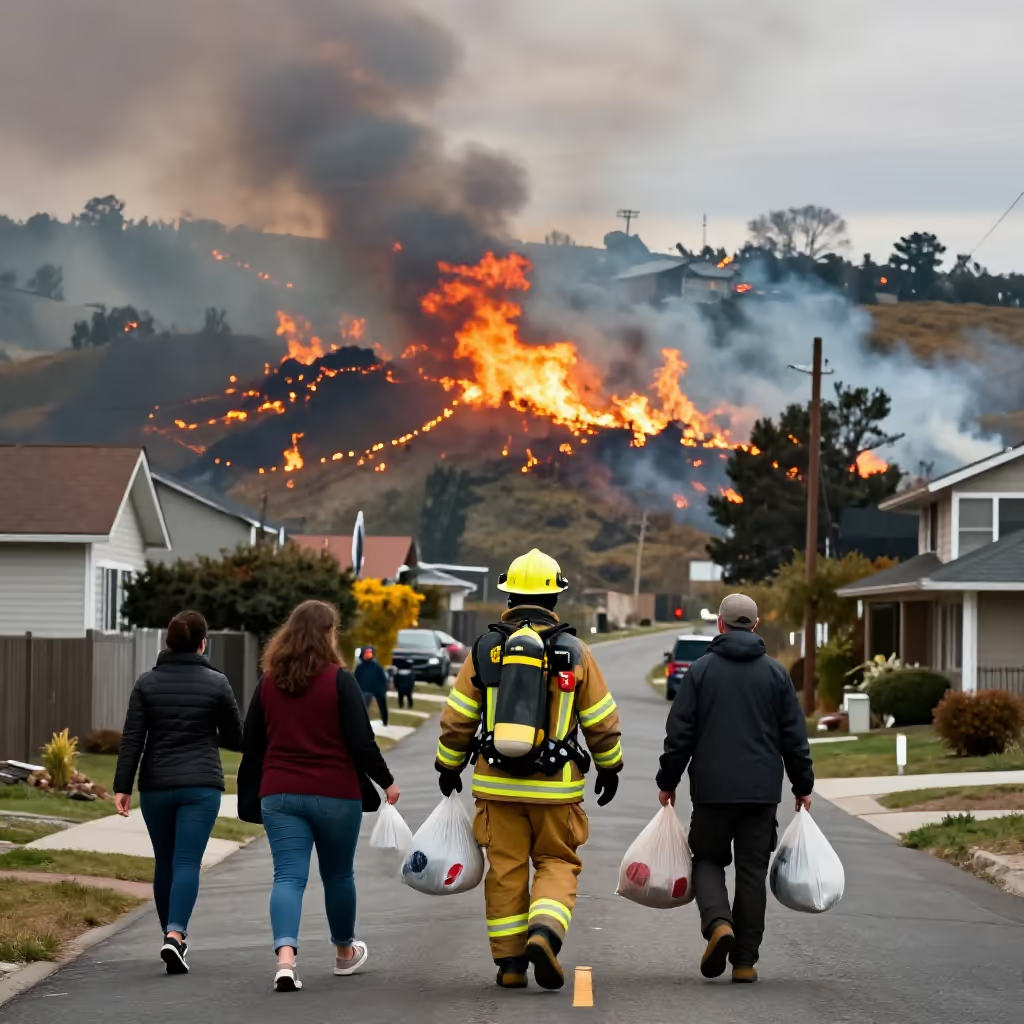
unausweichlich
inevitable
In such a way that it cannot be avoided or prevented; bound to happen.
EXAMPLE
Nach den schweren Fehlern war die Niederlage der Mannschaft unausweichlich.
After the serious mistakes, the team's defeat was inevitable.
inevitable
Loading your saved state.
inevitable
In such a way that it cannot be avoided or prevented; bound to happen.
Nach den schweren Fehlern war die Niederlage der Mannschaft unausweichlich.
After the serious mistakes, the team's defeat was inevitable.
The word is logically built: 'un-' (not) + 'ausweichen' (to dodge, avoid) + '-lich' (adjective ending). So something is 'unausweichlich' (inevitable) if you cannot 'ausweichen' (avoid) it.
Man kann dem Schicksal nicht ausweichen.
You cannot escape fate.
The adjective is directly connected to the verb 'ausweichen' (to dodge, avoid), which means 'einer Sache aus dem Weg gehen' (to get out of the way of something / avoid something). If something is inevitable, you cannot get out of its way.
Der Radfahrer konnte dem Auto gerade noch ausweichen.
The cyclist was just able to swerve out of the way of the car.
'Unausweichlich' (inevitably) is very often used as an adverb to describe that an action or event is bound to take place. It often appears at the beginning of a sentence or in the middle of a sentence.
Diese Entwicklung führt unausweichlich zu höheren Preisen.
This development inevitably leads to higher prices.
inevitable
Zwangsläufig and unausweichlich can both present an outcome as impossible to avoid. Zwangsläufig tends to emphasize the logical or causal necessity arising from the circumstances; unausweichlich highlights the lack of any way to escape the outcome. Use zwangsläufig for the reasoning that leads to it and unausweichlich for its inevitability.
Nach dem langen Ausfall war eine Verzögerung des Projekts unausweichlich.
After the long outage, a delay in the project was inevitable.
Aus dem langen Ausfall folgt zwangsläufig eine Verzögerung des Projekts.
The long outage inevitably leads to a delay in the project.