

ungeklärt
unresolved
Not yet solved, answered, or clarified; open or unclear.
EXAMPLE
Die Ursache des Unfalls ist bisher ungeklärt.
The cause of the accident is still unresolved.
unresolved / untreated
Loading your saved state.
unresolved
Not yet solved, answered, or clarified; open or unclear.
Die Ursache des Unfalls ist bisher ungeklärt.
The cause of the accident is still unresolved.
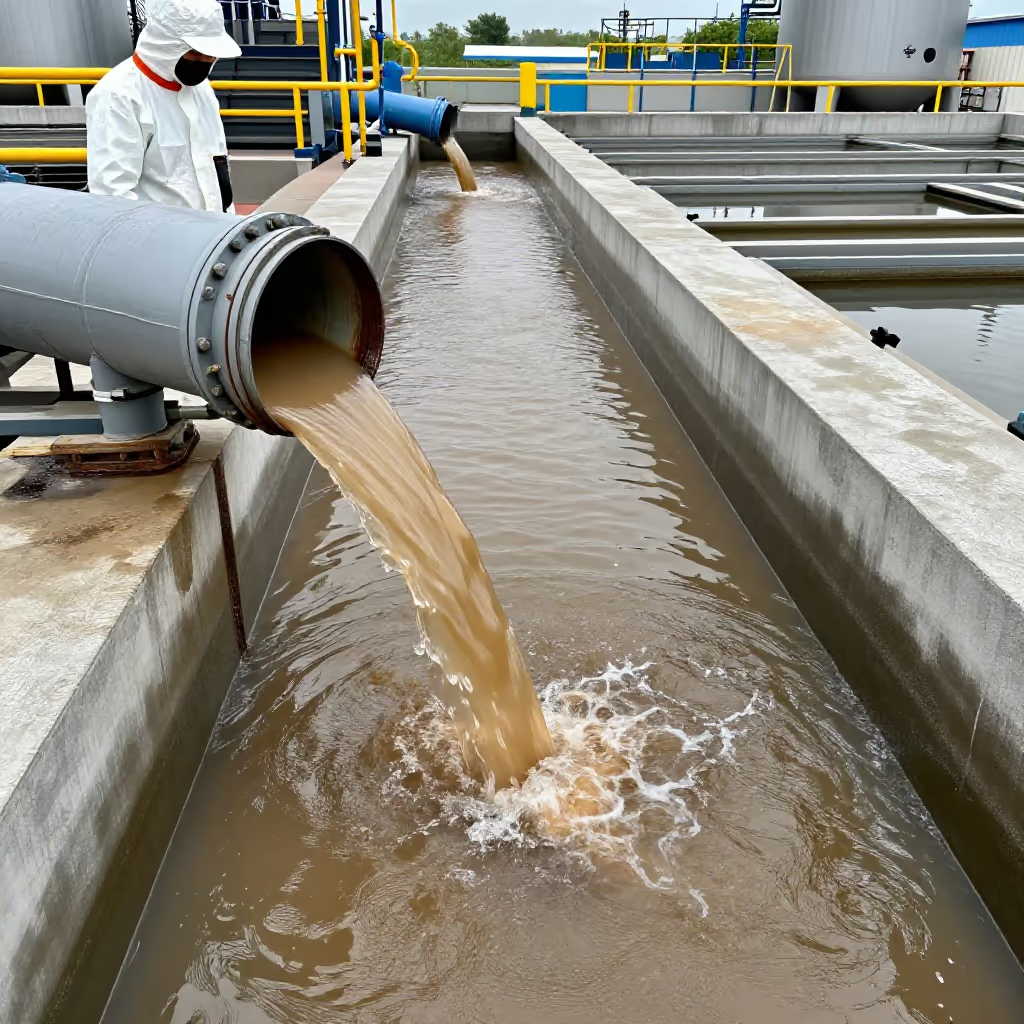
untreated
In relation to liquids, especially wastewater: not cleaned or filtered.
Das ungeklärte Abwasser belastet den Fluss stark.
The untreated wastewater is putting a heavy strain on the river.
The word is made up of two parts: the prefix 'un-' (not) and 'geklärt', the past participle (Partizip II) of 'klären' (to clarify). 'Ungeklärt' (unresolved / untreated) therefore literally means 'not clarified' or 'not solved'.
Viele Fragen zu dem historischen Ereignis sind bis heute ungeklärt.
Many questions about the historical event remain unresolved to this day.
The context reveals the meaning: If people are talking about abstract things like a question, a case, or a cause, 'ungeklärt' (unresolved) means unsolved. If people are talking about liquids such as wastewater, it means 'not cleaned'.
Der Verbleib des Geldes ist weiterhin ungeklärt.
The whereabouts of the money remain unresolved.
In the meaning 'ungelöst' (unresolved), the word is often combined with nouns such as 'Frage' (question), 'Fall' (case), 'Mord' (murder), or 'Ursache' (cause). It describes a situation for which there is still no answer or solution.
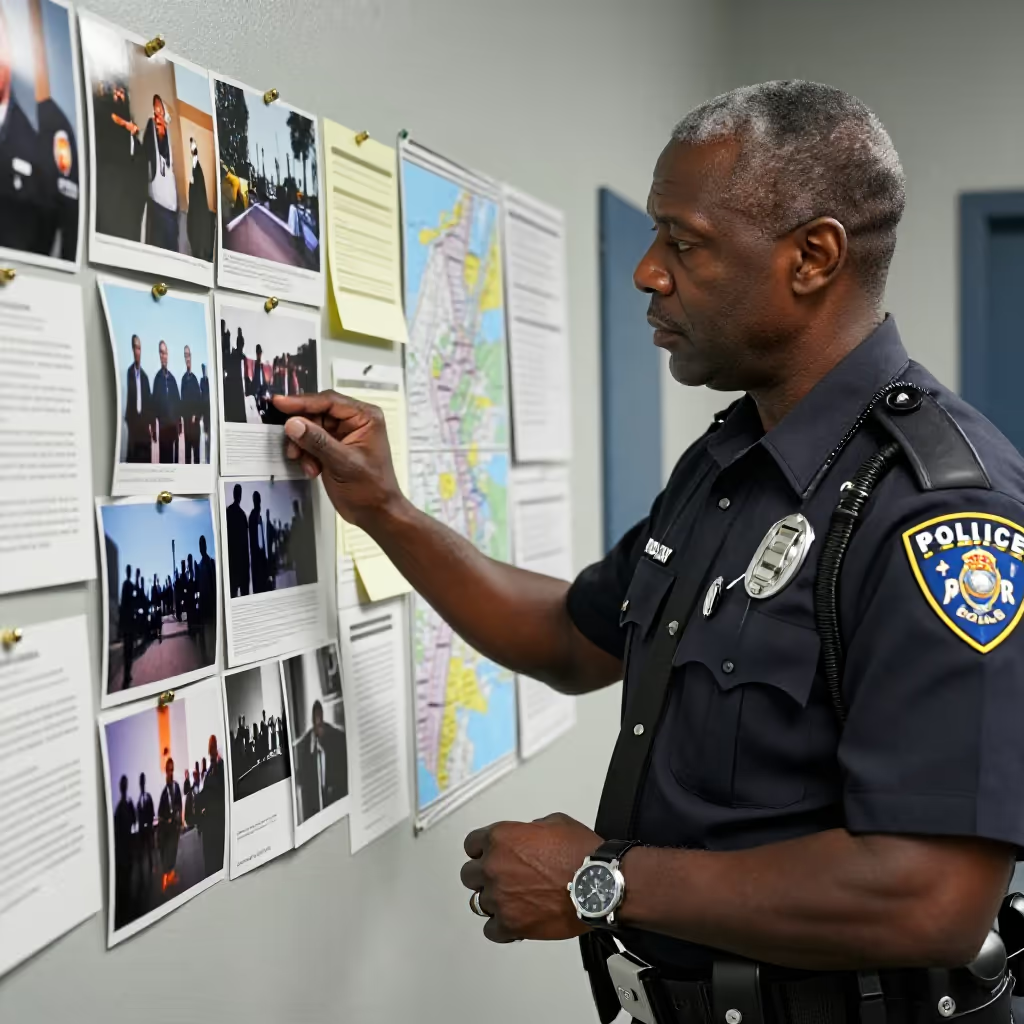
Die Polizei ermittelt in einem bisher ungeklärten Fall.
The police are investigating a case that has so far remained unresolved.
The meaning 'nicht gereinigt' (not cleaned) is mainly used in technical or environmental contexts. The most common word in this context is 'ungeklärtes Abwasser' (untreated wastewater).
Die Fabrik wurde kritisiert, weil sie ungeklärte Industrieabwässer einleitete.
The factory was criticized because it discharged untreated industrial wastewater.
open
An offene Frage has not yet been decided and remains an issue that needs further attention. An ungeklärte Frage does not yet have a sufficient explanation or answer. Offen therefore emphasizes that closure is still pending, while ungeklärt emphasizes the lack of clarification.

Trotz mehrerer Rückfragen ist ungeklärt, wer die Leitung des Projekts übernimmt.
Despite several follow-up questions, it remains unresolved who will take over management of the project.
Im Planungsgespräch bleibt offen, wer die Leitung des Projekts übernimmt.
During the planning discussion, it remains open who will take over management of the project.