

der Untergang
downfall
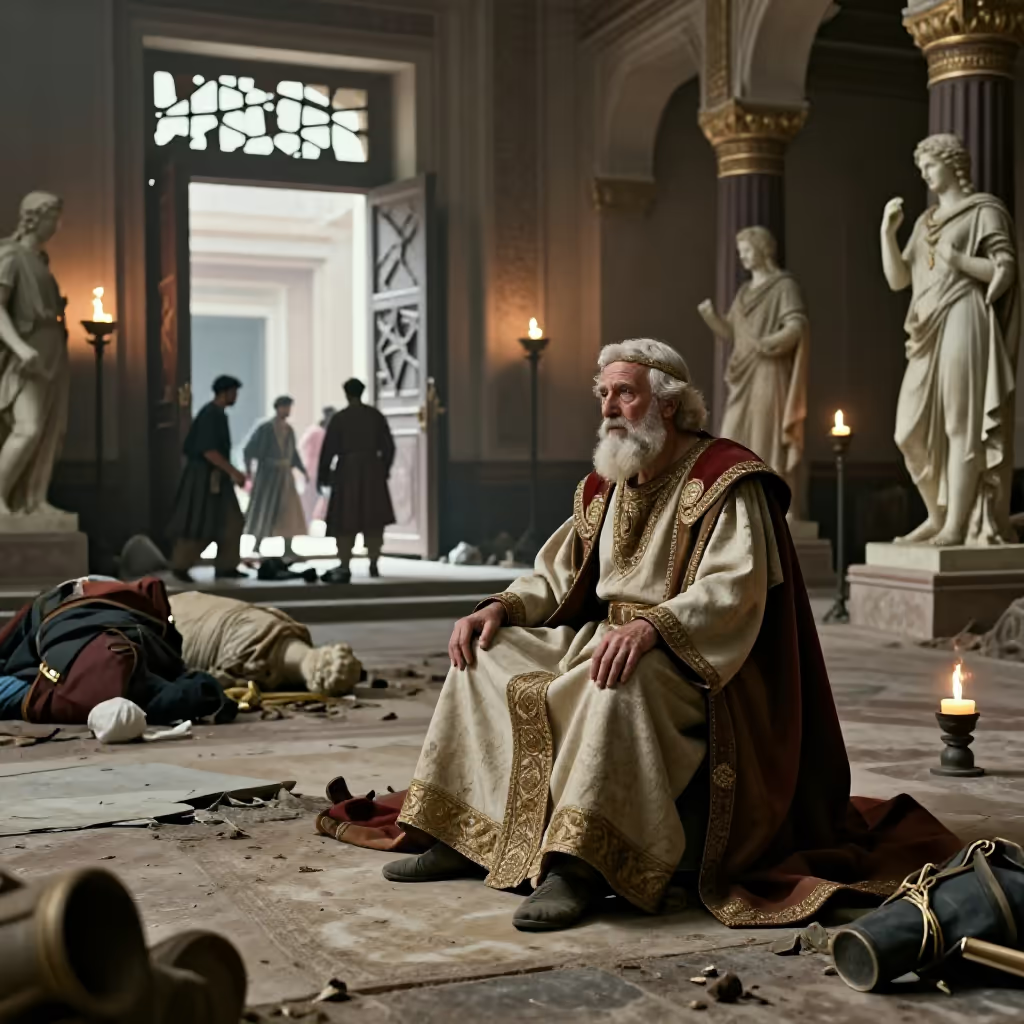
The collapse or end of an era, an empire, a culture, or a power.
EXAMPLE
Historiker diskutieren die Gründe für den Untergang des Römischen Reiches.
Historians discuss the reasons for the downfall of the Roman Empire.
downfall / sinking / sunset
Loading your saved state.
downfall
The collapse or end of an era, an empire, a culture, or a power.
Historiker diskutieren die Gründe für den Untergang des Römischen Reiches.
Historians discuss the reasons for the downfall of the Roman Empire.

sinking
The sinking of a ship.
Der Untergang der Titanic im Jahr 1912 ist weltberühmt.
The sinking of the Titanic in 1912 is world-famous.
setting / sunset
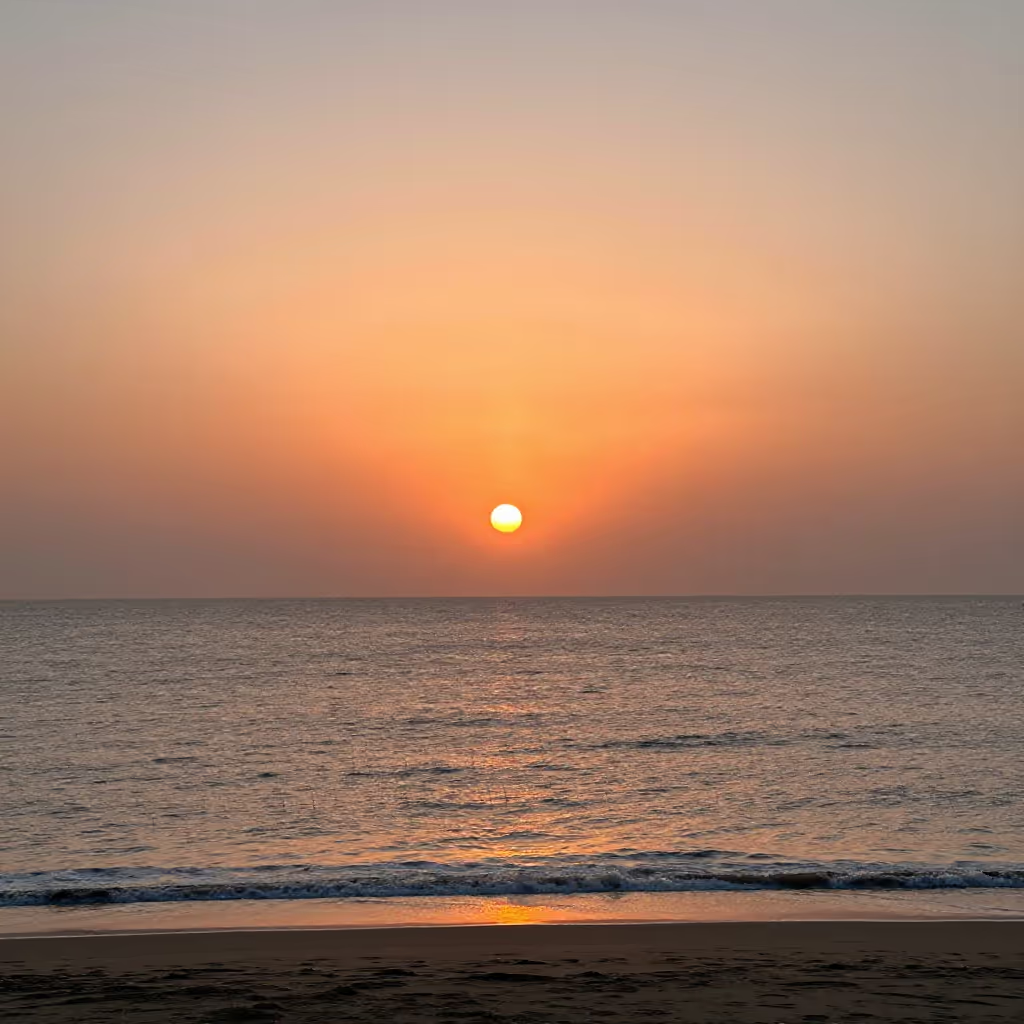
The disappearance of a celestial body, especially the sun, below the horizon.
Wir saßen am Strand und beobachteten den malerischen Untergang der Sonne.
We sat on the beach and watched the picturesque setting of the sun.
The word is made up of 'unter' (down) and 'Gang' (movement, process). So it literally describes a process of 'going down' or disappearing, which applies to all meanings.
Der Untergang des alten Systems war unvermeidlich.
The downfall of the old system was inevitable.
'Der Untergang' (the downfall/sinking/setting) is the nominalization of the separable verb 'untergehen' (to go down, sink, set). When something 'untergeht' (goes down/sinks/sets), it experiences its 'Untergang' (downfall/sinking/setting). This connection helps you understand the meaning of the noun.
Das Schiff ist gestern Nacht untergegangen.
The ship sank last night.
The noun 'Untergang' (downfall/sinking/setting) is very often used with a genitive attribute that specifies what is going down, sinking, or setting. The structure is: der Untergang + [genitive].
Der Film handelt vom Untergang einer ganzen Zivilisation.
The film is about the downfall of an entire civilization.
In historical or social contexts, 'Untergang' (downfall) is often used in fixed phrases such as 'dem Untergang geweiht sein' (to be doomed) or 'zum Untergang führen' (to lead to downfall).
Die Korruption führte zum Untergang der Regierung.
The corruption led to the downfall of the government.
For the setting of the sun, the compound word 'der Sonnenuntergang' (sunset) is used very frequently. It is a fixed and everyday vocabulary word.
Der Sonnenuntergang am Meer war wunderschön.
The sunset by the sea was beautiful.
case / fall
Der Fall and der Untergang can both refer to the end of a political power. Der Fall tends to highlight the decisive loss of power, while der Untergang emphasizes the final collapse. When talking about a historical downfall, „Fall“ is often appropriate; for the complete end, „Untergang“ is the stronger choice.

Der Untergang des alten Reiches war nach dem langen Krieg endgültig.
The downfall of the old empire was final after the long war.
Der Fall des alten Regimes begann nach dem Verlust seiner politischen Macht.
The fall of the old regime began after it lost its political power.