

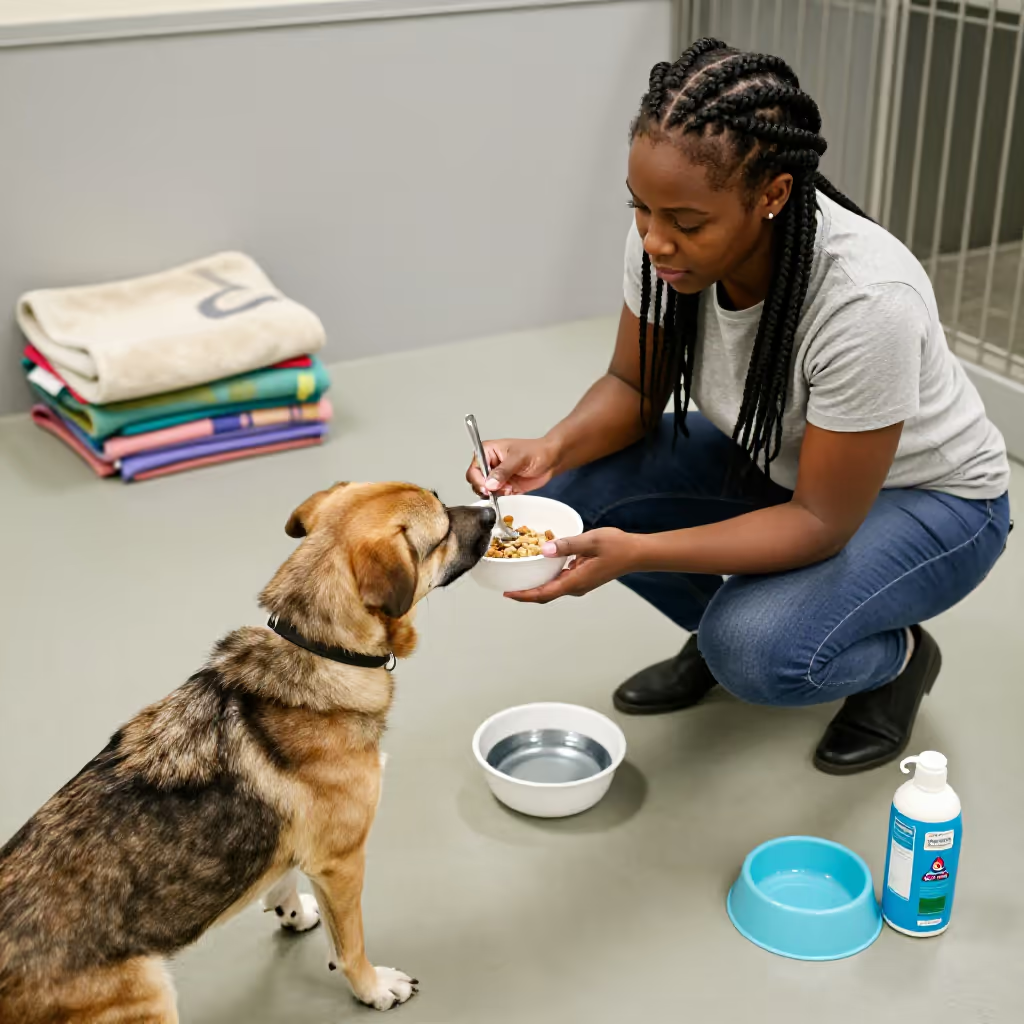
versorgen
to provide for
To give a person or an animal everything necessary for life, such as food, clothing, or care.
Die Eltern versorgen ihre Kinder mit allem, was sie brauchen.
The parents provide their children with everything they need.

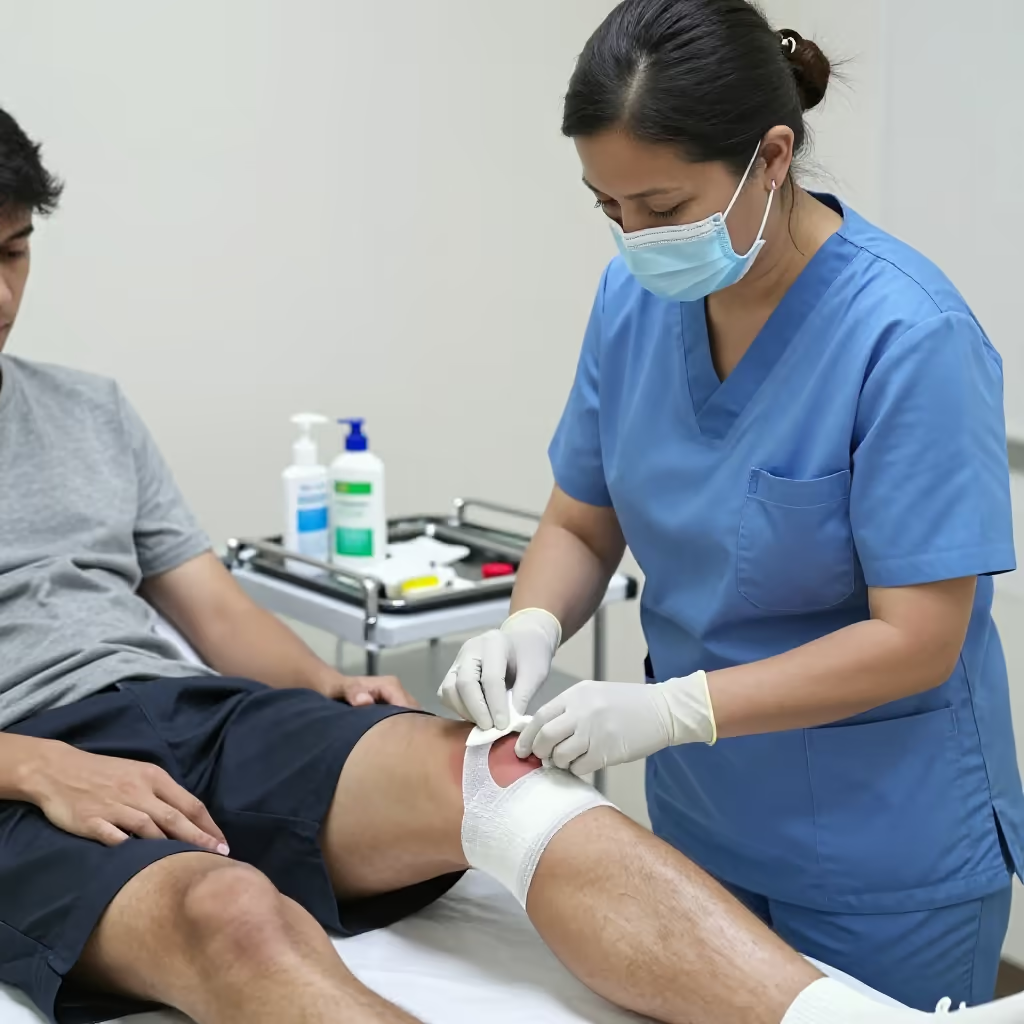
to provide / to treat
Loading your saved state.
to provide for
To give a person or an animal everything necessary for life, such as food, clothing, or care.
Die Eltern versorgen ihre Kinder mit allem, was sie brauchen.
The parents provide their children with everything they need.

'Versorgen' (to provide/supply/treat) is an inseparable verb with the prefix 'ver-'. It is derived from the verb 'sorgen' (to care/worry). While 'sorgen für' means 'to take care of', 'versorgen' describes the concrete action of providing someone with what is needed.
Sie versorgt ihre Großmutter, die nicht mehr allein leben kann.
She cares for her grandmother, who can no longer live alone.
The verb 'versorgen' (to provide/supply) is very often used with the preposition 'mit' (with) and the dative. The structure is: person/thing in the accusative + 'versorgen' + 'mit' + thing provided in the dative.
Die Hilfsorganisation versorgt die Menschen mit Lebensmitteln und Wasser.
The aid organization provides the people with food and water.
In this meaning, the subject is often an institution (e.g. a power plant, a company), and the object is a geographical area (a city, a region). What is supplied is usually a resource such as electricity, water, or data.
Das neue Rechenzentrum versorgt tausende Kunden mit Cloud-Speicher.
The new data center supplies thousands of customers with cloud storage.
You can always recognize this meaning from the medical context. The direct object is typically a wound, an injury, or a patient.
Der Wanderer versorgte seinen blutenden Arm mit einem Verband.
The hiker treated his bleeding arm with a bandage.
to connect / to bandage
'verbinden' and 'versorgen' can both be used for a wound. Here, 'verbinden' specifically means putting a bandage or cloth around the wound. 'versorgen' is broader and means the whole medical treatment, for example cleaning, disinfecting, and then bandaging. Learners may confuse the words because bandaging is often part of treating a wound. If you only mean the bandage, 'verbinden' is more precise. If you mean all the help given for an injury, 'versorgen' fits better.

Nach dem Sturz wurde die Verletzung sofort im Krankenhaus versorgt.
After the fall, the injury was treated immediately at the hospital.
Die Ärztin verbindet die kleine Wunde am Knie.
The doctor bandages the small wound on the knee.