


gehen
to go
To move on foot from one place to another; to walk.
EXAMPLE
Ich gehe jeden Morgen zur Arbeit.
I go to work every morning.
to go
Loading your saved state.
to go
To move on foot from one place to another; to walk.
Ich gehe jeden Morgen zur Arbeit.
I go to work every morning.

to go
To leave a place or head toward a specific destination.
Es ist schon spät, ich muss jetzt gehen.
It's already late, I have to go now.
to work
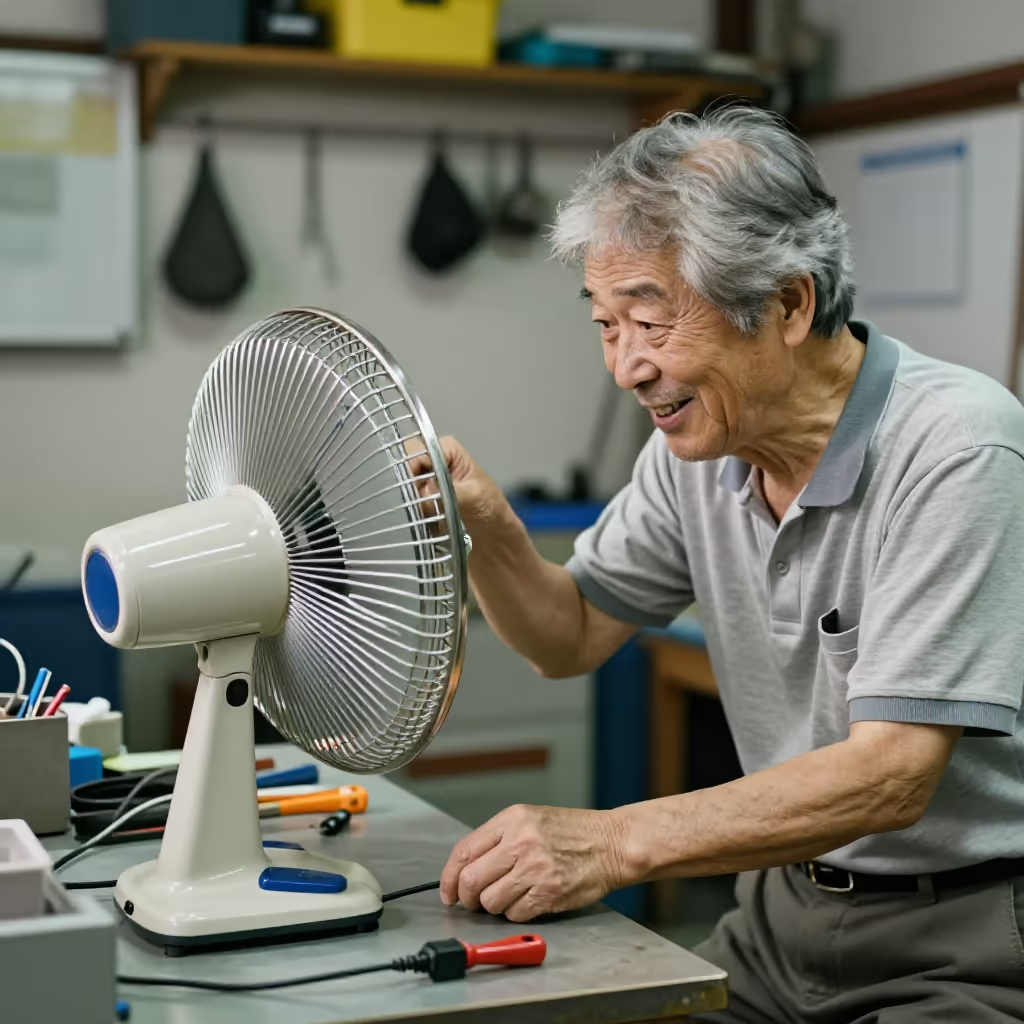
To function, to be in operation.
Meine alte Uhr geht immer noch ganz genau.
My old watch still works very accurately.
to work
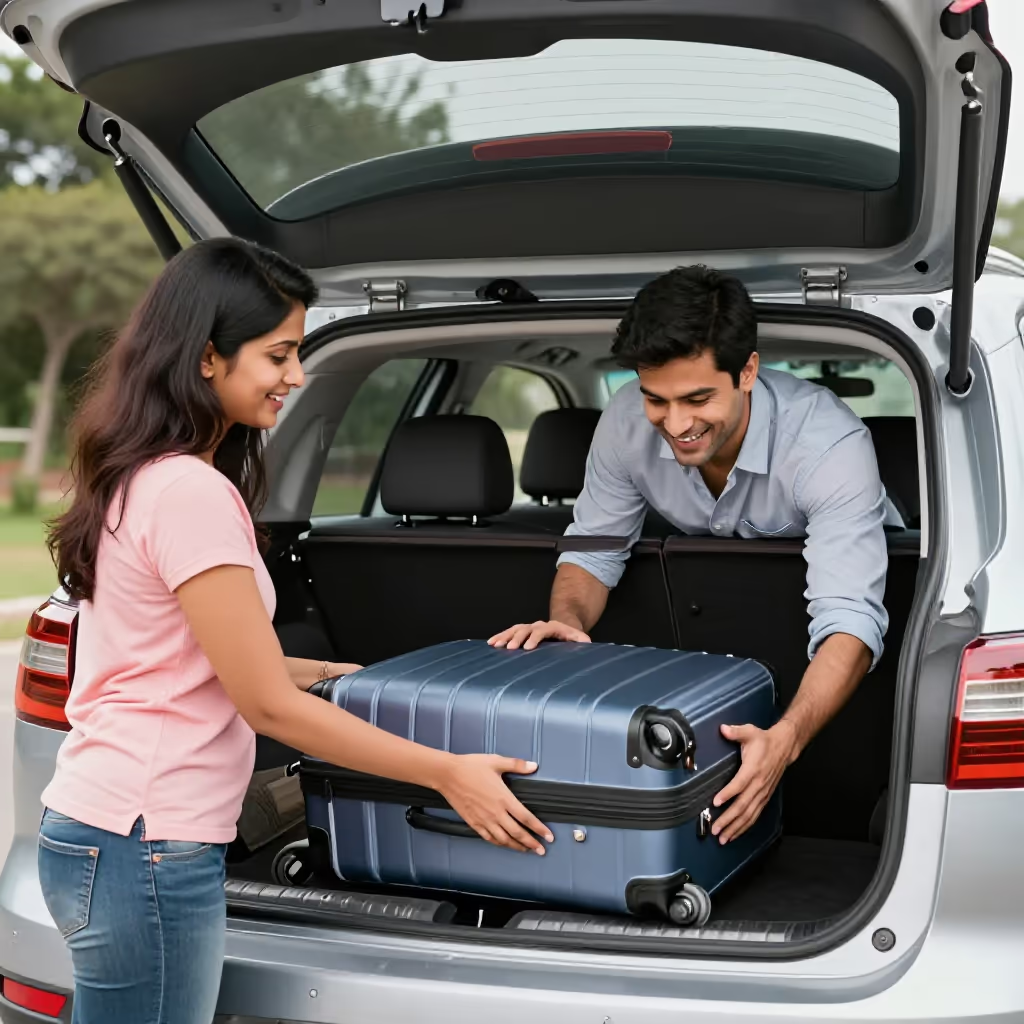
To be possible, feasible, or acceptable.
Geht es, wenn wir das Treffen auf morgen verschieben?
Would it work if we moved the meeting to tomorrow?

to be about
To deal with a specific topic; to be about something.
In dieser Diskussion geht es um die Zukunft unserer Stadt.
This discussion is about the future of our city.

how are you
To ask about someone's well-being or condition.
Hallo, lange nicht gesehen! Wie geht es dir?
Hello, long time no see! How are you?

to run
To last a certain amount of time or extend over a certain distance.
Der Wanderweg geht über 10 Kilometer durch den Wald.
The hiking trail runs over 10 kilometers through the forest.

to rise
For the volume of dough to increase through fermentation; to rise.
Der Hefeteig muss an einem warmen Ort etwa eine Stunde gehen.
The yeast dough has to rise in a warm place for about an hour.
As a verb of movement, 'gehen' (to go) always forms its past tense (Perfekt) with the auxiliary verb 'sein' (to be). So it is 'ich bin gegangen' (I went / have gone), not 'ich habe gegangen'.
Wir sind gestern Abend ins Kino gegangen.
We went to the cinema yesterday evening.
The question about well-being 'Wie geht es...?' (How is/are...?) always requires the dative. The person you are asking about is in the dative.
Wie geht es Ihnen heute?
How are you today?
The fixed expression 'es geht um' (it is about) is used to name the topic of a conversation or text. The topic that follows is always in the accusative.
In dem Film geht es um eine wahre Geschichte.
The film is about a true story.
To express that something is possible or feasible, 'gehen' (to work/be possible) is often used impersonally. The simplest form is 'Das geht' (That works/That's possible) or 'Das geht nicht' (That doesn't work/That's not possible).
Können wir uns um 15 Uhr treffen? – Ja, das geht.
Can we meet at 3 p.m.? – Yes, that works.
When 'gehen' describes movement toward a destination, it is often combined with prepositions such as 'zu' (to), 'in' (into/to), 'auf' (onto/to), or 'nach' (to). The choice of preposition depends on the destination.
Nach der Schule gehe ich zu einem Freund.
After school I go to a friend's place.
When the subject is a device, machine, or technical system, 'gehen' almost always means 'to work' or 'to function'.
Das Internet geht schon wieder nicht.
The internet isn't working again.
In the context of baking and cooking, 'gehen' or 'gehen lassen' means that dough increases in volume because of yeast. The subject is always the dough.
Lass den Pizzateig an einem warmen Ort gehen.
Let the pizza dough rise in a warm place.
To emphasize that you are moving on foot, the combination 'zu Fuß gehen' (to go on foot / to walk) is often used. This makes clear that no vehicle is being used.
Die Schule ist nicht weit, deshalb gehe ich immer zu Fuß.
The school is not far away, so I always walk.
to come
Gehen and kommen can both express movement to a place. Gehen describes leaving your current location or moving away from the person speaking, while kommen describes moving toward the person speaking or toward the destination. The direction of view is therefore decisive.

Ich bin im Flur, bitte geh jetzt ins Wohnzimmer.
I’m in the hallway; please go to the living room now.
Ich bin im Wohnzimmer, bitte komm jetzt zu mir.
I’m in the living room; please come to me now.