

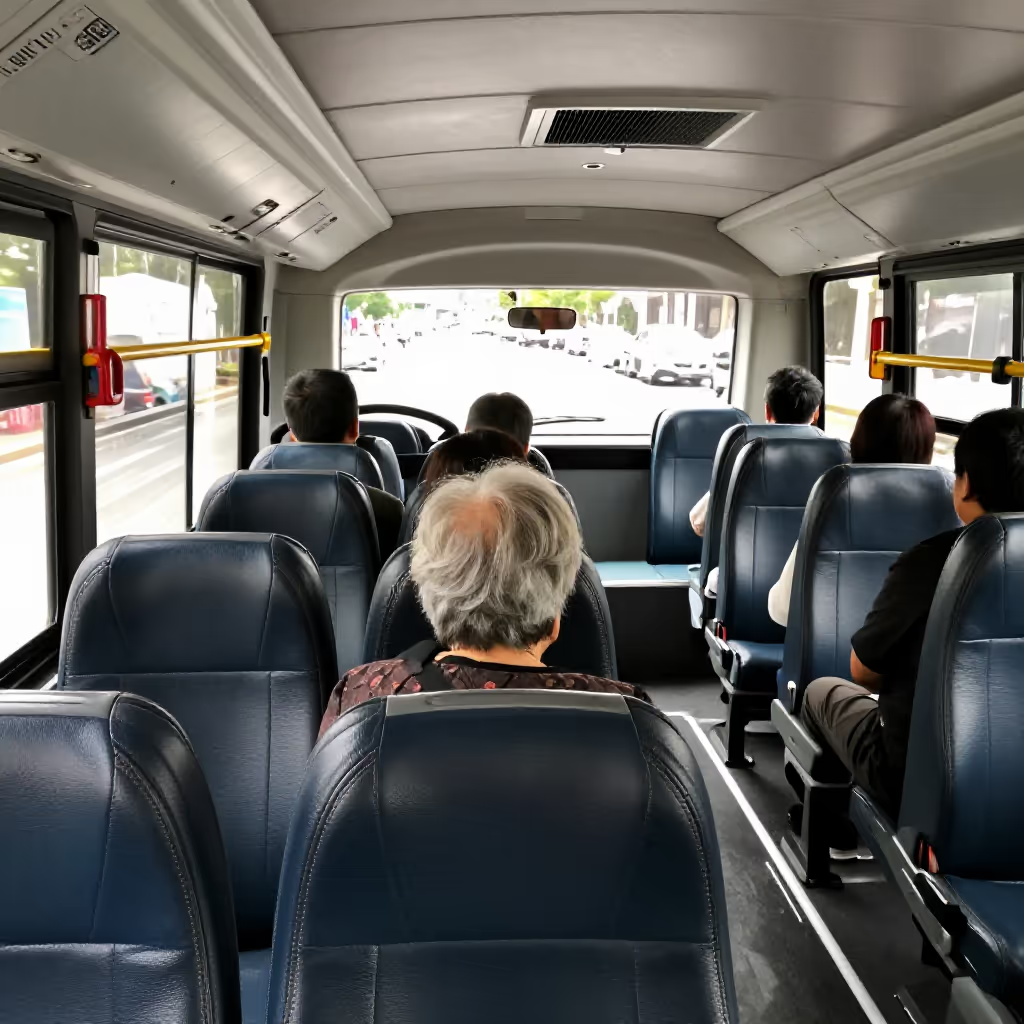
Describes the position at the front side or beginning of something, as opposed to 'hinter' (behind). It is used almost exclusively in its inflected form before a noun, e.g. 'vordere', 'vorderes'.
example
Der vordere Reifen des Fahrrads hat einen Platten.
The front tire of the bicycle has a flat.

Usage tips
Only before a noun
The adjective 'vorder-' (front) can only appear in its declined form before a noun, e.g. 'der vordere Platz' (the front seat/place). It cannot be used alone at the end of a sentence.
EXAMPLE
Bitte benutzen Sie die vordere Tür zum Einsteigen.
Please use the front door to board.
Common mistake
You cannot say 'Der Sitz ist vorder.' To describe a position at the end of a sentence, you must use the adverb 'vorne' (at the front / in front).
EXAMPLE
Der vordere Bereich des Busses ist für Kinderwagen reserviert.
The front area of the bus is reserved for strollers.
Typical collocations
'Vorder-' (front) is often combined with parts of objects, vehicles, or bodies. Typical examples are 'die vordere Reihe' (the front row), 'das vordere Bein' (the front leg), or 'der vordere Teil' (the front part).
EXAMPLE
Mein vorderer Zahn braucht eine Füllung.
My front tooth needs a filling.
Compare with
antonym · confusable
vorder vs hinter
behind
'hinter' and 'vorder' both describe a position in relation to a front and back side. But they are opposites: 'hinter' means the back side or movement there. 'vorder' means the front side or the front part. The grammar is also important: 'hinter' is a preposition and comes before a noun phrase, for example 'hinter dem Haus' (behind the house) or 'hinter das Haus' (behind the house / to behind the house). 'vorder' is used almost only in an inflected form before a noun, for example 'die vordere Tür' (the front door). Learners may confuse the words because both talk about position on an object. As a practical rule: use 'hinter' for the back side, and use 'vordere', 'vorderer', or 'vorderes' for the front part.