

wärmen
to warm
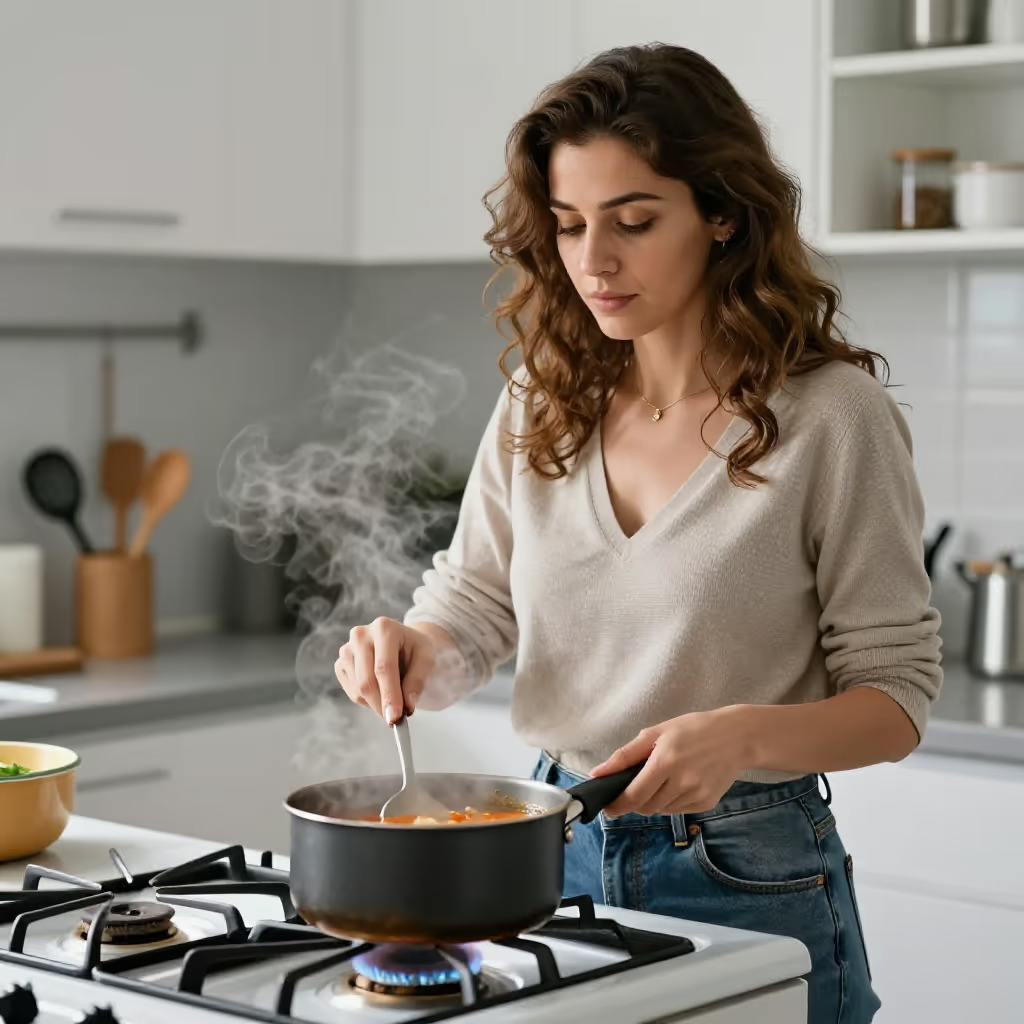
To deliberately expose something to a heat source in order to raise its temperature.
EXAMPLE
Ich wärme mir schnell die Suppe von gestern in der Mikrowelle.
I'll quickly warm yesterday's soup in the microwave.
to warm
Loading your saved state.
to warm
To deliberately expose something to a heat source in order to raise its temperature.
Ich wärme mir schnell die Suppe von gestern in der Mikrowelle.
I'll quickly warm yesterday's soup in the microwave.
to warm oneself
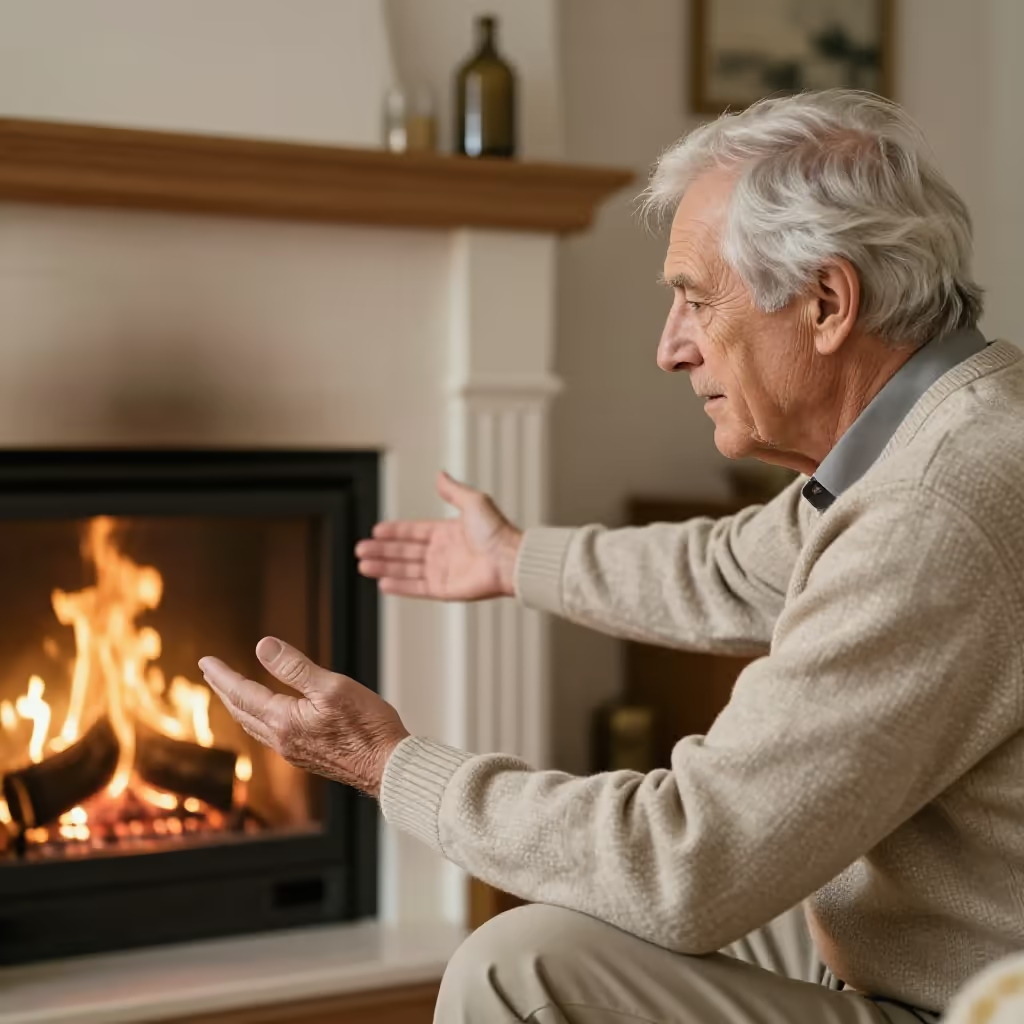
To expose one's own body to a heat source in order not to be cold.
Die Katzen wärmen sich auf der sonnigen Fensterbank.
The cats are warming themselves on the sunny windowsill.

to keep warm
As a property, to give off warmth and thereby protect against the cold.
Dieser Wollpullover wärmt auch bei Minusgraden noch sehr gut.
This wool sweater keeps you very warm even in sub-zero temperatures.
The verb 'wärmen' (to warm) belongs to the word family of 'warm' (adjective) and 'die Wärme' (warmth; noun). All these words refer to a pleasantly high temperature.
Die Frühlingssonne wärmt schon angenehm.
The spring sun is already pleasantly warm.
'Wärmen' (to warm) can be used in three ways: transitively (you warm something), reflexively (you warm yourself), or intransitively (something keeps warm by itself).
Kannst du bitte die Milch für das Baby wärmen?
Can you please warm the milk for the baby?
When you deliberately heat something, typical objects are foods and drinks. Common combinations are 'eine Suppe wärmen' (to warm a soup), 'das Essen wärmen' (to warm the food), or 'seine Hände wärmen' (to warm one's hands).
Er wärmte seine kalten Hände an der heißen Tasse.
He warmed his cold hands on the hot cup.
When you warm yourself, the heat source is often given with the prepositions 'an' (+ dative) or 'in' (+ dative).
Die Wanderer wärmten sich am Lagerfeuer.
The hikers warmed themselves by the campfire.
In this meaning, the subject of the sentence is the source of warmth, often a piece of clothing, a blanket, or the sun. The verb describes a property of that thing.
Ein guter Schlafsack wärmt auch in kalten Nächten.
A good sleeping bag keeps you warm even on cold nights.
to heat / speed
Heizen usually refers to heating a room by operating a heating system. Wärmen, by contrast, focuses on the warmth given off and its effect in protecting against the cold. Whoever uses the heating system heizt the room; a heat source or an object can wärmen the room.
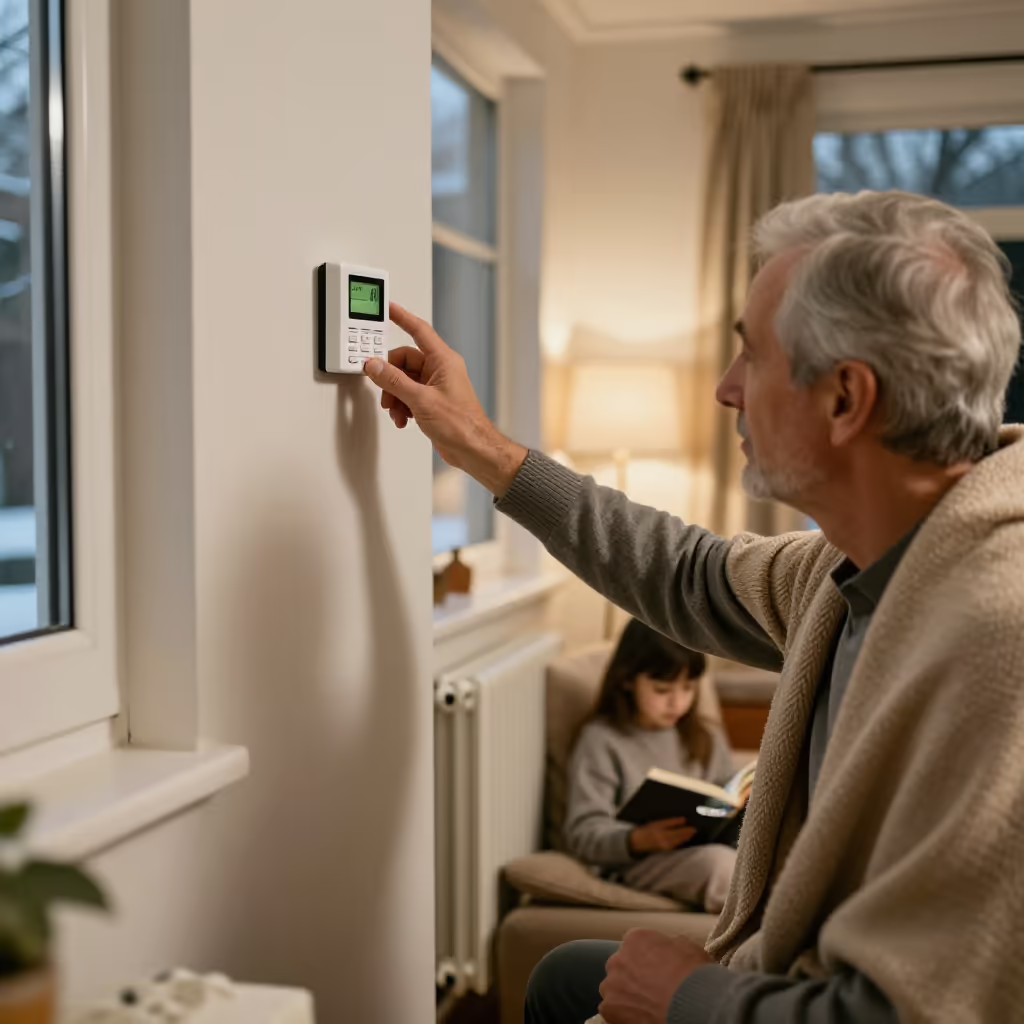
Im Winter wärmt der kleine Ofen das Wohnzimmer.
In winter, the small stove warms the living room.
Im Winter heizen wir das Wohnzimmer mit der Zentralheizung.
In winter, we heat the living room with the central heating.