

weiß
white
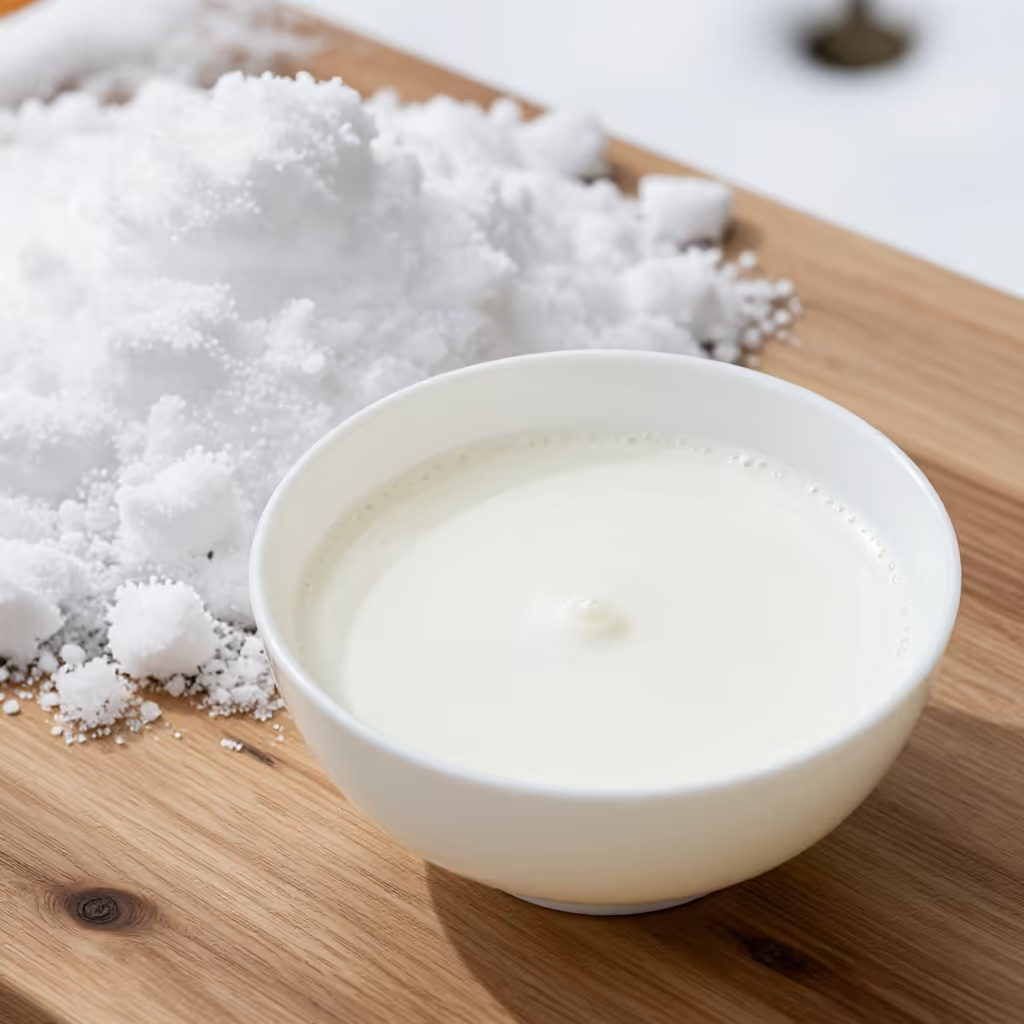
Having the color of snow or milk; the lightest of all colors.
EXAMPLE
Die Wände sind frisch weiß gestrichen.
The walls have been freshly painted white.
white
Loading your saved state.
white
Having the color of snow or milk; the lightest of all colors.
Die Wände sind frisch weiß gestrichen.
The walls have been freshly painted white.
pale
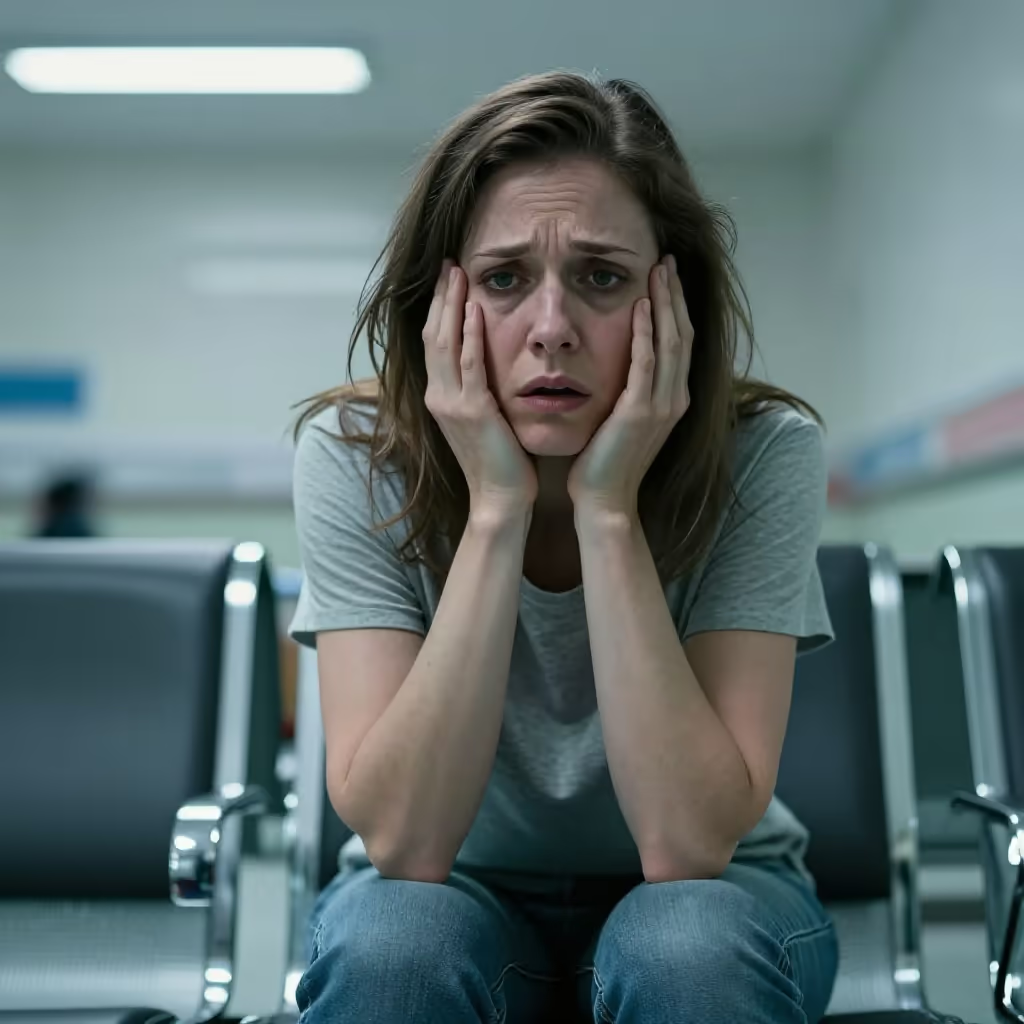
To be very pale in the face, often as a reaction to fear, shock, or illness.
Als sie die Nachricht hörte, wurde sie ganz weiß im Gesicht.
When she heard the news, her face went completely pale.

to have a clean record
To be innocent; to have nothing to reproach oneself for.
Der Politiker betonte, dass er in dieser Affäre eine weiße Weste habe.
The politician emphasized that he had a clean record in this affair.
white goods
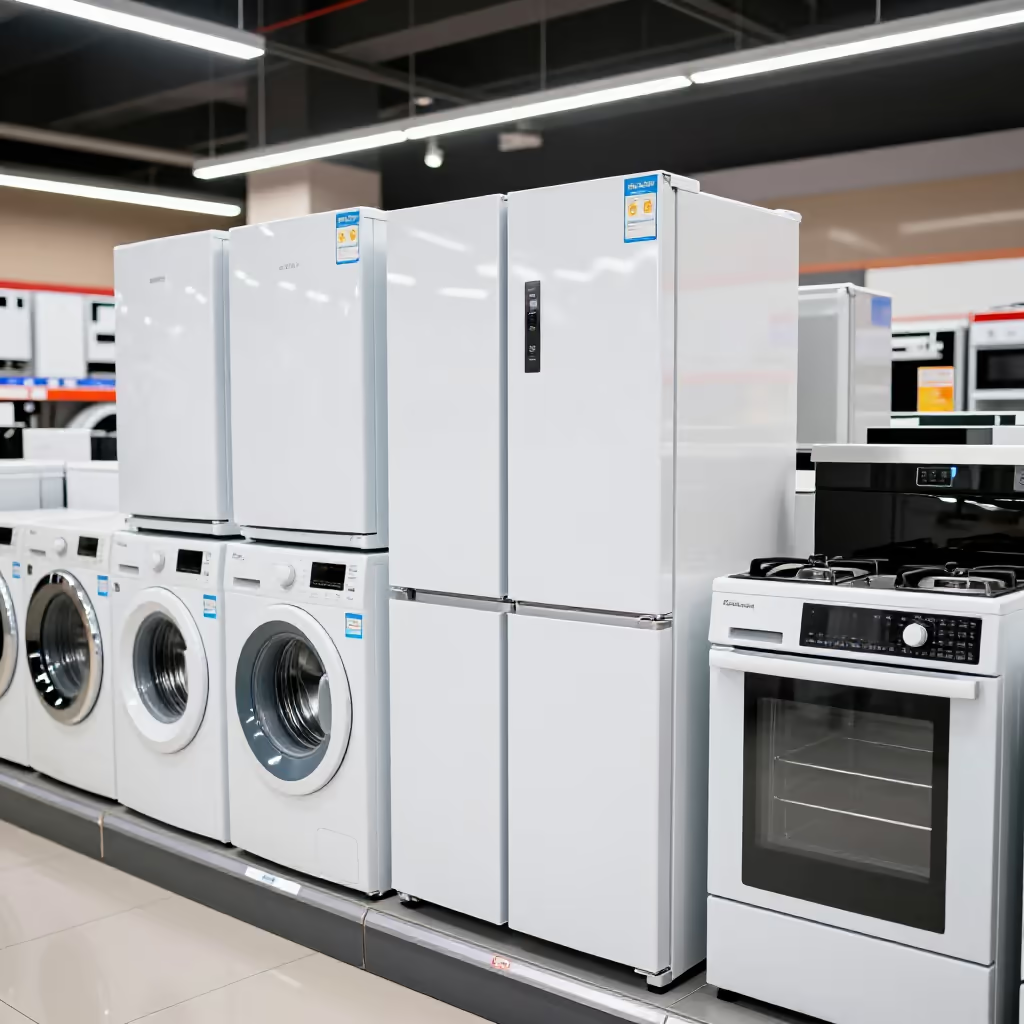
A commercial term for large electrical household appliances such as washing machines, refrigerators, or stoves.
Im Elektrofachmarkt gibt es diese Woche Rabatte auf weiße Ware.
At the electronics store, there are discounts on white goods this week.
The adjective 'weiß' (white; color) is pronounced the same as the verb form 'weiß' (know; from 'wissen'). Pay attention to the spelling and the context so you don't confuse them.
Das Papier ist weiß.
The paper is white.
In the meaning 'blass' (pale), 'weiß' (white/pale) is often used with verbs such as 'werden' (to become) or 'sein' (to be) and together with 'im Gesicht' (in the face). It describes a visible physical reaction.
Er wurde plötzlich ganz weiß im Gesicht.
His face suddenly went completely pale.
The idiom 'eine weiße Weste haben' (to have a clean record; literally, to have a white vest) is a fixed unit. It means that someone is innocent or that nothing can be proven against them.
Er behauptet, in der ganzen Sache eine weiße Weste zu haben.
He claims to have a clean record in the whole matter.
The expression 'weiße Ware' (white goods) is a technical term from commerce. It is used specifically for large household appliances such as refrigerators or washing machines.
Die Abteilung für weiße Ware befindet sich im Untergeschoss.
The white goods department is located in the basement.
gray
Both words can be appropriate for very light hair that has turned that way with age. Grau usually describes the typical condition of hair in old age, while weiß places more emphasis on the visibly very light color. Use grau for the usual description of aging and weiß when the color looks especially light.
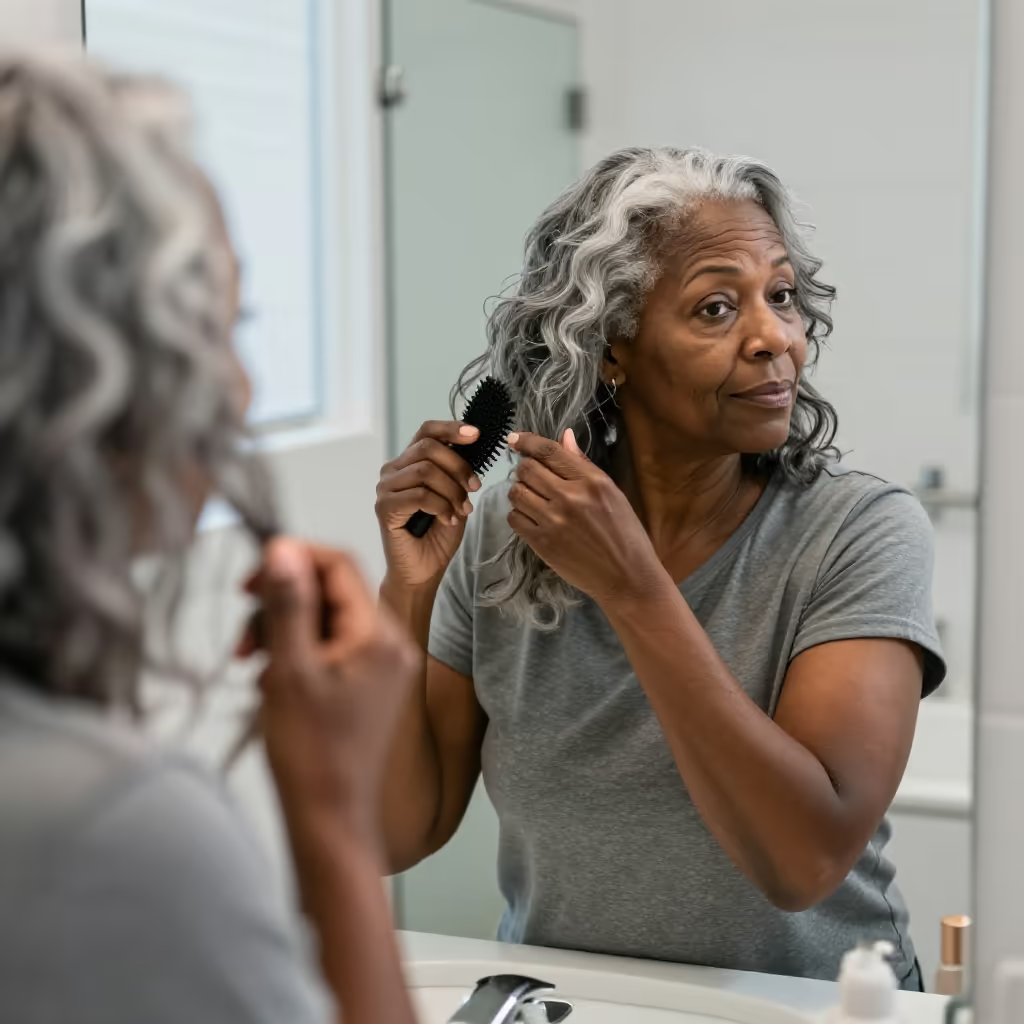
Im hohen Alter war ihr Haar fast vollständig weiß.
In old age, her hair was almost completely white.
Seit einigen Jahren trägt er sein graues Haar ganz kurz.
For several years now, he has kept his gray hair very short.