

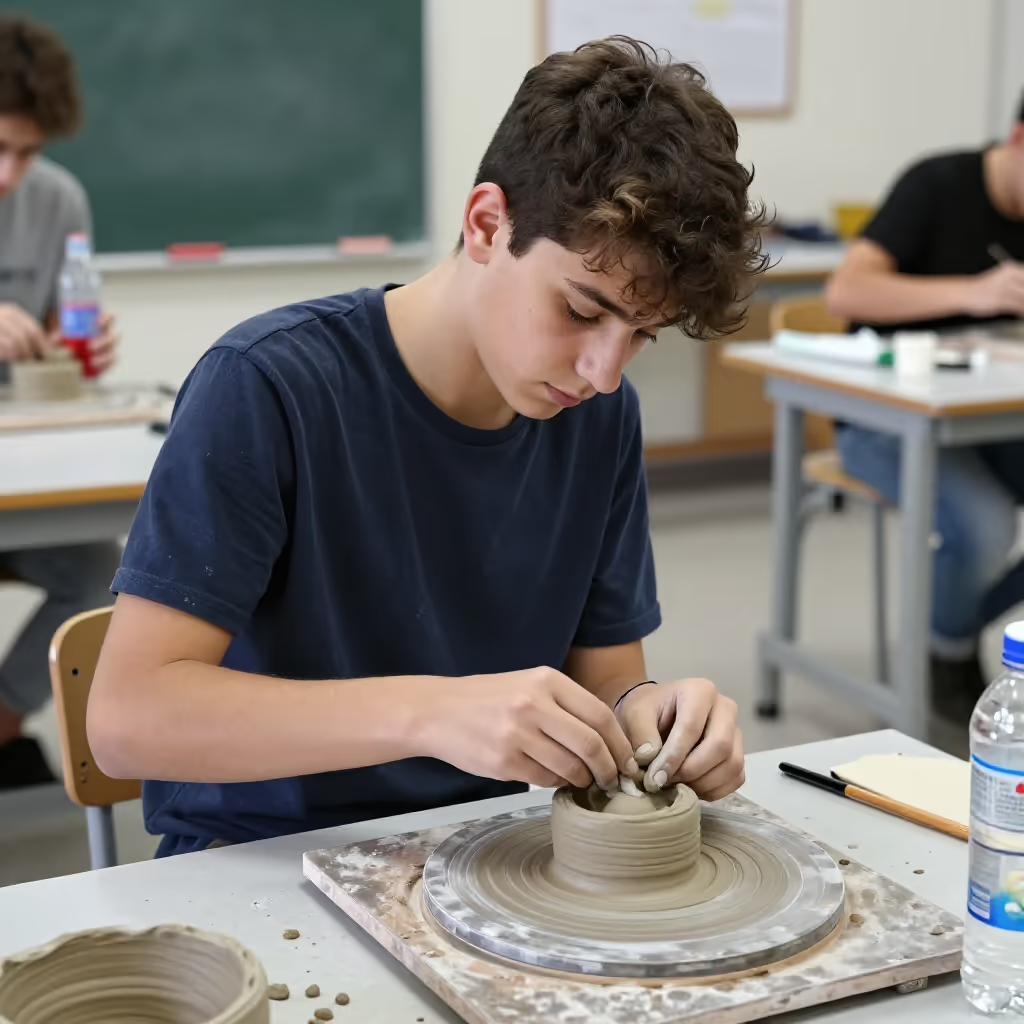
weitermachen
to continue
To continue with an activity or action that has been started, often after an interruption.
EXAMPLE
Nach einer kurzen Pause machten wir mit der Gartenarbeit weiter.
After a short break, we continued with the gardening.
to continue
Loading your saved state.
to continue
To continue with an activity or action that has been started, often after an interruption.
Nach einer kurzen Pause machten wir mit der Gartenarbeit weiter.
After a short break, we continued with the gardening.

to carry on
Not to give up despite difficulties, resistance, or setbacks, and to continue on the path already taken.
Auch wenn es schwer wird, müssen wir einfach weitermachen und dürfen die Hoffnung nicht verlieren.
Even if it gets difficult, we just have to carry on and not lose hope.
'Weitermachen' (to continue/carry on) is a separable verb. The prefix 'weiter' comes at the end in a main clause. In subordinate clauses and in the infinitive with 'zu', the verb stays together.
Wir machen nach der Pause weiter.
We continue after the break.
The verb is logically made up of 'weiter' (in the sense of 'forward' or 'continuing') and 'machen' (to do/make). So it literally means to continue an action.
Trotz des Regens machten die Bauarbeiter einfach weiter.
Despite the rain, the construction workers simply carried on.
If you want to say exactly what you are continuing with, use the preposition 'mit' followed by the dative. The structure is: mit etwas weitermachen (to continue with something).
Lass uns mit dem nächsten Thema weitermachen.
Let's continue with the next topic.
'Weitermachen' (to carry on) is very often used as a command or encouragement to motivate someone not to give up. It often appears in the imperative.
Gib nicht auf, mach einfach weiter!
Don't give up, just carry on!
to continue / move on
Both words can express the continuation of an interrupted activity. weitergehen typically takes the work or process as its subject and sounds neutral. Weitermachen focuses more on the person carrying out the action and is usually more colloquial; depending on the sentence, both words are understandable and possible.
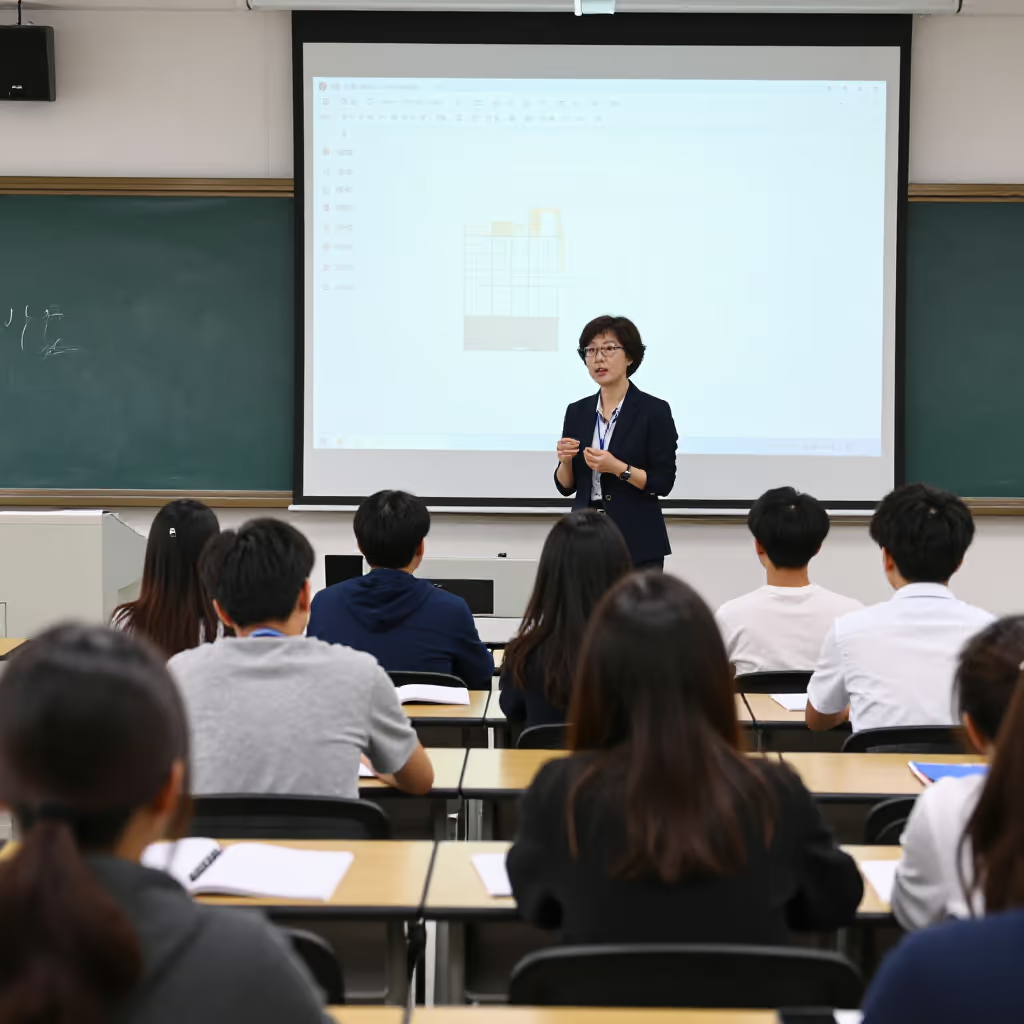
Nach der kurzen Pause machten die Mitarbeiter im Büro ruhig weiter.
After the short break, the employees quietly carried on working in the office.
Nach der kurzen Pause ging die Arbeit im Büro ruhig weiter.
After the short break, the work continued quietly in the office.