


wissen
to know
To have knowledge of a fact or information; to be sure about something.
EXAMPLE
Ich weiß, dass die Prüfung morgen stattfindet.
I know that the exam is taking place tomorrow.
to know
Loading your saved state.
to know
To have knowledge of a fact or information; to be sure about something.
Ich weiß, dass die Prüfung morgen stattfindet.
I know that the exam is taking place tomorrow.

to know about
To be informed about something or someone, or to be aware of their existence.
Ich habe von dem Problem gewusst, aber nichts gesagt.
I knew about the problem, but didn't say anything.

to know what's going on
To be informed about a particular situation or set of circumstances.
Ruf mich an, sobald du Bescheid weißt.
Call me as soon as you know what's going on.
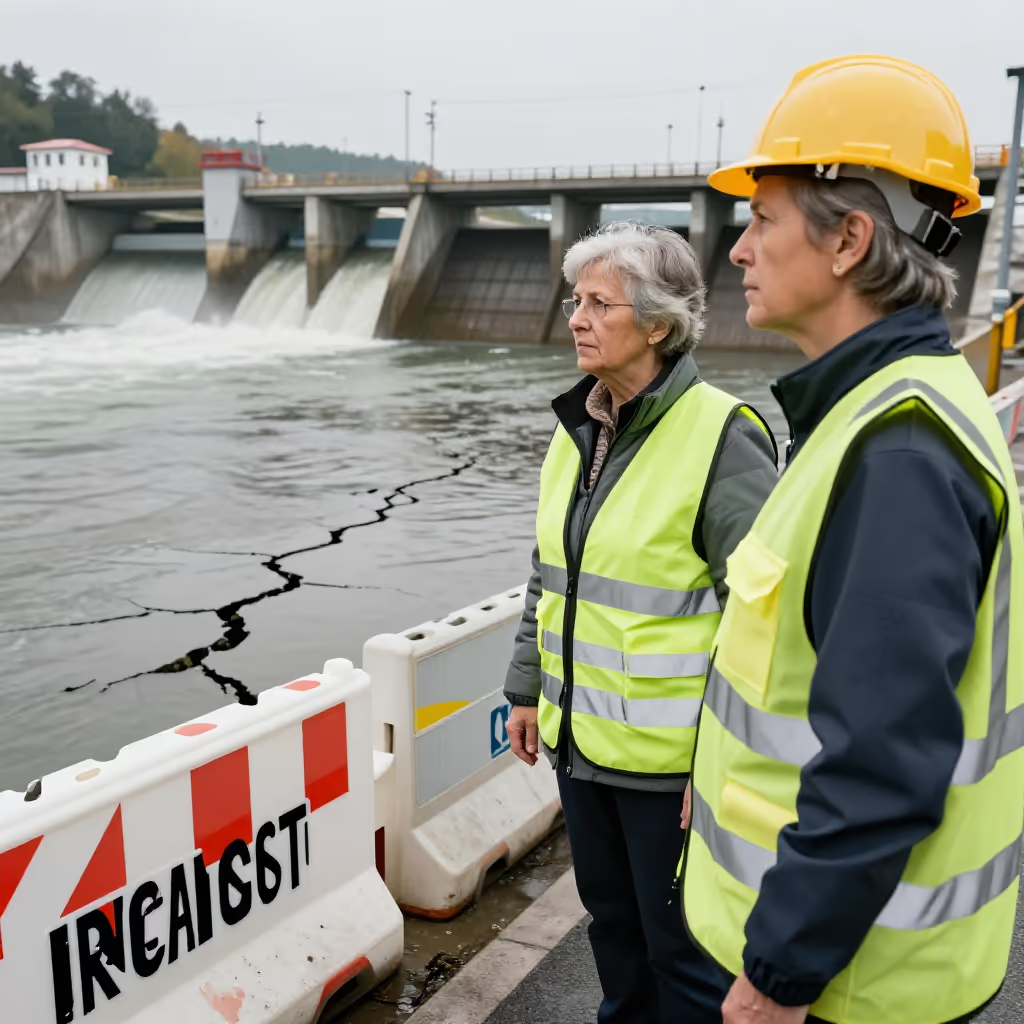
to be aware of
To be conscious of the importance, value, or danger of something. This expression is rather formal.
Als erfahrener Bergsteiger wusste er um die Gefahren der Tour.
As an experienced mountaineer, he was aware of the dangers of the tour.

to appreciate
To be grateful for something and recognize its value.
Ich weiß deine Hilfe wirklich zu schätzen.
I really appreciate your help.
'Wissen' (to know) has an irregular conjugation in the present tense that you have to learn by heart. In the singular, the vowel changes to 'ei': ich weiß, du weißt, er/sie/es weiß.
Ich weiß die Antwort leider nicht.
Unfortunately, I don't know the answer.
'Wissen' (to know) is very often used with a subordinate clause that describes the information. This subordinate clause is often introduced by 'dass' (that) or by a question word (how, what, where, when).
Sie weiß, dass der Zug um 10 Uhr fährt.
She knows that the train leaves at 10 o'clock.
The combination 'wissen von' + dative means that you have heard about something or are informed about its existence. It often expresses less detailed or only superficial knowledge.
Ich wusste nichts von seinen Plänen.
I knew nothing about his plans.
The expression 'Bescheid wissen' is a fixed combination and means 'to be informed'. The noun 'Bescheid' is not declined here and always comes at the end of the phrase.
Danke für die E-Mail, jetzt weiß ich Bescheid.
Thanks for the email; now I know what's going on.
The expression 'wissen um' + accusative expresses a deep awareness of a situation, often a danger, a value, or a complex situation. This wording is rather formal and is frequently used in written language.
Die Managerin weiß um die Schwierigkeiten des neuen Marktes.
The manager is aware of the difficulties of the new market.
In the expression 'etwas zu schätzen wissen' (to appreciate something), 'wissen' comes at the end and means 'to value' or 'to be grateful for'. The object that one appreciates is in the accusative.
Ich habe gelernt, deine ehrliche Meinung zu schätzen zu wissen.
I have learned to appreciate your honest opinion.
to know
Wissen and kennen can both be connected with information, but they imply different kinds of familiarity. Wissen usually refers to a fact or piece of information, while kennen refers to personal experience and familiarity with a person, place, or thing.

Ich weiß, wann der nächste Zug abfährt.
I know when the next train leaves.
Ich kenne den Bahnhof, weil ich dort oft umsteige.
I know the station because I often change trains there.