das Wort
word
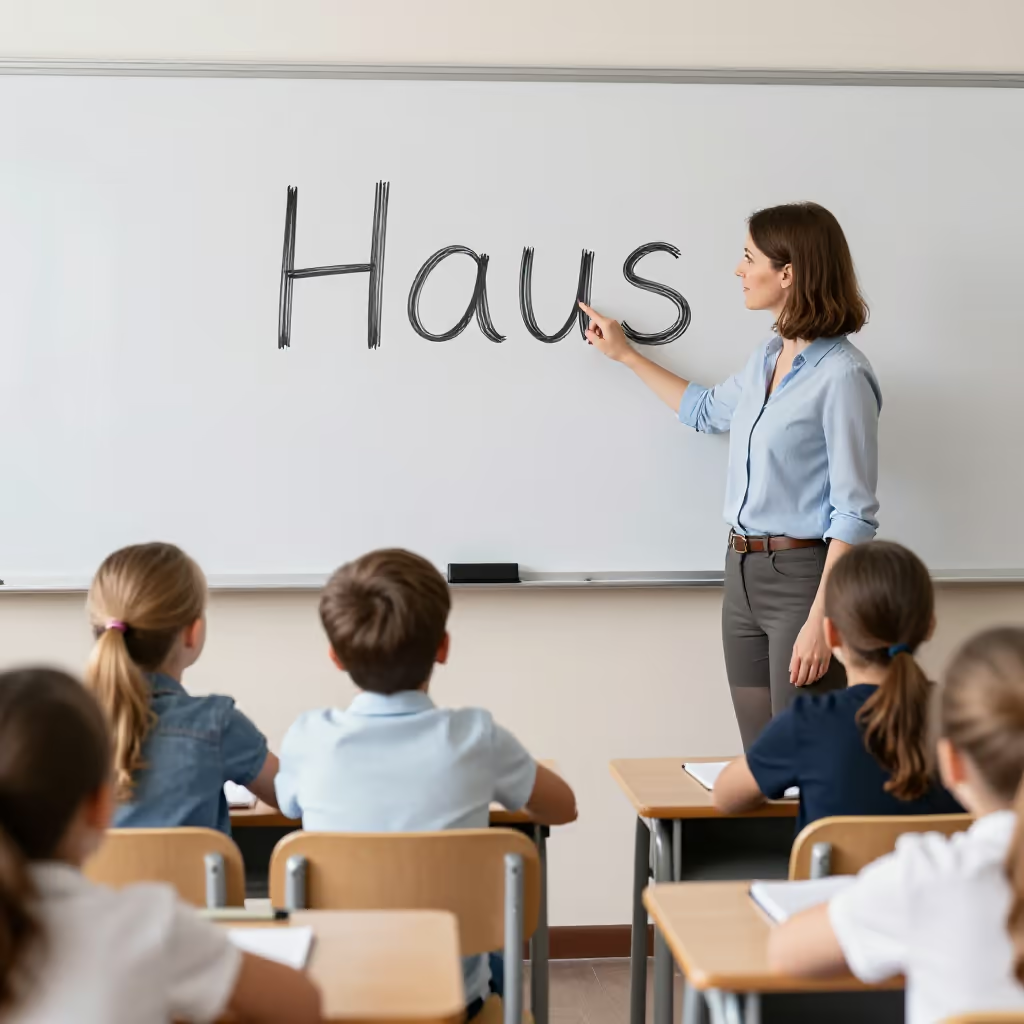
The smallest independent linguistic unit with a meaning, which is written or spoken. Plural: Wörter.
Der deutsche Satz „Ich gehe nach Hause“ besteht aus vier Wörtern.
The German sentence 'Ich gehe nach Hause' consists of four words.


word
Loading your saved state.
word
The smallest independent linguistic unit with a meaning, which is written or spoken. Plural: Wörter.
Der deutsche Satz „Ich gehe nach Hause“ besteht aus vier Wörtern.
The German sentence 'Ich gehe nach Hause' consists of four words.
This word has two plural forms with different meanings. 'Wörter' (plural of m01) are individual, isolated language units. 'Worte' (plural of m02) refers to a coherent, meaningful utterance or speech.
Dieser Satz hat fünf Wörter.
This sentence has five words.
In the meaning of 'Versprechen' (promise), 'Wort' (word) is always used in the singular and is part of fixed expressions: 'sein Wort geben' (to give one's word), 'sein Wort halten' (to keep one's word), and 'sein Wort brechen' (to break one's word).
Er hat mir sein Wort gegeben, dass er pünktlich sein wird.
He gave me his word that he would be on time.
The expression 'zu Wort kommen' (to get a word in) means to get the opportunity to speak in a discussion or conversation. It is often used in situations where many people want to talk.
In der hitzigen Debatte kam kaum jemand zu Wort.
In the heated debate, hardly anyone got a word in.
When someone 'das letzte Wort hat' (has the final say), that person makes the final decision in a discussion or dispute. It describes a hierarchical or authoritative position.
Wir können darüber diskutieren, aber am Ende hat der Chef das letzte Wort.
We can discuss it, but in the end the boss has the final say.
In the context of language and learning, 'Wort' (word; plural: Wörter) is often used with verbs like 'nachschlagen' (to look up), 'übersetzen' (to translate), 'lernen' (to learn), or 'buchstabieren' (to spell).
Ich muss dieses Wort im Wörterbuch nachschlagen.
I have to look up this word in the dictionary.
In the context of communication and emotions, 'Wort' (word; plural: Worte) is often combined with adjectives like 'freundliche' (kind), 'weise' (wise), 'leere' (empty), or 'verletzende' (hurtful).
Vielen Dank für deine freundlichen Worte.
Thank you very much for your kind words.
speech / talk
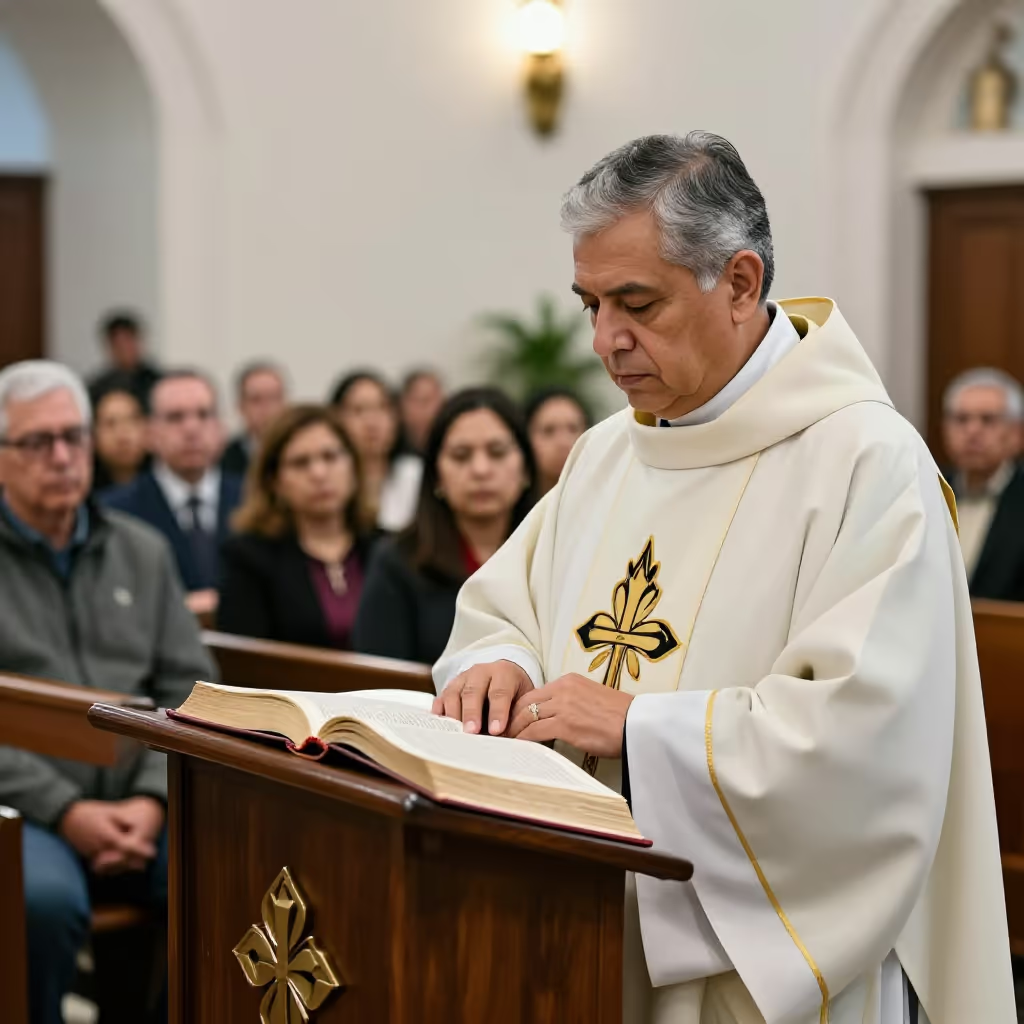
'das Wort' and 'die Rede' can both have to do with speaking in front of others. In this context, 'Wort' more often means an utterance or a short remark, often in expressions like 'ein paar Worte sagen' (to say a few words). 'Rede' means a real oral presentation or address in front of a group. Learners may confuse the words because at a celebration you can both say 'ein paar Worte' (a few words) and give 'eine Rede' (a speech). The difference is length and form: 'Worte' are usually shorter and freer, while a 'Rede' is more planned and official.

Nach dem Essen sagte der Vater noch ein paar freundliche Worte.
After the meal, the father said a few kind words.
Bei der Feier hielt die Chefin eine kurze Rede für das ganze Team.
At the celebration, the boss gave a short speech for the whole team.