

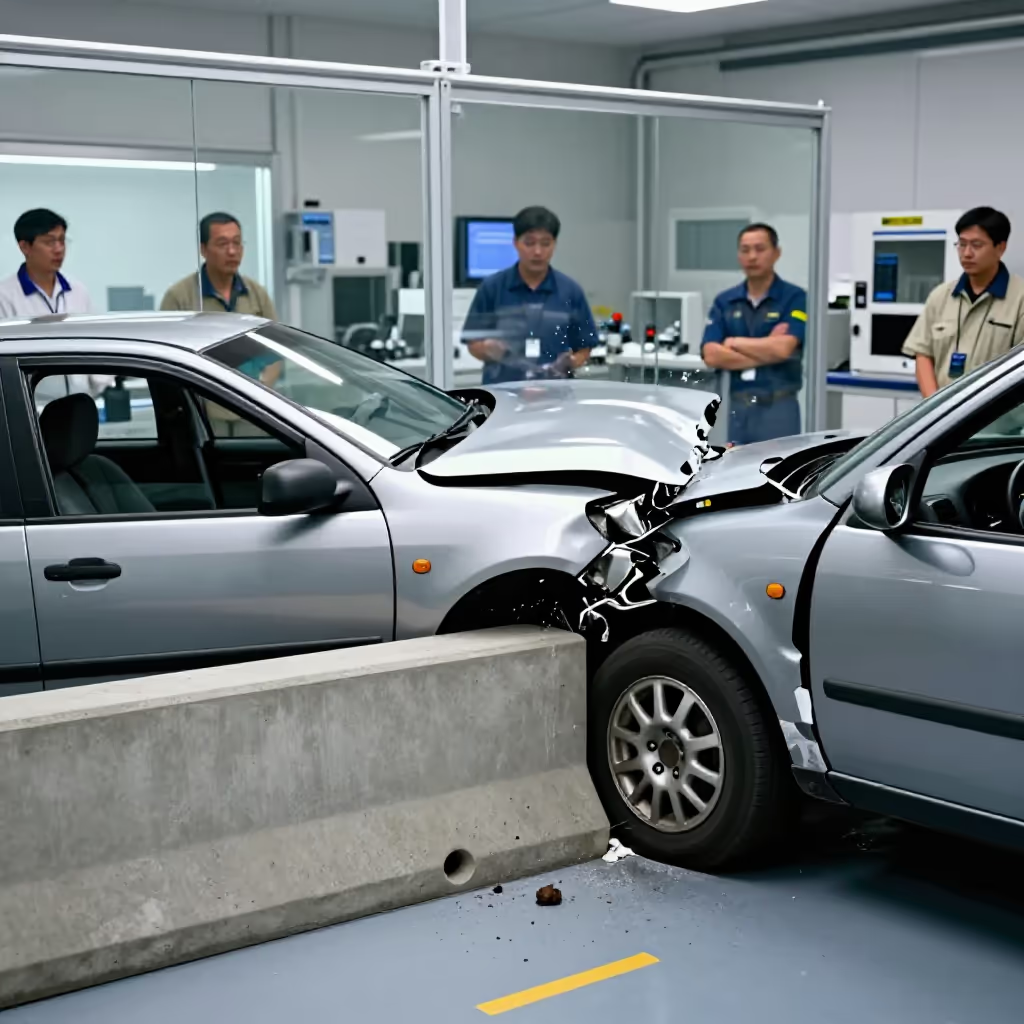
die Wucht
force / impact
A great, often sudden force or strength that arises during a movement or collision.
EXAMPLE
Der LKW traf den Baum mit voller Wucht.
The truck hit the tree with full force.
force
Loading your saved state.
force / impact
A great, often sudden force or strength that arises during a movement or collision.
Der LKW traf den Baum mit voller Wucht.
The truck hit the tree with full force.
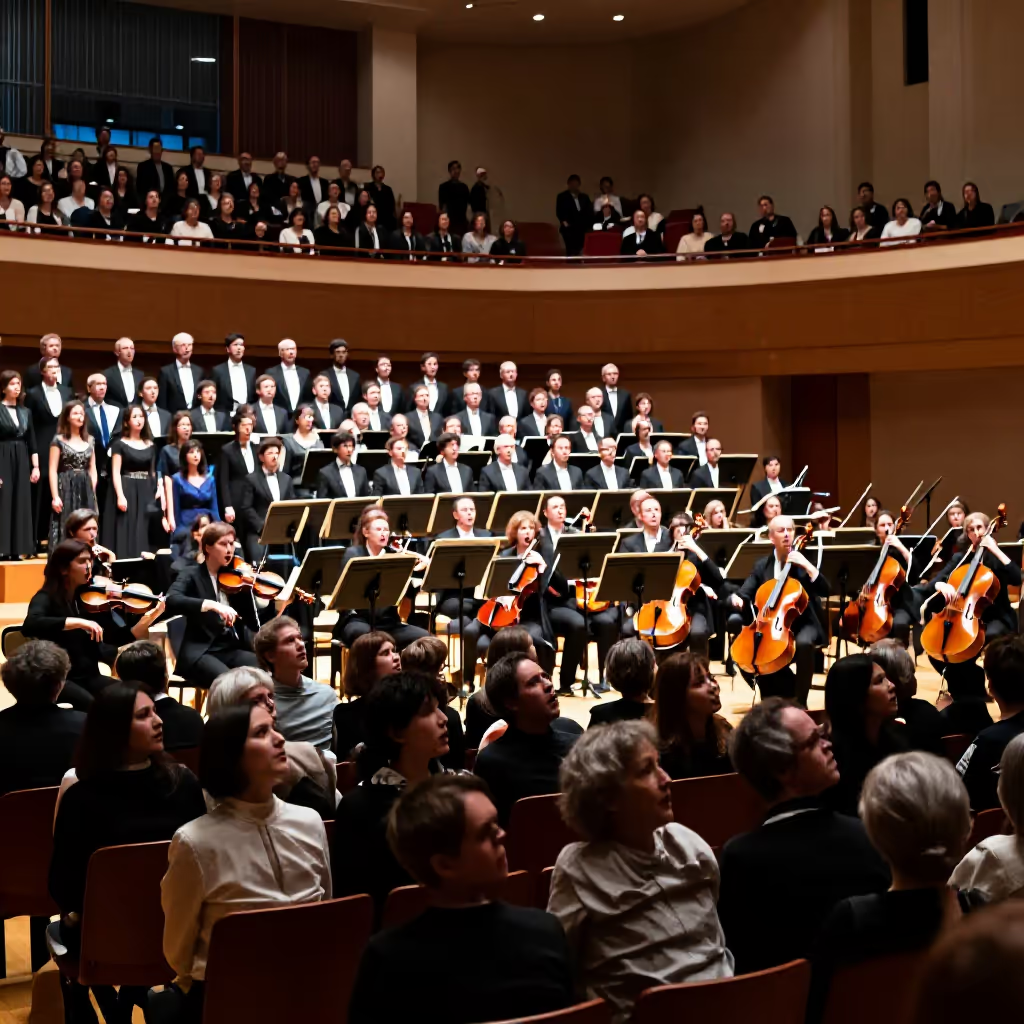
impact / force
A great, impressive, or overwhelming effect in a figurative sense.
Die Wucht der Bilder aus dem Kriegsgebiet war erschütternd.
The impact of the images from the war zone was devastating.

to be amazing
A colloquial expression meaning that something or someone is very impressive, fantastic, or great.
Das Konzert gestern Abend war echt eine Wucht!
The concert last night was really amazing!
The noun 'die Wucht' (force) is related to the verb 'wuchten', which means to move something heavy with great effort. 'Die Wucht' describes the force that arises or is needed in the process.
Er musste den schweren Stein mit aller Kraft zur Seite wuchten.
He had to heave the heavy stone aside with all his strength.
In the physical meaning, 'Wucht' is very often used with the preposition 'mit' (with) and an adjective to describe the strength of an impact. The most common combination is 'mit voller Wucht' (with full force).
Die Welle traf das Boot mit voller Wucht.
The wave hit the boat with full force.
You can recognize the figurative meaning by the fact that it is not about a physical impact, but about the effect of abstract things such as images, words, or feelings.
Die emotionale Wucht des Films hat alle Zuschauer tief berührt.
The emotional impact of the film deeply moved all the viewers.
The expression 'eine Wucht sein' (to be amazing) is a fixed phrase. The structure is always '[person/thing] + sein + eine Wucht'.
Deine neue Frisur ist echt eine Wucht!
Your new hairstyle is really amazing!
The expression 'eine Wucht sein' (to be amazing) is used almost exclusively in informal everyday language to express enthusiasm.
Danke für das tolle Geschenk, du bist eine Wucht!
Thanks for the great gift, you're amazing!
strength / force
Kraft and Wucht can both refer to the strength of a movement or impact. Wucht particularly emphasizes the great, often sudden intensity of the impact, while Kraft describes the physical force more generally. Wucht is therefore often suitable for a powerful impact, while Kraft is more suitable for a general physical effect.

Die Wucht des Aufpralls verformte die vordere Tür des Autos.
The force of the impact deformed the car’s front door.
Die Kraft des Aufpralls verformte die vordere Tür des Autos.
The force of the impact deformed the car’s front door.