abdrehen
to turn off
To interrupt the supply of something (e.g., water, gas, electricity) by turning something.
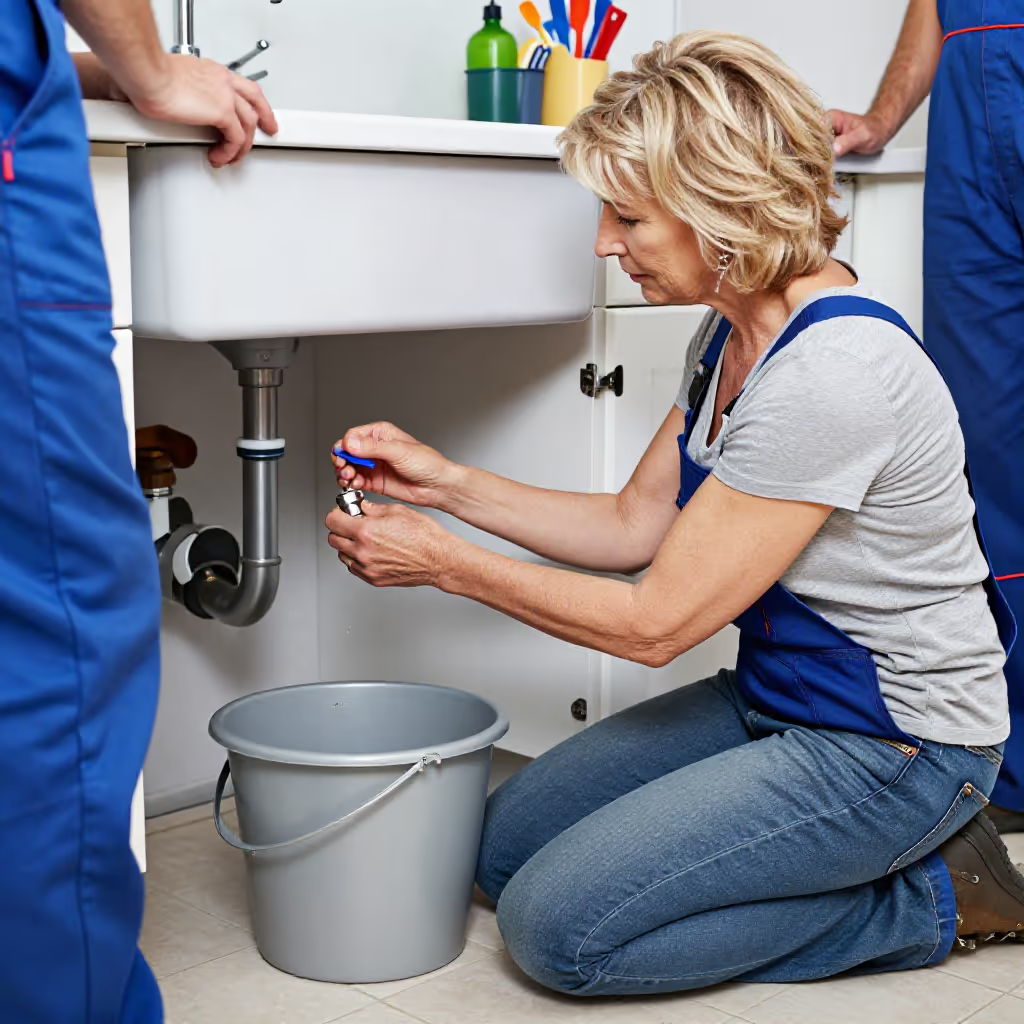
Kannst du bitte das Wasser abdrehen, während ich die Dichtung wechsle?
Can you please turn off the water while I change the seal?


to turn off / to freak out
Loading your saved state.
to turn off
To interrupt the supply of something (e.g., water, gas, electricity) by turning something.
Kannst du bitte das Wasser abdrehen, während ich die Dichtung wechsle?
Can you please turn off the water while I change the seal?

'Abdrehen' is a separable verb. In a main clause, the prefix 'ab-' goes at the end; in subordinate clauses and in the infinitive, it remains attached to the verb.
Bitte dreh die Heizung ab, es ist zu warm.
Please turn off the heating; it's too warm.
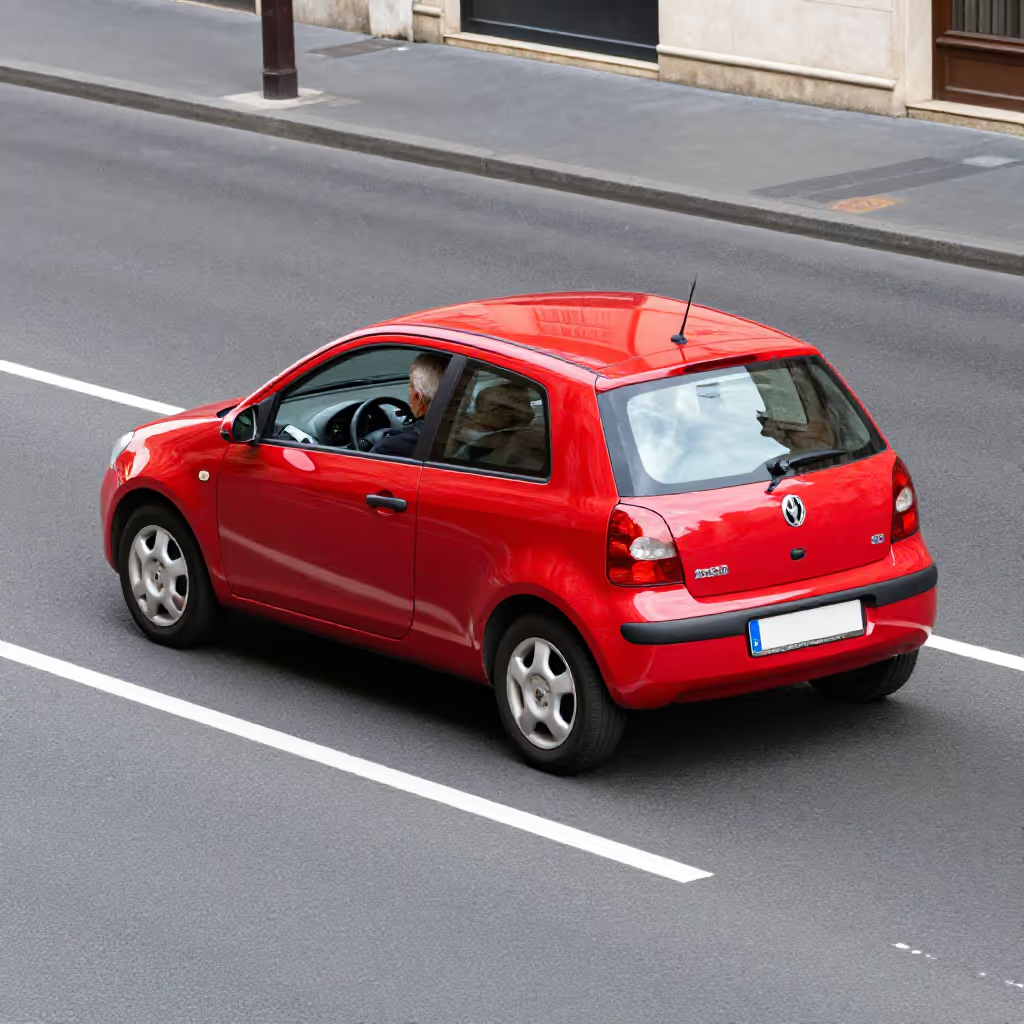
You can recognize the meaning of 'abdrehen' from the context. If it is about devices or pipes/lines (water, gas), the technical meaning is intended. In connection with ships or airplanes, it refers to a change of direction. When talking about people, the colloquial meaning 'verrückt werden' (to go crazy) is often meant.
Der Pilot musste wegen des Gewitters sofort abdrehen.
The pilot had to turn away immediately because of the thunderstorm.
In the technical meaning, 'abdrehen' is often combined with things whose supply can be stopped. Typical phrases are: 'das Wasser abdrehen' (to turn off the water), 'den Hahn abdrehen' (to turn off the tap), 'das Gas abdrehen' (to turn off the gas), or 'die Heizung abdrehen' (to turn off the heating).
Bevor du in den Urlaub fährst, solltest du den Haupthahn für das Wasser abdrehen.
Before you go on vacation, you should turn off the main water tap.
The meaning 'verrückt werden' (to go crazy) is strongly colloquial. Since it describes a sudden change of state, the perfect tense is formed with 'sein' (to be).
Die Fans sind nach dem Siegestor völlig abgedreht.
The fans completely freaked out after the winning goal.
to lock / to complete
'abschließen' and 'abdrehen' can both mean that you no longer leave something open or freely usable. The difference is what exactly you do: 'abschließen' is used for doors, windows, cabinets, or rooms when you secure them with a key or bolt. 'abdrehen' is used for water, gas, or similar supply lines when you stop them by turning something. Learners may confuse the words because both often come at the end of an action: you leave the house and lock the door; you leave the kitchen and turn off the water. A practical way to remember it is: you use 'abschließen' for doors, and 'abdrehen' for water or gas.

Nach dem Kochen hat Tom das Gas am Herd abgedreht.
After cooking, Tom turned off the gas on the stove.
Bevor ich gehe, schließe ich die Haustür ab.
Before I leave, I lock the front door.