


anfangen
to begin / start
To begin an action, process, or state.
EXAMPLE
Wann fängt der Deutschkurs an?
When does the German course start?
to begin / to start
Loading your saved state.
to begin / start
To begin an action, process, or state.
Wann fängt der Deutschkurs an?
When does the German course start?
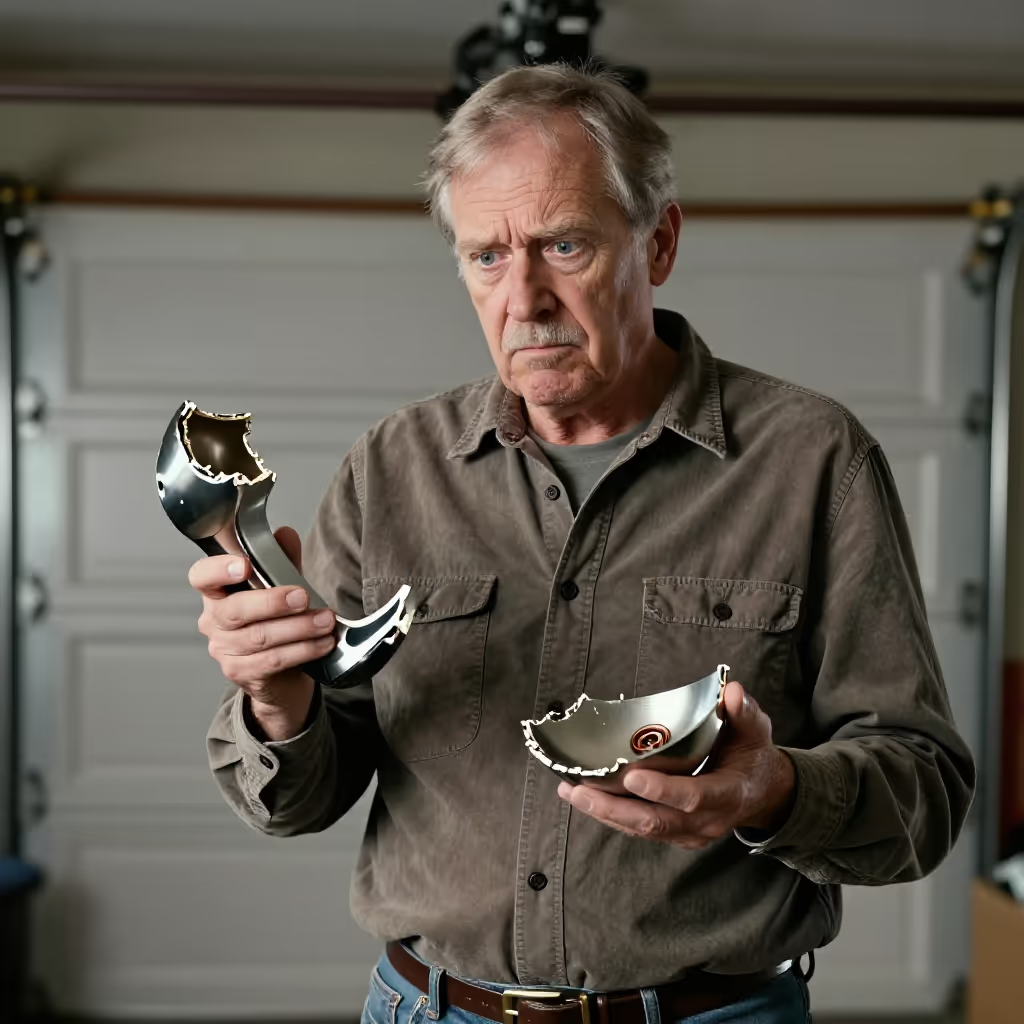
to do with something
To have a use for something or to know what to do with it. Often used in negative or question sentences.
Ich weiß nicht, was ich mit diesem seltsamen Geschenk anfangen soll.
I don't know what I'm supposed to do with this strange gift.
'Anfangen' (to begin/start) is a separable verb. The prefix 'an' comes at the end in a main clause. In subordinate clauses and in the infinitive, the verb stays together, with 'zu' placed between 'an' and 'fangen' in an infinitive clause.
Ich fange morgen mit dem neuen Projekt an.
I'm starting the new project tomorrow.
To express what you are beginning, there are two common patterns. Use 'mit + dative' for a thing or activity and 'zu + infinitive' for an action.
Fangen wir mit der ersten Übung an.
Let's start with the first exercise.
The expression 'etwas mit jemandem/etwas anfangen' means 'to have a use for something/someone' or 'to know what to do with something/someone.' It is almost always used in questions or negative sentences.
Was soll ich denn mit so viel Gemüse anfangen?
What am I supposed to do with so many vegetables?
There are several fixed expressions with 'anfangen' (to begin/start). Very common ones are 'von vorne anfangen' (to start from scratch) or 'ein Gespräch anfangen' (to start a conversation).
Nach dem Fehler mussten wir die ganze Arbeit von vorne anfangen.
After the mistake, we had to start the whole job from scratch.
to begin
Here, beginnen and anfangen both mean that an action or process starts. Beginnen sounds somewhat more formal, while anfangen is more common in spoken and casual German. Beginnen often fits official texts, while anfangen is equally correct in personal conversation.

Der Kurs fängt morgen um neun Uhr an.
The course starts tomorrow at nine o'clock.
Der Kurs beginnt morgen um neun Uhr.
The course begins tomorrow at nine o'clock.