

ansetzen
to apply / place
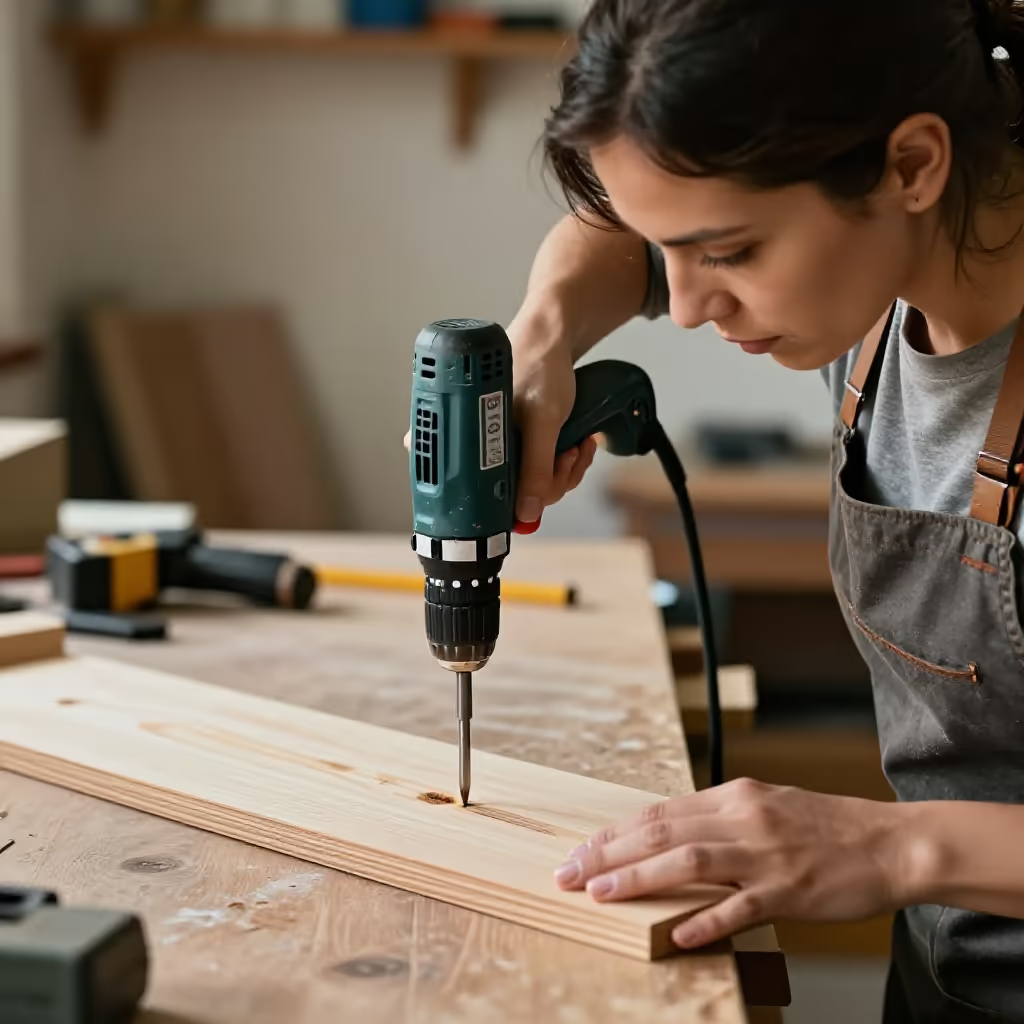
To bring something to a specific spot and place it there, often as the beginning of an action.
EXAMPLE
Der Chirurg setzte das Skalpell präzise an.
The surgeon applied the scalpel precisely.
to apply / schedule
Loading your saved state.
to apply / place
To bring something to a specific spot and place it there, often as the beginning of an action.
Der Chirurg setzte das Skalpell präzise an.
The surgeon applied the scalpel precisely.

to schedule
To plan and set a date or time for an appointment, meeting, or event.
Die Prüfung wurde für nächsten Dienstag um 10 Uhr angesetzt.
The exam was scheduled for next Tuesday at 10 a.m.
to form / develop
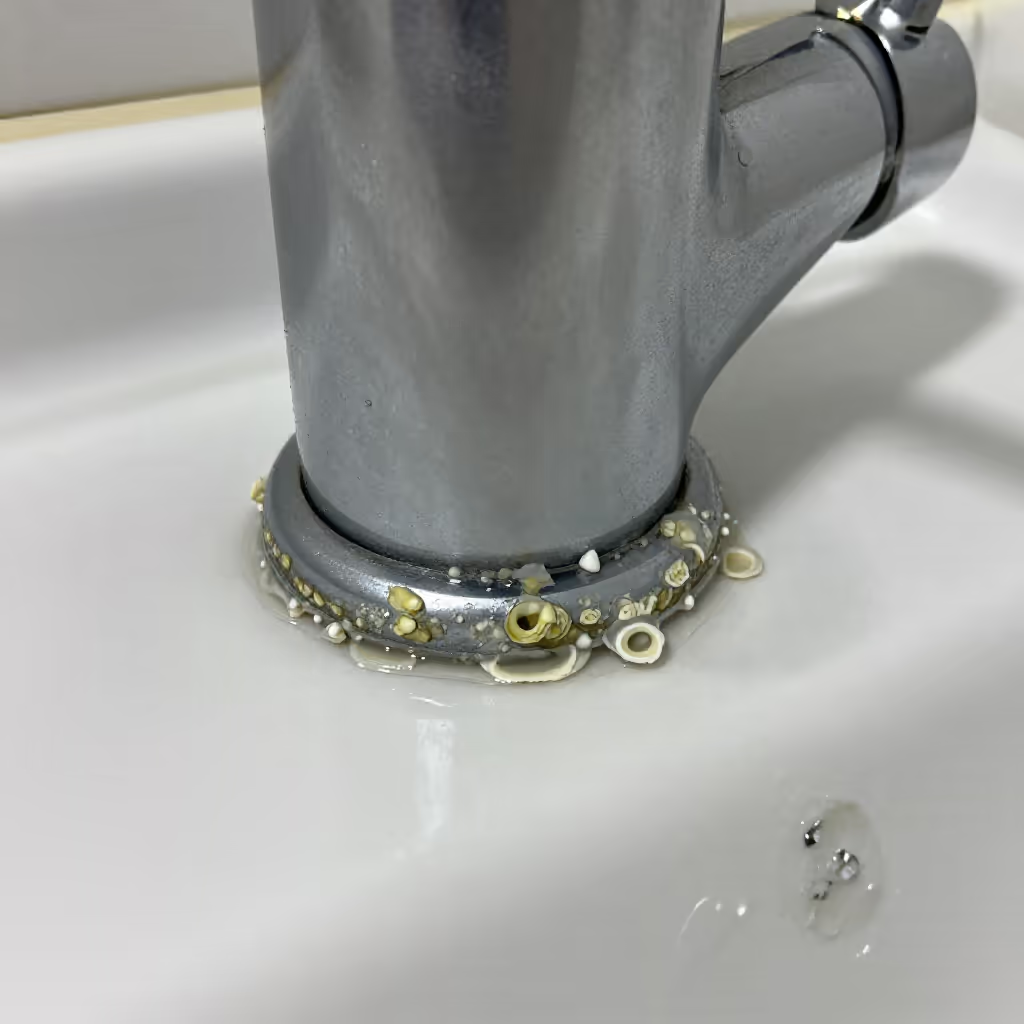
To form, accumulate, or begin to grow on a surface.
Das alte Fahrrad hat über den Winter im Keller Rost angesetzt.
The old bicycle developed rust in the basement over the winter.

to estimate / budget
To estimate or budget a value, amount, or cost for something.
Für die Renovierung müssen wir mindestens 10.000 Euro ansetzen.
For the renovation, we need to budget at least 10,000 euros.

to prepare / start
To make a liquid or mixture by mixing ingredients and then leaving it to rest or mature.
Meine Großmutter hat früher immer ihren eigenen Holunderblütensirup angesetzt.
My grandmother used to always make her own elderflower syrup.
'Ansetzen' is a separable verb. The prefix 'an-' goes at the end in a main clause. In subordinate clauses and in the infinitive with 'zu', the verb stays together.
Der Handwerker setzt die Säge vorsichtig an.
The craftsman carefully applies the saw.
The prefix 'an-' often suggests the beginning of an action or contact with a surface. This basic idea appears in many meanings, e.g. placing a tool against something or when rust begins to develop.
Er setzte das Glas an die Lippen und trank.
He put the glass to his lips and drank.
When an appointment or date is being planned, 'ansetzen' (to schedule) often appears in the passive. The preposition 'für' (for) or 'auf' (for/at) introduces the time expression.
Die nächste Besprechung ist für Freitag angesetzt.
The next meeting is scheduled for Friday.
In the meaning 'sich ansammeln' (to accumulate), the verb is often combined with unwanted things. Typical examples are 'Rost ansetzen' (to develop rust), 'Staub ansetzen' (to gather dust), or 'Schimmel ansetzen' (to develop mold).
Die Kaffeemaschine hat Kalk angesetzt und muss gereinigt werden.
The coffee machine has developed limescale and needs to be cleaned.
In this meaning, 'ansetzen' (to estimate/budget) is used in the context of planning and finances. You can say 'Kosten ansetzen' (to budget costs), 'einen Betrag ansetzen' (to set an amount), or also 'einen Zeitraum für ein Projekt ansetzen' (to allocate a period of time for a project).
Für die Reparatur des Daches haben wir 5.000 Euro angesetzt.
We budgeted 5,000 euros for repairing the roof.
This meaning belongs to the area of cooking and preparation. For example, you can say 'einen Teig ansetzen' (to prepare/start a dough), 'eine Soße ansetzen' (to prepare/start a sauce), or 'Likör ansetzen' (to make liqueur).
Für das Brot müssen Sie den Teig am Abend vorher ansetzen.
For the bread, you need to prepare the dough the evening before.
to estimate / appreciate
When talking about costs, Schätzen gives an approximate expected amount. In this context, Ansetzen means using such an amount as the basis for planning or calculation. Often, an amount is estimated first and then used as the figure for a plan or calculation.
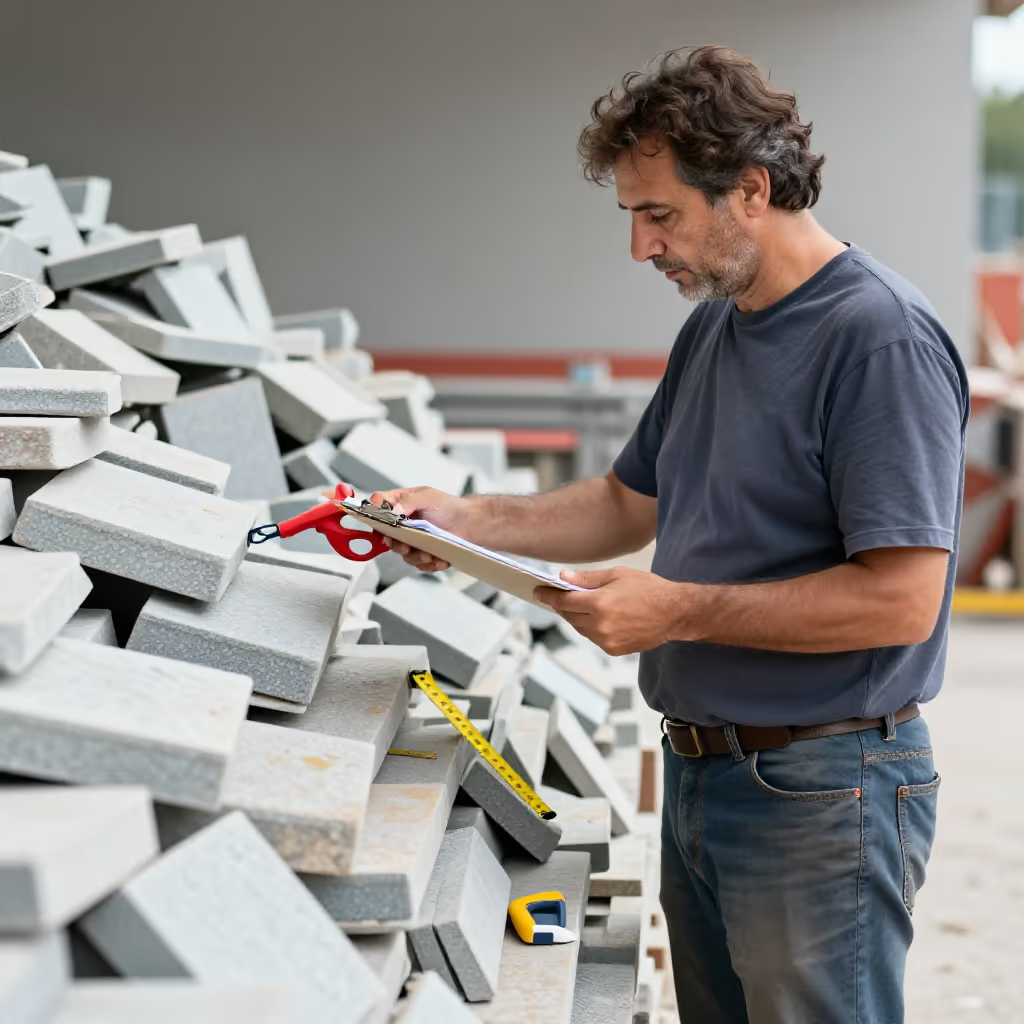
Für den Finanzplan setzt die Architektin 20.000 Euro Materialkosten an.
For the financial plan, the architect budgets 20,000 euros for material costs.
Die Architektin schätzt die Materialkosten auf 20.000 Euro.
The architect estimates the material costs at 20,000 euros.