

To operate correctly, deliver the expected performance, or fulfill the intended purpose. This applies to devices, systems, plans, or even social interactions.
example
Der alte Computer funktioniert erstaunlicherweise immer noch einwandfrei.
Surprisingly, the old computer still works perfectly.

Usage tips
Verbs ending in '-ieren'
'Funktionieren' (to work / to function) is a verb ending in '-ieren', which often indicates a foreign-language origin. These verbs are always regular and form the past participle without the prefix 'ge-'.
EXAMPLE
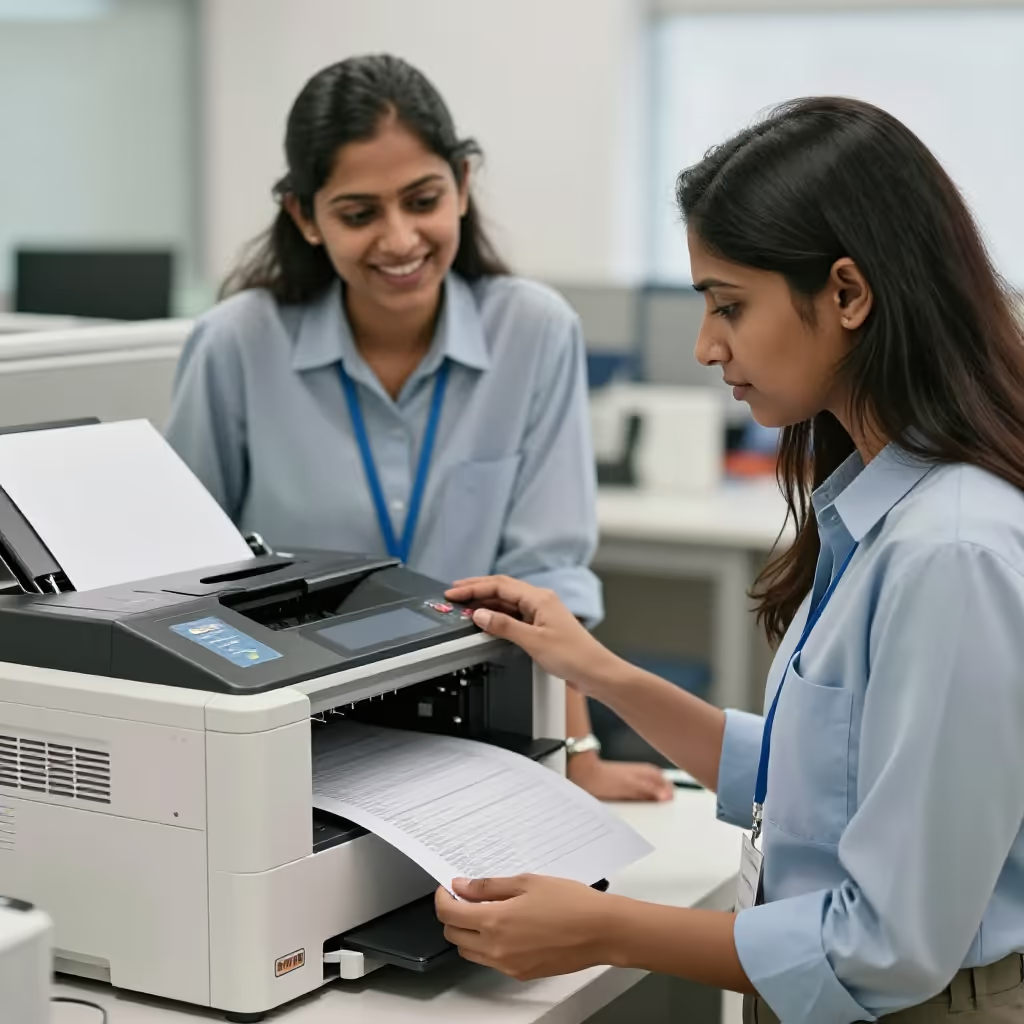
Der Drucker hat gestern noch perfekt funktioniert.
The printer was still working perfectly yesterday.
Typical subjects
The subject of 'funktionieren' (to work / to function) is typically not a person, but a device, a machine, a system, or an abstract plan. It describes whether something fulfills its purpose.
EXAMPLE
Die Heizung funktioniert nicht richtig.
The heating isn't working properly.
Broad use
The verb is not only used for technical devices, but also for abstract concepts such as plans, strategies, or social relationships.
EXAMPLE
Die Zusammenarbeit in unserem Team funktioniert sehr gut.
The collaboration in our team works very well.
Compare with
synonym · near_synonym · confusable
funktionieren vs gehen
to go
'gehen' and 'funktionieren' can both say that something works correctly or is possible. In this meaning, 'gehen' is very colloquial and brief. For example, you say 'Der Fernseher geht nicht' (the TV doesn't work) or 'Geht das morgen?' (Does tomorrow work?). 'funktionieren' is more precise and fits well with devices, plans, systems, or processes. It sounds somewhat more matter-of-fact. Learners may confuse the words because 'gehen' also means movement. But when it is about a device or a plan, 'gehen' often does not mean movement, but 'to function' or 'to be possible'.
funktionieren
Im Büro funktioniert der Drucker heute nicht.
The printer at the office isn't working today.
gehen
Mein Handy geht wieder, seit ich es neu gestartet habe.