

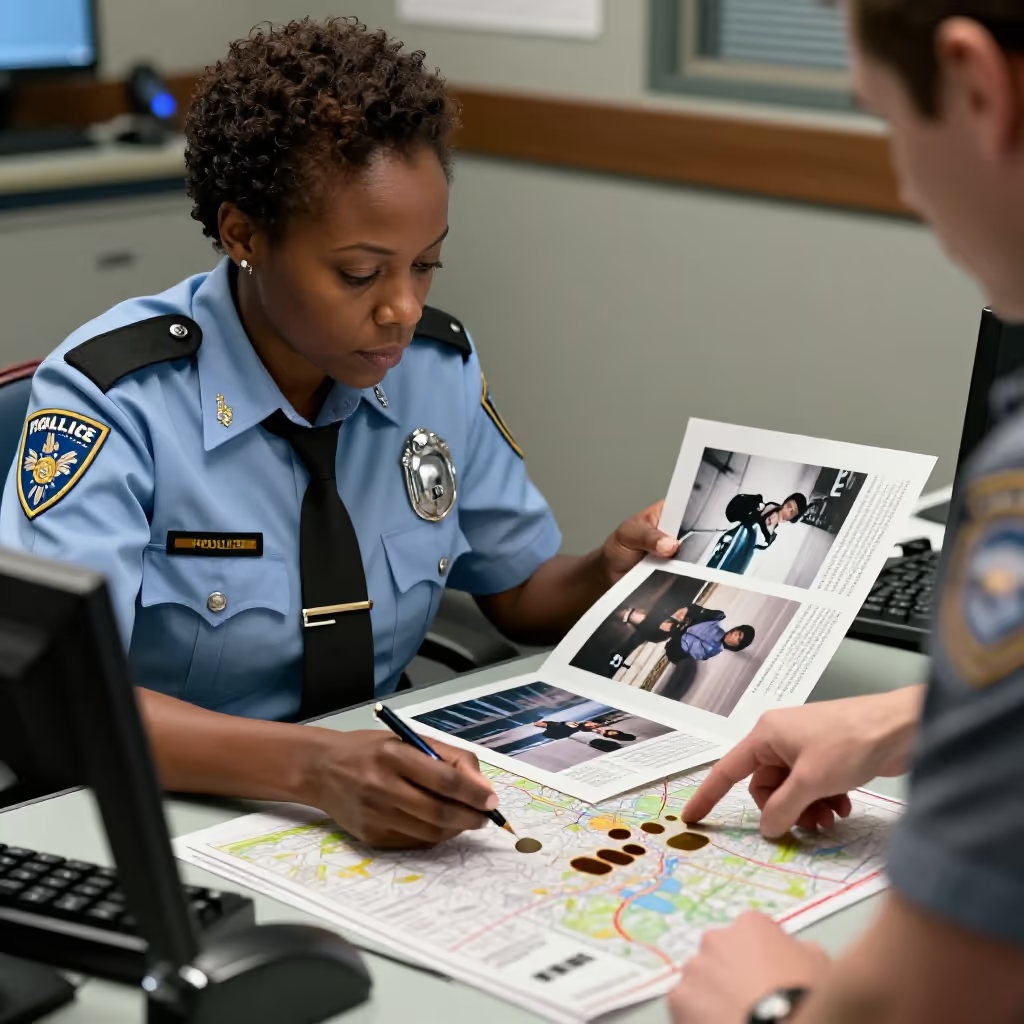
aufklären
to solve
To investigate an unclear matter, a crime, or a mystery and find out the truth.
EXAMPLE
Die Polizei konnte den Diebstahl schnell aufklären.
The police were able to solve the theft quickly.
to clarify / clear up
Loading your saved state.
to solve
To investigate an unclear matter, a crime, or a mystery and find out the truth.
Die Polizei konnte den Diebstahl schnell aufklären.
The police were able to solve the theft quickly.
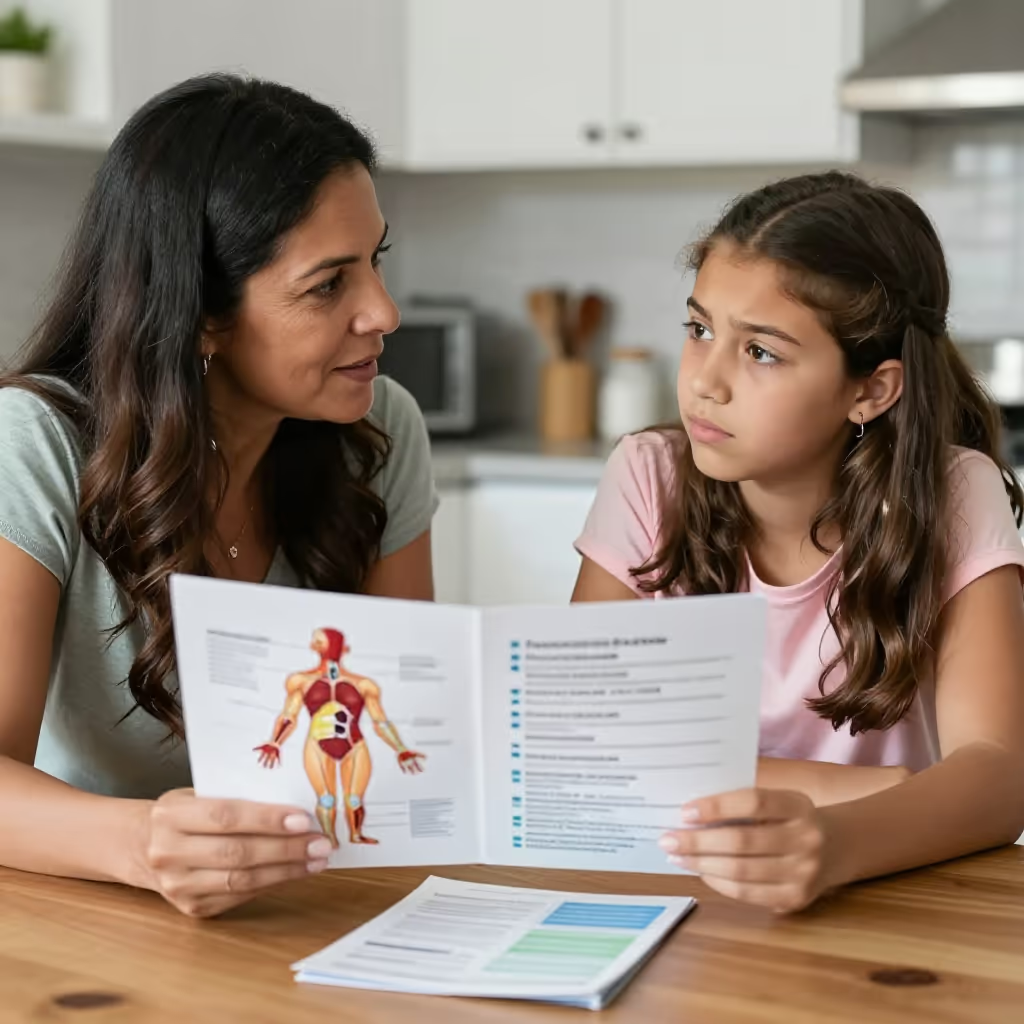
to inform
To inform someone about a particular topic that he or she knows little about, especially in the area of sexuality.
Eltern sollten ihre Kinder frühzeitig über die Gefahren im Internet aufklären.
Parents should inform their children early about the dangers on the internet.
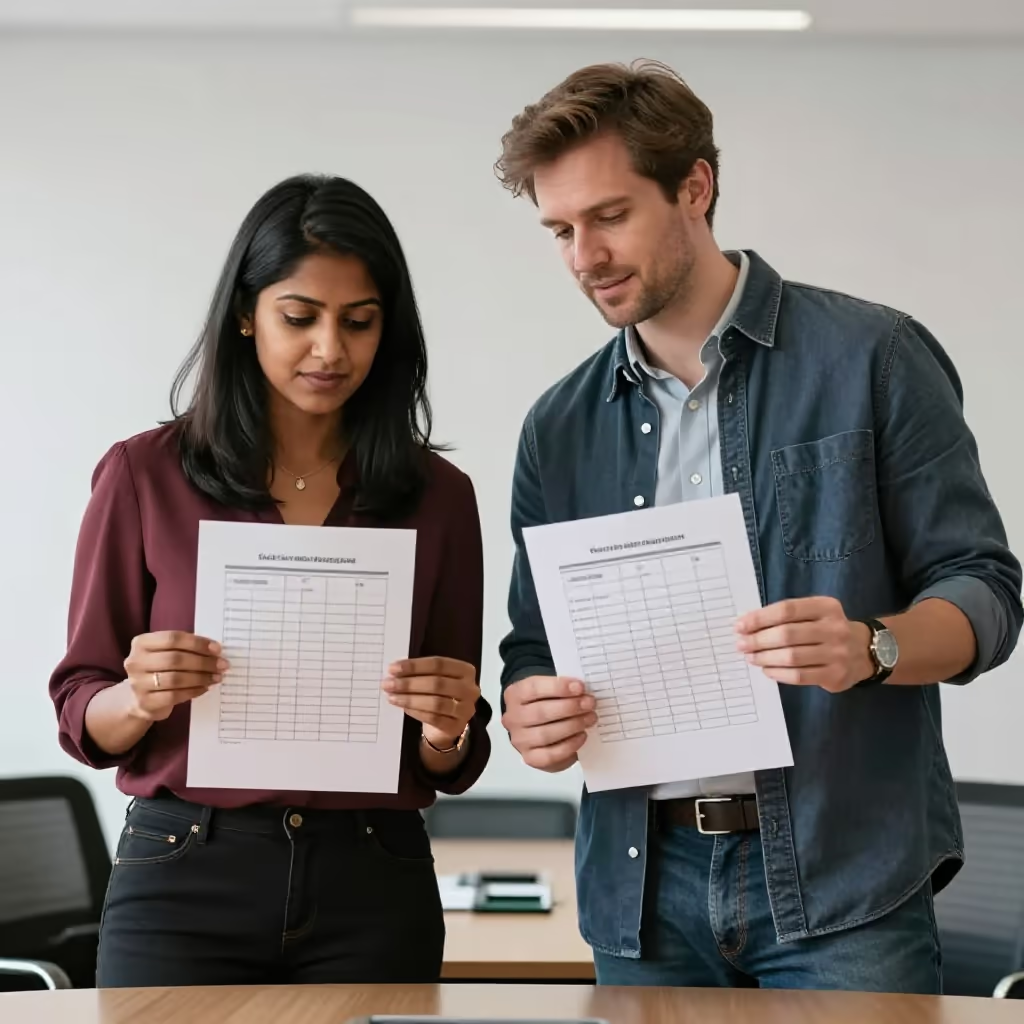
to clear up
Refers to a situation, misunderstanding, or secret that becomes clear and understandable on its own or through new information.
Nach einem langen Gespräch hat sich das Missverständnis endlich aufgeklärt.
After a long conversation, the misunderstanding finally cleared up.
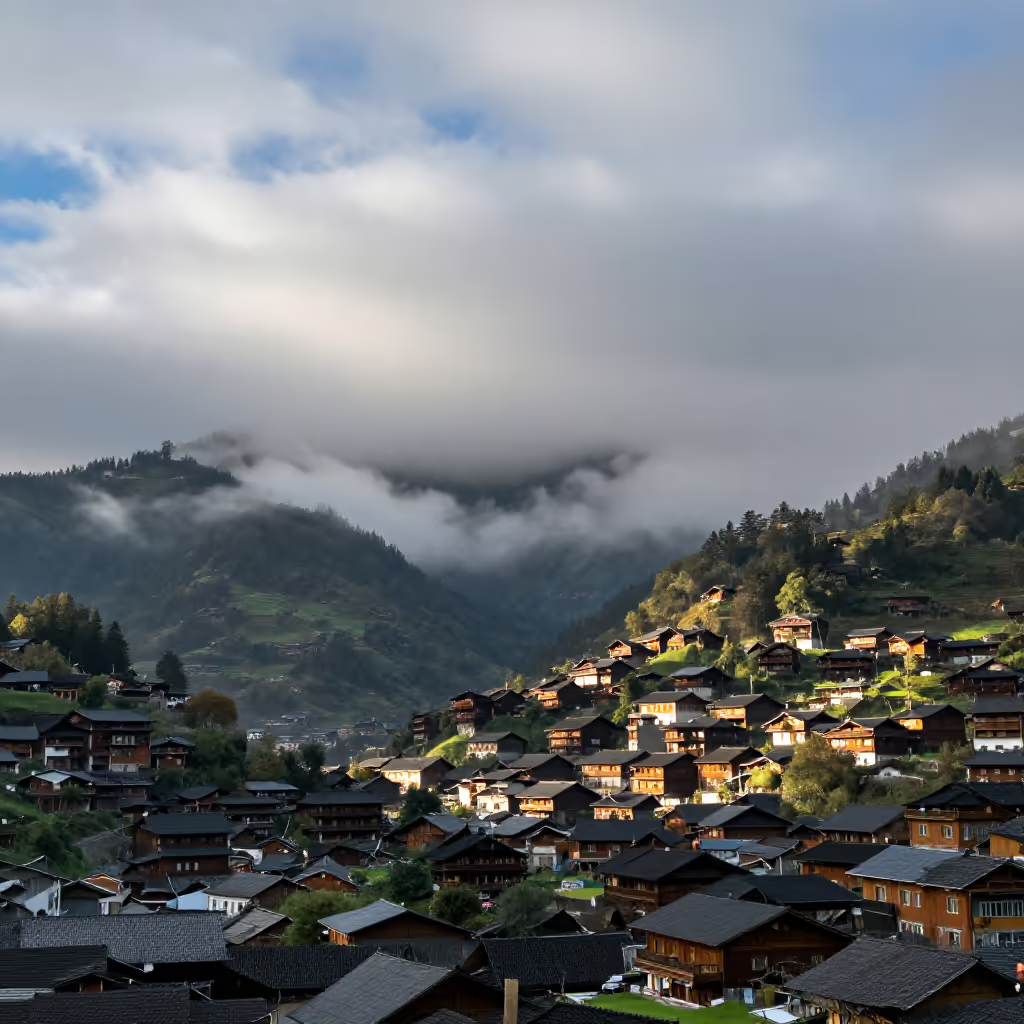
to clear up
Refers to the weather when clouds and fog disappear and the sky becomes clear and sunny again.
Nach dem Regen am Morgen klärte es am Nachmittag wieder auf.
After the rain in the morning, it cleared up again in the afternoon.
'Aufklären' (to clarify / clear up) is a separable verb. In a main clause, the prefix 'auf' goes at the end; in a subordinate clause, the whole verb goes at the end. In the infinitive with 'zu', 'zu' comes between the prefix and the verb.
Der Detektiv klärt den Fall schnell auf.
The detective solves the case quickly.
The verb is made up of the prefix 'auf' and the verb 'klären' (to clarify). 'Klären' means to make something clear. The prefix 'auf' reinforces this and means to make something completely clear or open.
Ein Anruf bei der Bank konnte die Verwirrung aufklären.
A call to the bank was able to clear up the confusion.
The meaning of 'aufklären' (to clarify / clear up) often depends on the grammatical structure. 'Etwas aufklären' means to solve something, 'jemanden über etwas aufklären' means to inform someone about something, 'sich aufklären' means that something becomes clear on its own, and 'es klärt auf' refers to the weather.
Die Polizei klärt ein Verbrechen auf.
The police solve a crime.
In the meaning of 'lösen' (to solve), the verb is often used with words such as 'ein Verbrechen' (a crime), 'einen Mord' (a murder), 'einen Diebstahl' (a theft), or 'ein Rätsel' (a riddle/mystery).
Die Kommissarin konnte den komplizierten Mordfall aufklären.
The detective was able to solve the complicated murder case.
When you inform someone, the topic of the information is introduced with the preposition 'über' and the accusative.
Wir müssen die Mitarbeiter über die neuen Regeln aufklären.
We have to inform the employees about the new rules.
When talking about the weather, 'aufklären' (to clear up) is often used with the impersonal pronoun 'es' as the subject.
Ich hoffe, es klärt bald wieder auf.
I hope it clears up again soon.
to explain / declare
Erklären makes a particular situation understandable. Jemanden aufklären means informing someone more comprehensively about a topic they have previously known little about. Thus, a doctor might explain one specific risk and inform the patient about the risks of the treatment.
Die Ärztin klärt den Patienten vor der Operation über die möglichen Risiken auf.
The doctor informs the patient about the possible risks before the operation.
Die Ärztin erklärt dem Patienten, warum nach der Operation Schmerzen auftreten können.
The doctor explains to the patient why pain may occur after the operation.