
To solve and make understandable a problem, question, or misunderstanding. To clear something up or resolve it.
example
Wir müssen dringend klären, wer für diese Aufgabe verantwortlich ist.
We urgently need to clarify who is responsible for this task.
Usage tips
Word family
The verb 'klären' (to clarify) comes from the adjective 'klar' (clear). The basic meaning is always to make something 'klar' (clear)—whether it is a problem, a liquid, or an unclear situation.
EXAMPLE
Nach dem Gespräch war die Situation endlich klar.
After the conversation, the situation was finally clear.
Typical collocations
In its most common meaning, 'klären' is used with abstract nouns. Typical objects are 'ein Problem' (a problem), 'eine Frage' (a question), 'ein Missverständnis' (a misunderstanding), 'die Details' (the details), or 'die Fronten' (the battle lines/positions).
EXAMPLE
Bevor wir anfangen, müssen wir ein paar wichtige Fragen klären.
Before we start, we need to clarify a few important questions.
Reflexive use
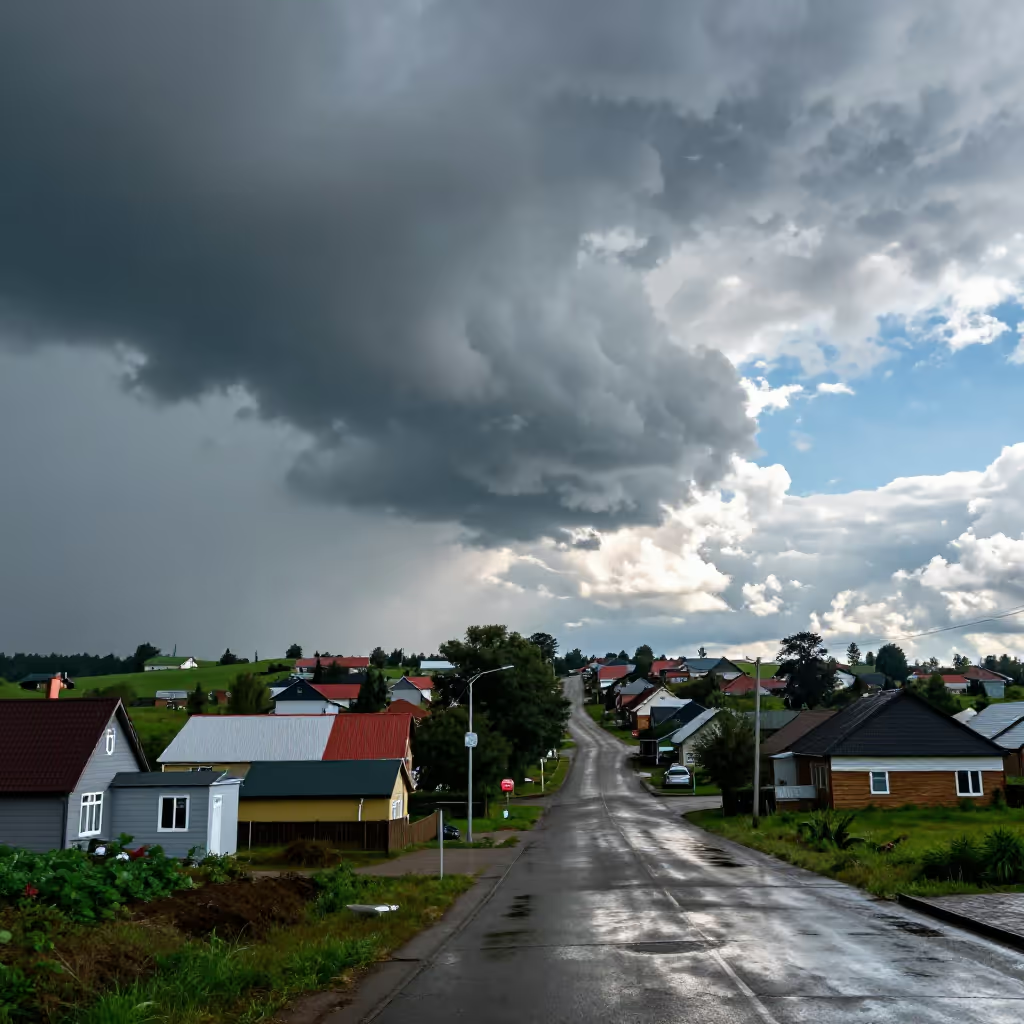
The reflexive form 'sich klären' means that something resolves itself or improves on its own, without anyone actively intervening. This is often used for situations and also for the weather.
EXAMPLE
Mach dir keine Sorgen, das Problem wird sich von selbst klären.
Don't worry, the problem will clear itself up.
Context clue
The meaning 'eine Flüssigkeit reinigen' (to purify a liquid) is a technical term from cooking or chemistry. You can recognize it from the context through words like 'Brühe' (broth), 'Suppe' (soup), 'Wein' (wine), or 'Butter' (butter).
EXAMPLE
Um geklärte Butter herzustellen, muss man sie langsam erhitzen.
To make clarified butter, you have to heat it slowly.
Compare with
near_synonym · confusable
klären vs erklären
to explain / declare
'erklären' and 'klären' both have to do with understanding. 'erklären' is used when someone makes something understandable to another person. 'klären' is used more when a question, problem, or misunderstanding is resolved. That is why you say, for example: 'Kannst du mir die Aufgabe erklären?' (Can you explain the task to me?), but 'Wir müssen das Missverständnis klären.' (We need to clear up the misunderstanding.) The words can be confused because after both, something is clearer. The difference is: 'erklären' gives information; 'klären' resolves an open issue.
klären
Vor dem Termin klärt Nora im Zug noch eine wichtige Frage mit ihrem Chef.
Before the appointment, Nora clarifies an important question with her boss while on the train.
erklären
Nach der Nachricht erklärt er seiner Kollegin den neuen Plan.
After the message, he explains the new plan to his colleague.