

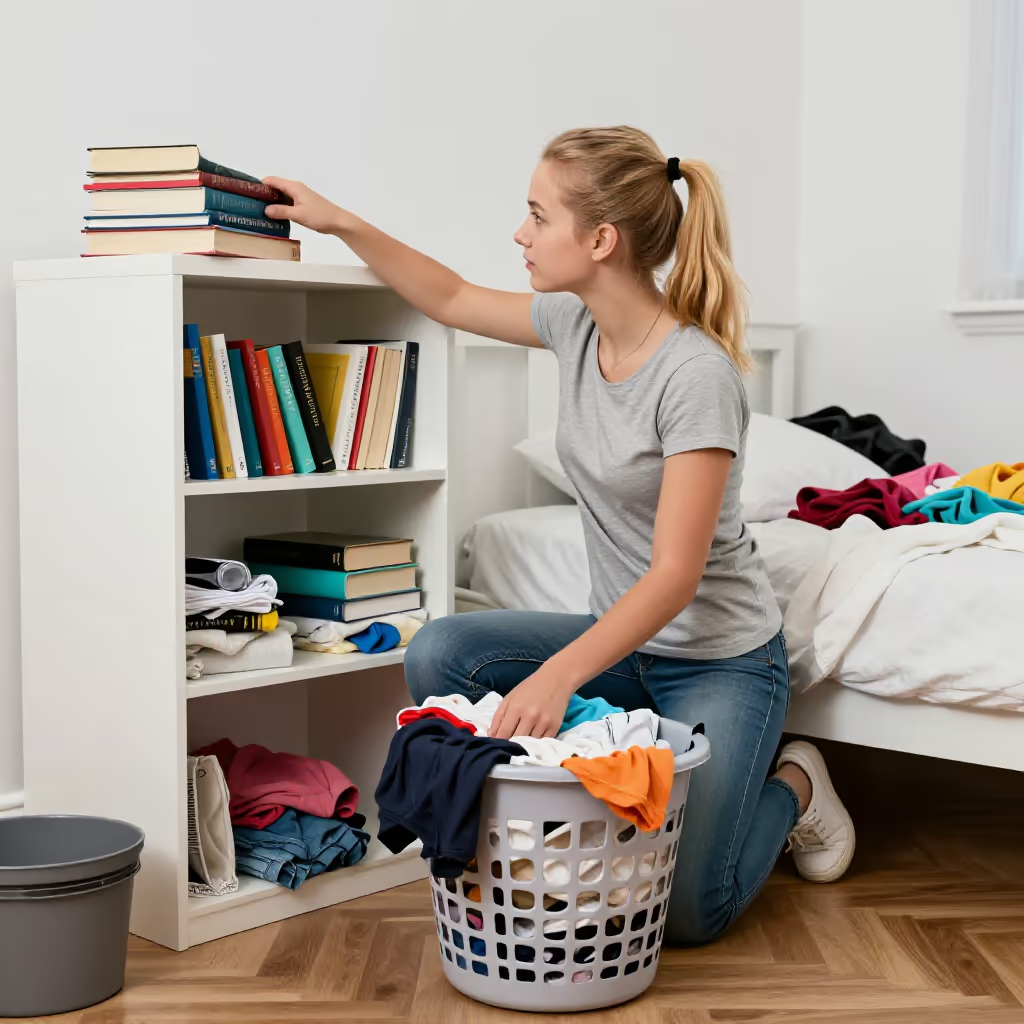
aufräumen
to tidy up
To make a place neat and clean by putting things in their proper place.
EXAMPLE
Jeden Samstag muss ich mein Zimmer aufräumen.
Every Saturday I have to tidy up my room.
to tidy up / clear up
Loading your saved state.
to tidy up
To make a place neat and clean by putting things in their proper place.
Jeden Samstag muss ich mein Zimmer aufräumen.
Every Saturday I have to tidy up my room.
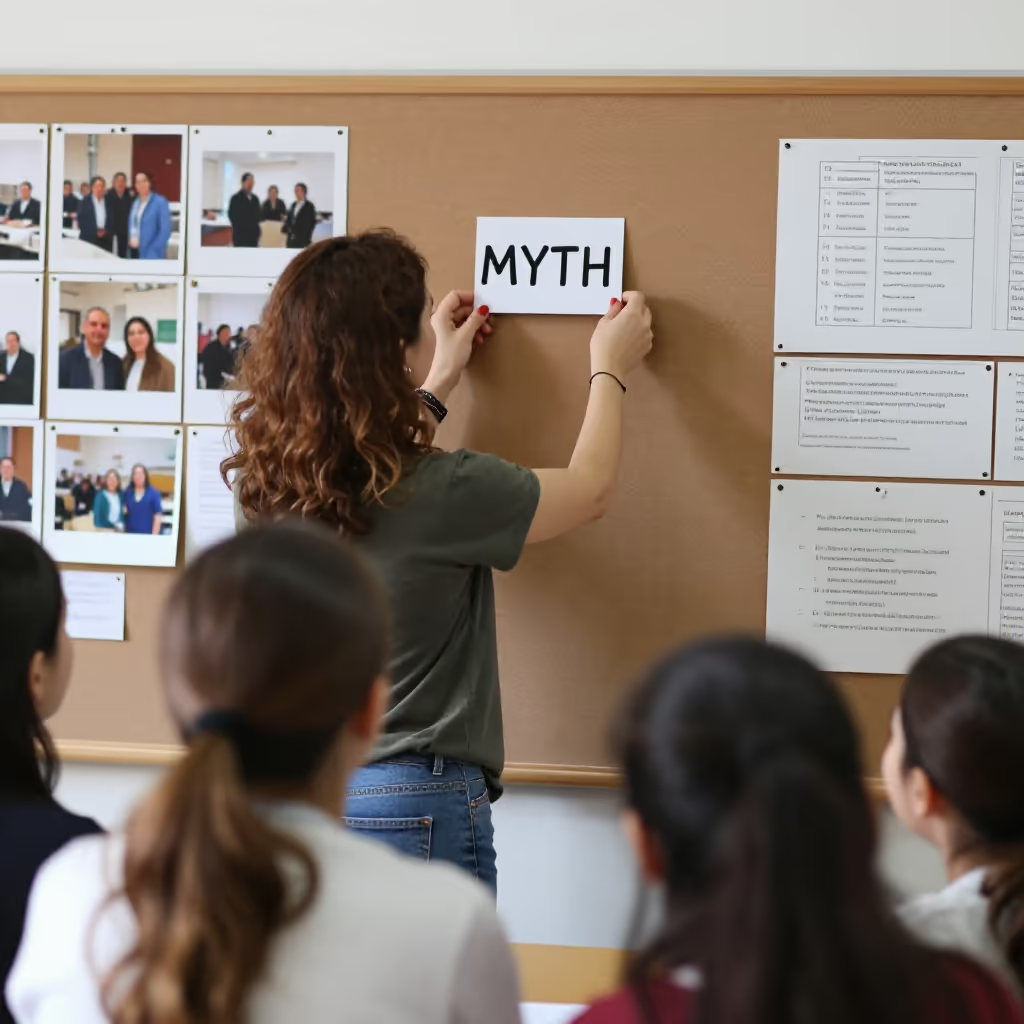
to clear up
A figurative expression meaning to eliminate false ideas, prejudices, or myths about a topic.
In ihrem Buch will die Historikerin mit einigen Legenden über den König aufräumen.
In her book, the historian wants to clear up some legends about the king.

to clean house
Figuratively, the determined removal of problems, abuses, or opponents.
Die neue Chefin hat in der Abteilung ordentlich aufgeräumt und alte Strukturen verändert.
The new boss really cleaned house in the department and changed old structures.
'Aufräumen' (to tidy up/clear up) is a separable verb. In a main clause, the prefix 'auf' goes to the end, while in a subordinate clause it remains attached to the verb. In the infinitive with 'zu', 'zu' goes in the middle: 'aufzuräumen'.
Wann räumst du endlich dein Zimmer auf?
When are you finally going to tidy up your room?
In the literal meaning, 'aufräumen' (to tidy up) is often combined with places or areas that are put in order. Typical objects are 'das Zimmer' (the room), 'die Wohnung' (the apartment), 'den Schreibtisch' (the desk), or 'die Küche' (the kitchen).
Bevor die Gäste kommen, müssen wir noch die Wohnung aufräumen.
Before the guests arrive, we still have to tidy up the apartment.
In the figurative meaning 'to eliminate prejudices', 'aufräumen' (to clear up) is always used with the preposition 'mit' and the dative. The structure is: 'mit etwas (Dativ) aufräumen'.
Dieser Dokumentarfilm räumt mit vielen Klischees auf.
This documentary clears up many clichés.
to remove / eliminate
Beseitigen and aufräumen can both express putting an end to problematic conditions. Beseitigen neutrally describes the result. In this figurative use, aufräumen sounds more forceful and often more colloquial; it fits when someone takes decisive action against several or long-standing problems.

Die neue Leitung will in der Abteilung entschlossen mit den Missständen aufräumen.
The new management wants to decisively clean up the problems in the department.
Die neue Leitung will die Missstände in der Abteilung schnell beseitigen.
The new management wants to quickly eliminate the problems in the department.