

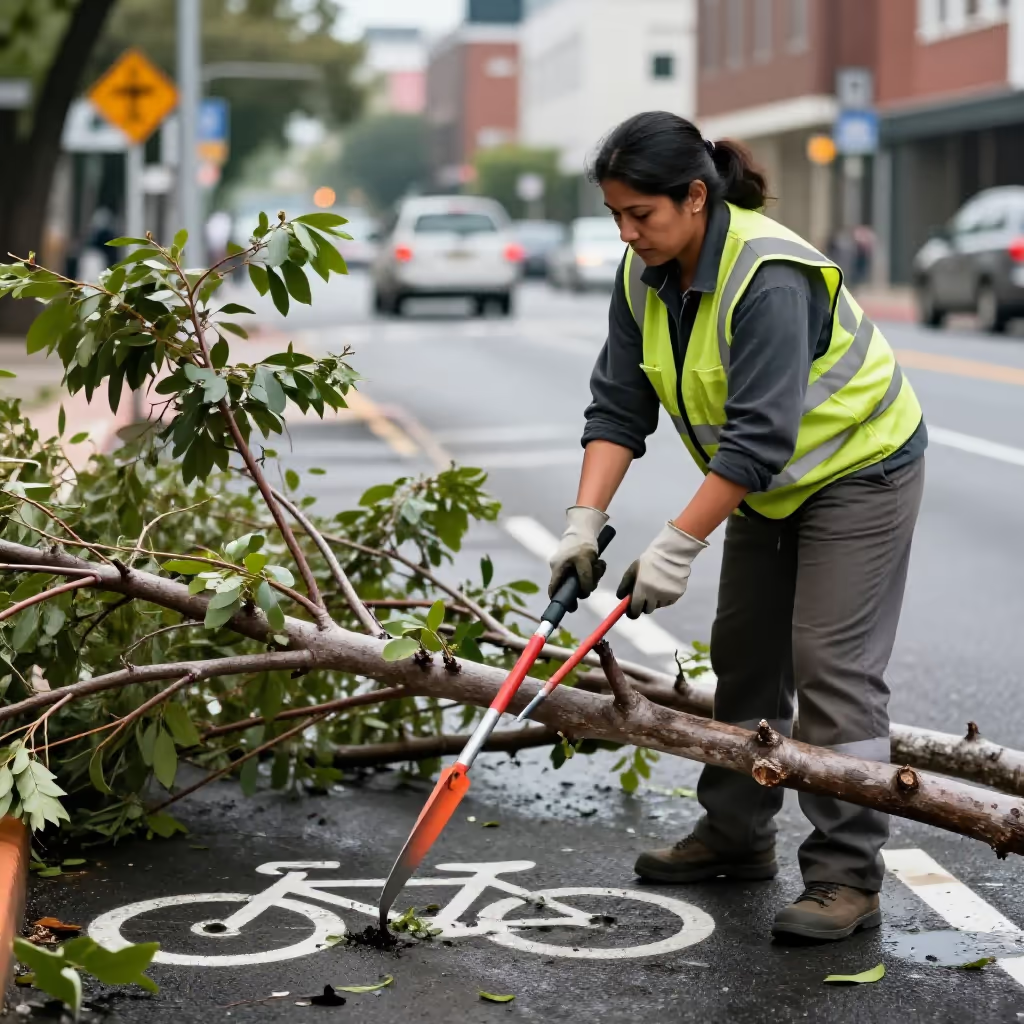
beseitigen
to remove
To remove or clear away something that is disruptive, unwanted, or harmful.
EXAMPLE
Die Feuerwehr beseitigte den umgestürzten Baum von der Straße.
The fire department removed the fallen tree from the road.
to remove / eliminate
Loading your saved state.
to remove
To remove or clear away something that is disruptive, unwanted, or harmful.
Die Feuerwehr beseitigte den umgestürzten Baum von der Straße.
The fire department removed the fallen tree from the road.

to eliminate
To resolve and get rid of an abstract problem, a doubt, a deficiency, or a misunderstanding.
Durch ein offenes Gespräch konnten wir alle Zweifel beseitigen.
Through an open conversation, we were able to eliminate all doubts.

to eliminate
Used as a euphemism for killing or murdering someone in order to get rid of that person as a problem or threat.
Der Diktator gab den Befehl, seine politischen Gegner zu beseitigen.
The dictator gave the order to eliminate his political opponents.
'Beseitigen' (to remove/eliminate) is an inseparable verb. The prefix 'be-' always stays connected to the stem 'seitigen', even in a main clause.
Die Stadt beseitigt die Sturmschäden so schnell wie möglich.
The city is removing the storm damage as quickly as possible.
The word can be understood as 'to move aside'. It expresses the idea of clearing away or removing something disruptive.
Bitte beseitige das Chaos in deinem Zimmer, bevor die Gäste kommen.
Please clear up the mess in your room before the guests arrive.
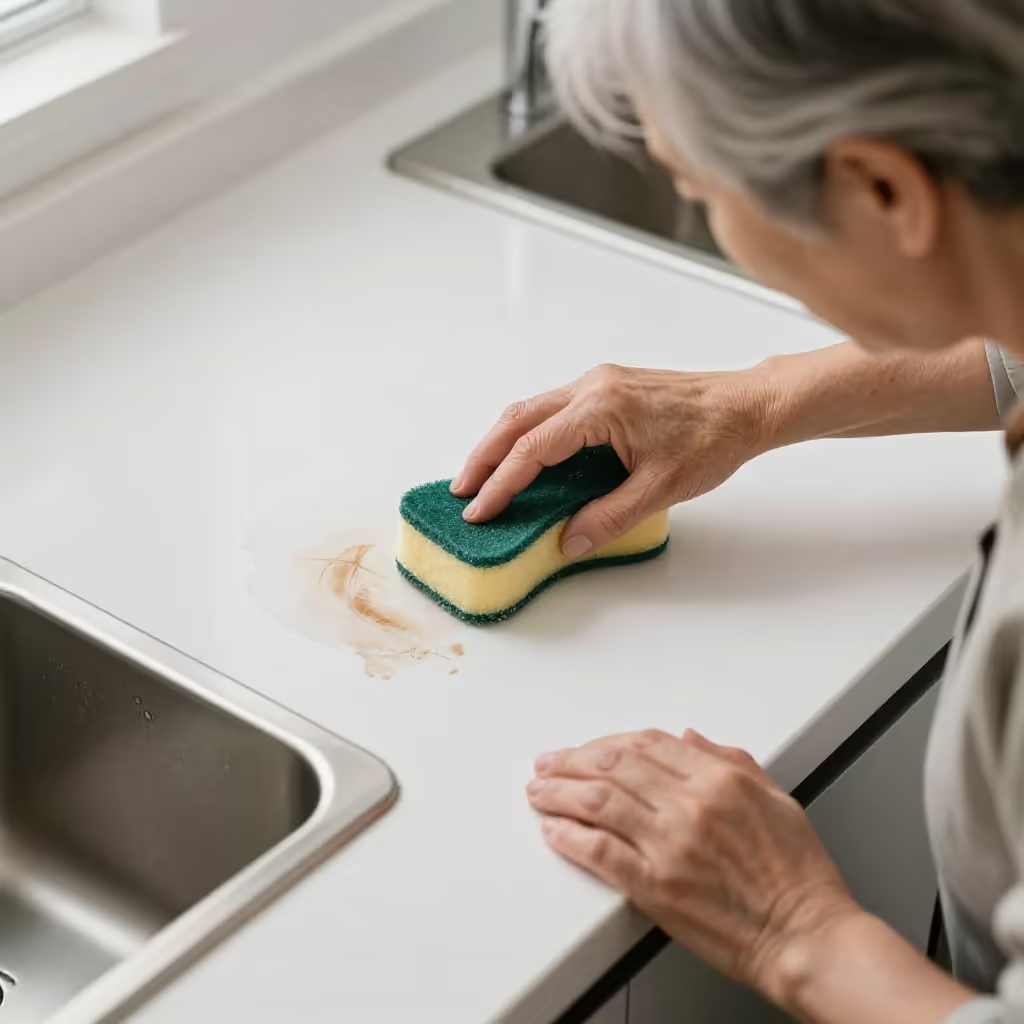
In its concrete meaning, 'beseitigen' (to remove) is often combined with things that are physically disruptive or unwanted. Examples are: 'Müll beseitigen' (to remove trash), 'einen Fleck beseitigen' (to remove a stain), or 'ein Hindernis beseitigen' (to remove an obstacle).
Wie kann ich diesen Rotweinfleck am besten beseitigen?
What is the best way for me to remove this red wine stain?
This meaning refers to non-material things. Typical objects here are 'Zweifel beseitigen' (to eliminate doubts), 'ein Missverständnis beseitigen' (to clear up a misunderstanding), or 'einen Mangel beseitigen' (to remedy a deficiency).
Ich hoffe, dieses Gespräch beseitigt alle Unklarheiten.
I hope this conversation clears up all uncertainties.
In the meaning 'töten' (to kill), 'beseitigen' (to eliminate) is a euphemism, meaning a softened or glossed-over expression. It is mostly used in contexts of crime, espionage, or dictatorships and has a very negative, serious connotation.
Der Agent erhielt den Auftrag, den Verräter zu beseitigen.
The agent received the assignment to eliminate the traitor.
to remove
Both verbs can refer to removing an obstructing object. Entfernen neutrally describes taking something away, even if this is only temporary. Beseitigen emphasizes more strongly that the obstruction is to be dealt with completely or permanently.
Ich beseitige die Kiste, damit der Eingang dauerhaft frei bleibt.
I am getting rid of the crate so that the entrance stays clear permanently.
Ich entferne die Kiste vorübergehend aus dem Eingang.
I am temporarily removing the crate from the entrance.