

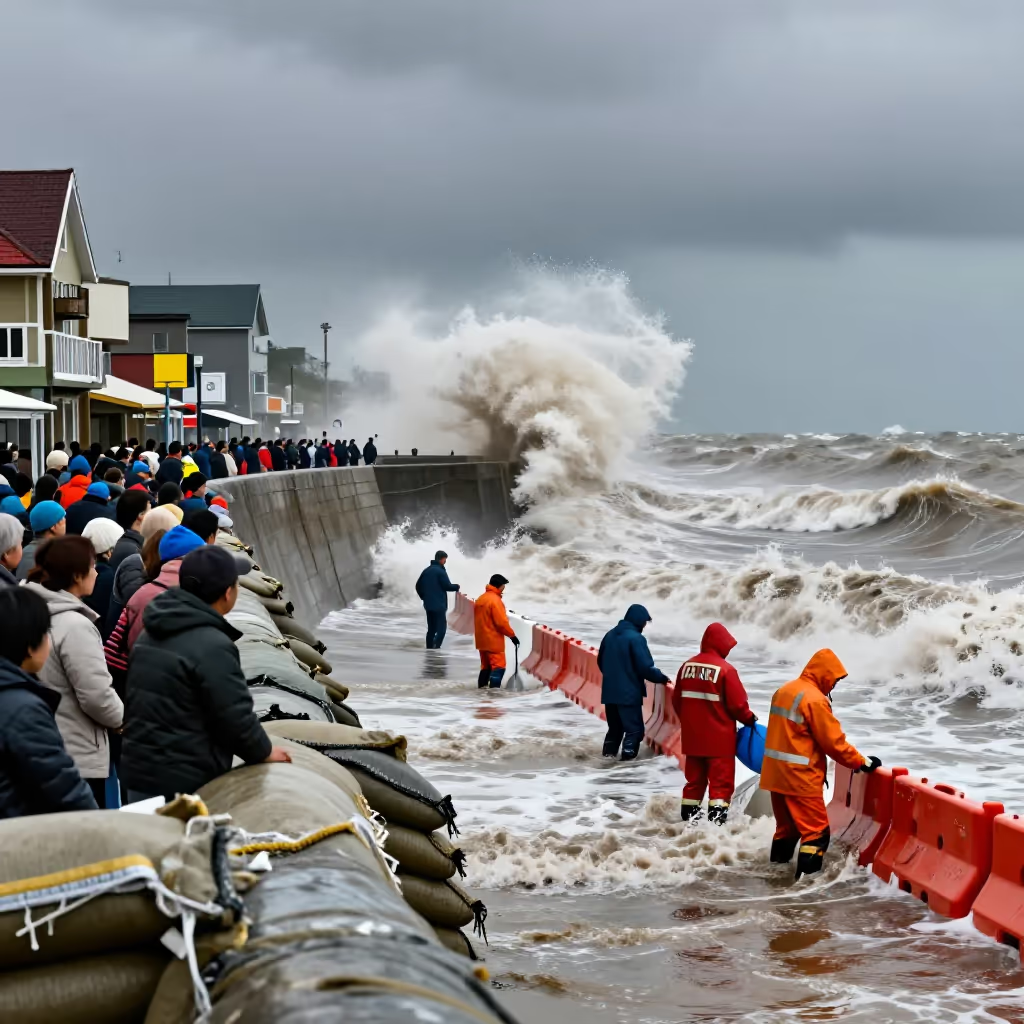
die Bedrohung
threat
A person, thing, or situation that is perceived as a serious danger or potential source of harm.
Der Klimawandel stellt eine globale Bedrohung für die Menschheit dar.
Climate change represents a global threat to humanity.

threat
Loading your saved state.

threat
A person, thing, or situation that is perceived as a serious danger or potential source of harm.
Der Klimawandel stellt eine globale Bedrohung für die Menschheit dar.
Climate change represents a global threat to humanity.

threat
The act of intimidating someone or forcing someone to do something by announcing violence or other negative consequences.
Die Bedrohung durch den Erpresser wurde bei der Polizei angezeigt.
The threat from the blackmailer was reported to the police.
The noun 'die Bedrohung' is derived directly from the verb 'bedrohen' (to threaten). The ending '-ung' turns the verb into a feminine noun that describes the action or the result of the verb.
Er hat seinen Nachbarn bedroht.
He threatened his neighbor.
To express what is endangered, use 'für' + accusative. To name the source of the danger, use 'durch' + accusative.
Die Dürre ist eine Bedrohung für die Landwirtschaft.
The drought is a threat to agriculture.
In this meaning, 'Bedrohung' is often combined with the verb 'darstellen' (to represent/constitute). The phrase 'eine Bedrohung darstellen' (to represent/constitute a threat) is a more formal way of saying that something is a threat.
Armut stellt eine ernsthafte Bedrohung für die soziale Stabilität dar.
Poverty represents a serious threat to social stability.
This meaning describes the concrete act of making threats and is often used in legal or police contexts. Typical verbs here are 'anzeigen' (to report/file charges) or 'ermitteln' (to investigate).
Sie hat die Bedrohung sofort bei der Polizei gemeldet.
She reported the threat to the police immediately.
danger
Both words can refer to a situation or thing that can cause harm. „Die Gefahr“ primarily emphasizes the potential harm, while „die Bedrohung“ focuses more on the threatening person, thing, or scenario. Use Gefahr for the possibility of harm and Bedrohung for a perceived threatening scenario.

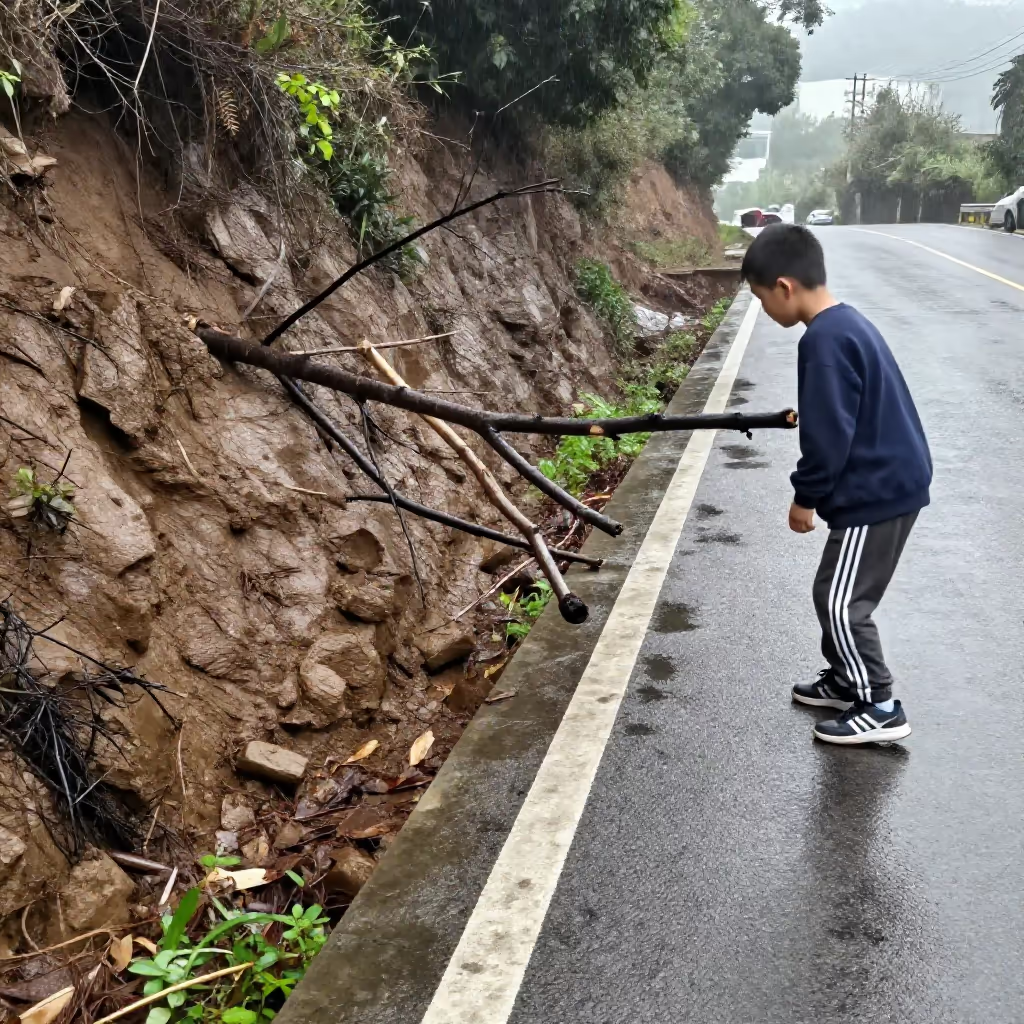
Der lose Ast wirkt bei starkem Wind wie eine Bedrohung für die Spaziergänger.
In strong winds, the loose branch seems like a threat to pedestrians.
Der lose Ast ist bei starkem Wind eine Gefahr für die Spaziergänger.
In strong winds, the loose branch is a danger to pedestrians.